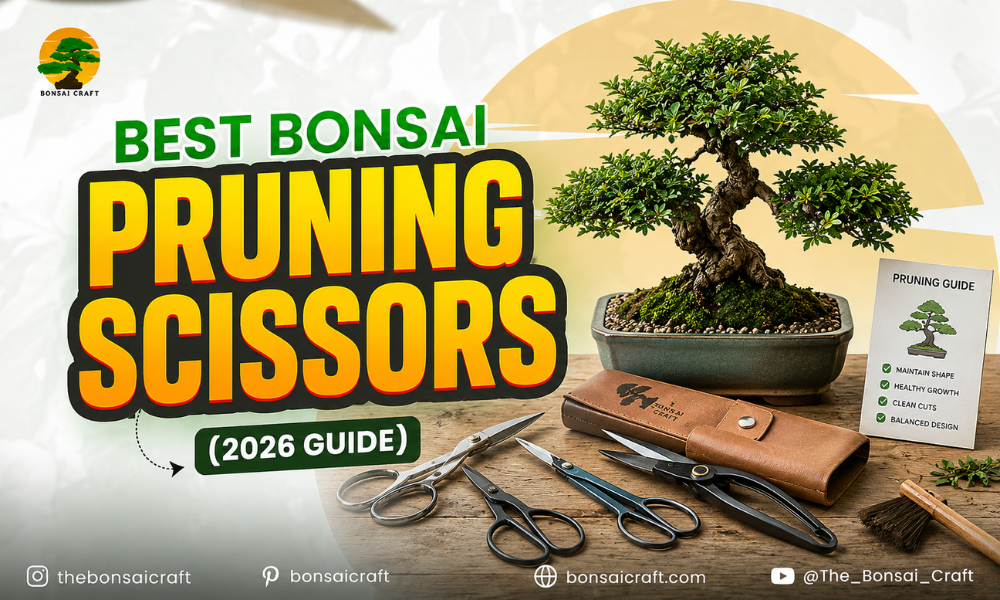
The right pair of bonsai pruning scissors changes everything about how you work on your trees. Every cut either advances your tree’s health and structure or sets it back, and the gap between a sharp, purpose-built pair of bonsai pruning scissors and a cheap substitute shows up weeks later in wound healing, back-budding density, and whether a branch tip dies back further than you intended.
This guide covers the best bonsai scissors in 2026 across every skill level and budget, from the best Japanese bonsai scissors for advanced styling to a solid first pair of bonsai tree scissors for complete beginners. If you are new to the practice and still building your wider kit, Bonsai Craft complete guide to bonsai tools for beginners is a useful companion read before diving into scissor-specific choices.
What Are Bonsai pruning Scissors?
Bonsai scissors are precision cutting tools with surgically sharp blades and ergonomic handles designed to sever, not crush, living plant tissue.
Regular scissors tear wood fibers rather than slicing them cleanly, creating wounds that heal slowly and risk die-back. According to Wazakura Japan, a specialist Japanese bonsai tool maker, there are two main types: general-purpose bonsai scissors that are durable and strong, ideal for cutting thicker branches and roots, and trimming scissors with a thinner cutting blade and more delicate shank, ideal for detail work in tight foliage zones. Matching the right type to the task prevents the two most common beginner mistakes: forcing delicate trimming scissors on branches too thick for their blade, and using bulky general shears in spaces too tight for their profile.
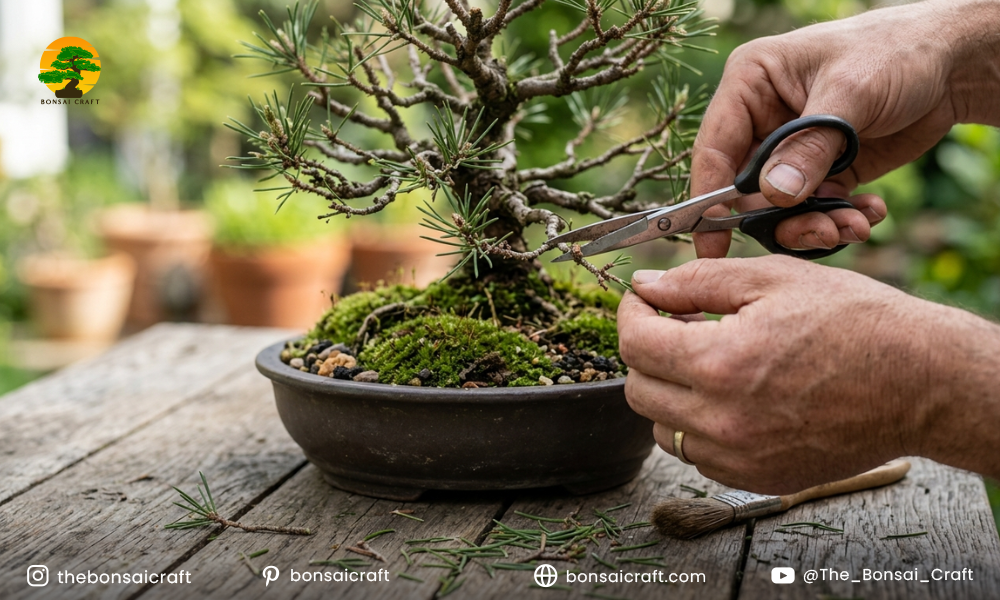
Can You Trim a Bonsai Tree with Scissors?
Yes, but only with sharp, purpose-built bonsai pruning scissors, not regular household scissors.
Bonsai scissors are the most basic and irreplaceable tools for bonsai owners, and they are significantly better suited to the job than regular scissors. For light maintenance on a large tree, a very sharp pair of garden scissors can work in a pinch. For refinement work, defoliation, or roots, dedicated bonsai scissors are non-negotiable. One species-level caveat that no pair of scissors can override: pine trees and some conifers should be pinched by hand rather than cut with scissors, because using scissors or shears on some conifer species can lead to brown, dead foliage at the cuttings. For a full breakdown of technique and timing across species, the Bonsai Craft step-by-step guide to trimming a bonsai tree covers exactly when to cut, how much to remove, and which tool to reach for at each stage.
The 5 Best Bonsai Pruning Scissors of 2026
The best bonsai scissors in 2026 span from artisan-forged Japanese tools to reliable budget picks. The right choice depends on your skill level, tree type, and specific pruning task.
1. Wazakura Yasugi Steel Satsuki: Best Overall Japanese Bonsai Scissors
The Wazakura Satsuki is the best overall bonsai scissor for 2026, combining Yasugi Specialty Steel blades, third-generation Japanese craftsmanship, and a design approved by Japanese bonsai masters.
These scissors are hand-forged by third-generation artisans in Sanjo, Niigata Prefecture a city recognized for its metalwork since the 17th century. The blade material is YCS3 Alloy Tool Steel, a grade of Yasugi Specialty Steel produced exclusively at the Hitachi Metals plant in Shimane Prefecture, Japan, made by combining iron and steel, removing impurities that reduce sharpness, and forging the steel multiple times at high temperatures. At 7 inches (180 mm), 52 mm blade length, and just 217 grams, the Satsuki handles detail trimming and thin branches up to 4 mm with minimal hand pressure. After three months of independent hands-on testing, reviewers in 2026 cited an exceptional 4.9-star rating and rust-resistant construction as standout strengths.
Best for: Beginners to advanced practitioners, detail trimming, foliage work, ikebana.
2. Wazakura Yasugi Steel Ashinaga: Best Everyday Bonsai Shears
The Ashinaga is the best everyday bonsai scissor for practitioners who need a single pair for both routine maintenance and repotting root work.
At 7.87 inches (200 mm) with a longer shank for deeper canopy reach, the Ashinaga handles branches up to 6 mm in diameter while being fine enough for delicate pruning on shohin trees. Its Yasugi steel is strong enough to cut thick roots cleanly during repotting, a critical factor in promoting fast root healing after pot work. Multiple experienced practitioners describe it as their primary daily tool precisely because it bridges the gap between fine trimming scissors and heavier shears.
Best for: Daily maintenance, root work, medium branch cuts, dense canopy trimming.
3. Kaneshin No. 40E: Best Japanese Bonsai Shears for Serious Practitioners
The Kaneshin No. 40E are the best Japanese bonsai shears for serious practitioners who demand proven, handmade quality and superior carbon steel edge retention.
Founded in 1919, Kaneshin has over 100 years of history in manufacturing high-quality bonsai tools. The No. 40E measures 185 mm with a 55 mm blade and is made from Japanese carbon steel with elegant rounded handles, prized for their quality and durability. New England Bonsai Gardens, operating since 1987, specifically recommends the No. 40E for American customers for thinning, defoliating, and trimming smaller roots. Carbon steel means that consistent oiling and drying after every use is essential, particularly in humid climates.
Best for: Advanced practitioners, foliage thinning, defoliation, long-term investment tools.
4. Kaneshin Trimming Scissors: Best Precision Bonsai Trimming Scissors
The Kaneshin Trimming Scissors are the best precision bonsai trimming scissors for working on mature trees with densely packed fine branches in hard-to-reach canopy zones.
Long, slender handles allow access to bud and branch trimming spots that general scissors simply cannot reach without damaging surrounding growth. Their pointed, narrow blades make them ideal for pine decandling, where candles must be cut cleanly at their base at a perpendicular angle to growth. Maximum cutting size is 6–8 mm; exceeding this risks blade damage. Regular sharpening with a 1000-grit whetstone keeps the edge performing as intended.
Best for: Mature bonsai, pine decandling, bud trimming, refinement-stage work.
5. Fiskars Micro-Tip Pruner: Best Budget Bonsai Scissors for Beginners
The Fiskars Micro-Tip Pruner is the best budget bonsai trimmer for beginners who need a reliable, sharp cutting tool before investing in Japanese-crafted scissors.
Spring-loaded to reduce fatigue and speed up trimming, with a non-stick coating that prevents sap build-up, the Fiskars Micro-Tip is available at Home Depot, Lowe’s, and online. Experienced members of the Bonsai Nut community consistently recommend it for leaf pruning and twig pruning, noting it performs considerably above its price point for routine shoot and foliage work on most tree types.
Best for: Complete beginners, young trees, general shoot and leaf work.
Carbon Steel vs Stainless Steel Bonsai Scissors
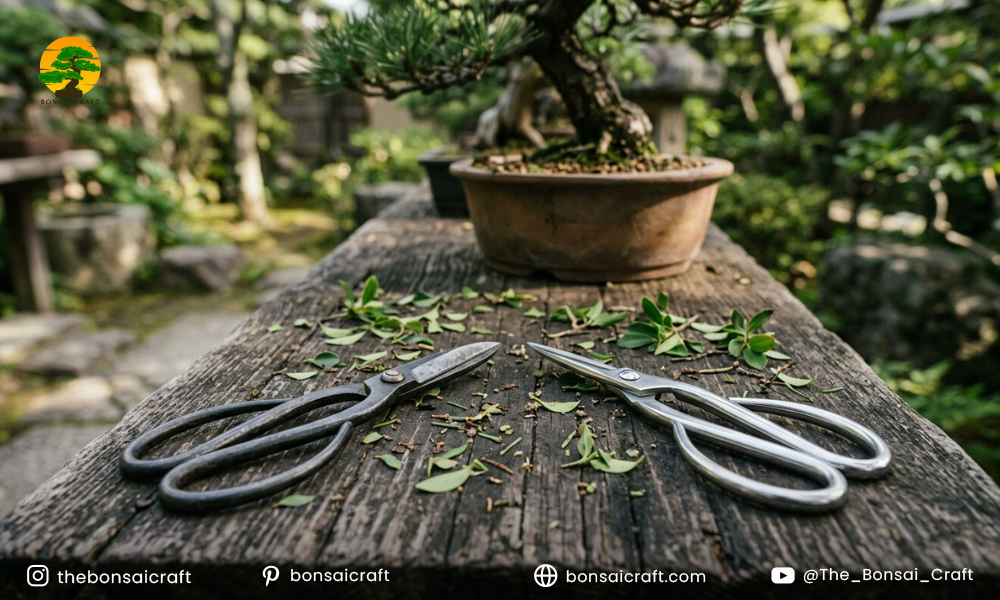
Carbon steel bonsai scissors achieve a sharper edge and are easier to resharpen; stainless steel bonsai scissors resist rust with far less maintenance, making stainless the smarter default for most growers.
Stainless steel offers excellent resistance to rust and corrosion, making it ideal for humid environments or beginners who may not yet have a consistent tool care routine. Carbon steel tools hold a keener edge and are preferred by experienced practitioners for precision detail work, but carbon steel left un-oiled for more than a few hours in high humidity develops micro-pitting that cannot be reversed with surface cleaning alone. For US growers in Florida, the Gulf Coast, or the Pacific Northwest, the low-maintenance case for stainless is not just convenience; it is practical protection. Growers in drier climates who maintain a strict cleaning habit will benefit from carbon steel’s sharper, longer-lasting edge. A hybrid approach works well: stainless for wet repotting sessions, carbon steel for dry-session detail trimming.
How to Care for Your Bonsai Scissors
Cleaning and oiling bonsai scissors after every single use is the most critical maintenance step; this routine alone determines whether a quality pair lasts years or deteriorates within months.
Wipe all sap and soil from blades immediately after use. A cloth with isopropyl alcohol dissolves conifer resin effectively. Address any surface rust at once with a fine-grit rust eraser. Apply a drop of camellia oil (choji oil) to the blades and the pivot point. Store in a dry, ventilated tool roll rather than a sealed plastic box. For sharpening, a 1000-grit then 3000-grit whetstone restores most bonsai scissor edges effectively, maintaining the original blade angle of around 20–25 degrees throughout. These habits apply equally whether you are maintaining a pair of bonsai tree trimmers or heavier bonsai pruners; the principle is the same. For more on seasonal care routines, including watering, soil refresh, and repotting timing, the Bonsai Craft complete bonsai care guide is an excellent reference for keeping your whole practice on track.
Frequently Asked Questions
What are the best bonsai scissors for beginners?
The Wazakura Yasugi Steel Satsuki Scissors are the best bonsai scissors for beginners seeking genuine Japanese quality. Handcrafted in Sanjo, Japan from Yasugi Specialty Steel, they require minimal cutting force, handle detail trimming and foliage work reliably, and are approved by Japanese bonsai masters, making them an ideal first serious tool.
Can you trim a bonsai tree with scissors?
Yes, you can trim a bonsai tree with scissors, but only with purpose-built bonsai scissors. Regular scissors tear rather than sever plant tissue, creating large wounds that heal slowly and risk die-back. Sharp bonsai-specific scissors deliver the clean, precise cuts that protect tree health and promote fast wound callus formation.
What is the difference between bonsai shears and bonsai trimming scissors?
Bonsai shears are stronger, general-purpose tools suited for branches and roots, while trimming scissors have finer blades for detail work in tight foliage zones. General-purpose scissors sacrifice delicacy for strength; trimming scissors sacrifice cutting diameter for precision. Most experienced practitioners keep both types and select based on the specific task and canopy density.
Are Japanese bonsai scissors worth the extra cost?
Japanese bonsai scissors are worth the investment because their superior steel, hand-forging process, and precision heat treatment produce measurably cleaner cuts than mass-produced tools. Kaneshin has made bonsai tools by hand since 1919, over 100 years of craft knowledge that translates directly into edge retention, blade alignment, and durability that cheap alternatives cannot match.
How often should I sharpen my bonsai scissors?
Sharpen your bonsai scissors at the first sign of resistance or tearing rather than on a fixed schedule. A 1000-grit then 3000-grit whetstone restores most edges effectively. Consistent oiling after every session significantly slows edge degradation, meaning well-maintained scissors require far less frequent sharpening than neglected ones.
Wrapping Up
The best bonsai scissors match your climate, your trees, and your care habits. For most growers, the Wazakura Yasugi Steel Satsuki delivers the best available balance of authentic Japanese craftsmanship and accessible pricing in 2026. Serious practitioners ready to invest in lifetime tools will find Kaneshin carbon and blue steel scissors at the top of the craft. Whatever you choose, consistent maintenance, cleaning, oiling, and timely sharpening are what truly separate a tool that lasts a season from one that lasts decades. If you are still deciding which species to build your collection around, the Bonsai Craft bonsai creation guide walks through species selection, pot choice, and first-year shaping from the very beginning.