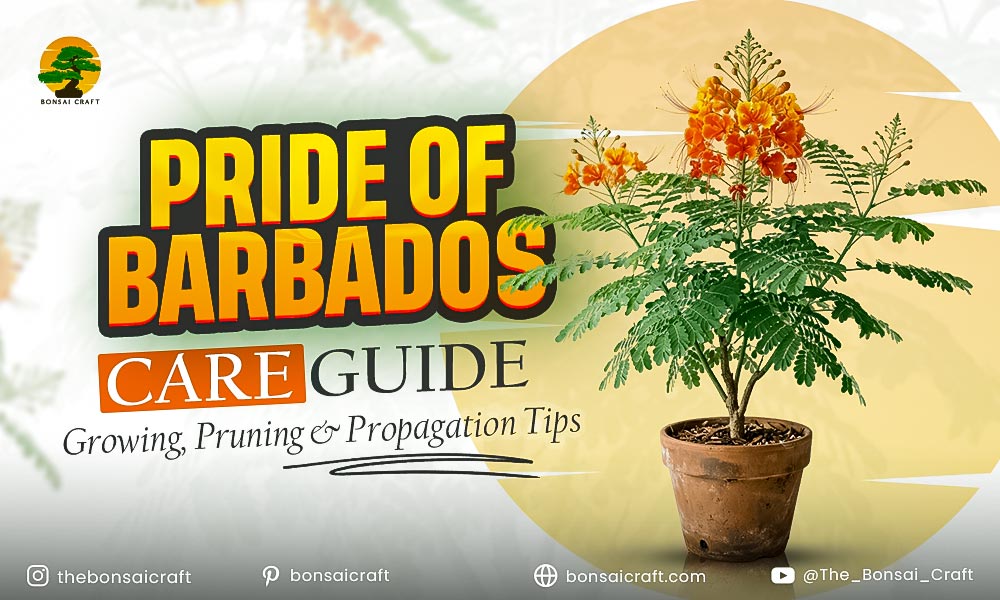
Pride of Barbados (Caesalpinia pulcherrima) is a fast-growing tropical shrub native to the West Indies and the Americas. Its ruffled orange, red, and yellow flowers bloom from late spring through fall, attracting hummingbirds and butterflies during peak summer heat when most other ornamentals have shut down.
Its species name translates to “very pretty”, fitting for a plant featured on the Royal Standard of Barbados and recognized across six continents. Whether you know it as the Peacock Flower, Dwarf Poinciana, or Red Bird of Paradise, this guide covers everything needed to grow it successfully.
Expert Tip: Pride of Barbados is one of the last plants to emerge from winter dormancy. Do not give up on it in spring, wait until late May or June before assuming it is dead.
What Is Pride of Barbados?
Pride of Barbados is a flowering shrub in the pea family (Fabaceae), native to the tropics and subtropics of the Americas. Common names vary by region:
- Pride of Barbados: Most widely used in North America and the Caribbean
- Peacock Flower: For the ruffled, fan-like blooms
- Dwarf Poinciana: Resembles the Royal Poinciana tree on a smaller scale
- Red Bird of Paradise: Common in Texas and the Southwest
- Barbados Flower Fence: Reflects its use as a spiny hedging plant in the Caribbean
The flower appears on Barbados’s Royal Standard. In India it is sacred to the god Shiva, and traditional uses across India, Mexico, and Thailand have made it one of the most culturally recognized tropical plants in the world.
Pride of Barbados Size and Growth Rate
Pride of Barbados reaches 6–20 feet tall and 6–10 feet wide depending on climate and pruning. In frost-free zones it grows as a small tree. In Zone 8–9 gardens where stems freeze back each winter, it behaves like a large perennial, rebounding fast and peaking in color within 60 days of spring emergence.
Individual blooms are bowl-shaped, 2–3 inches across, with five crinkled petals in red, orange, and yellow and ten prominent red stamens. Clusters run 4–8 inches long. After flowering, flat seed pods form and split open explosively at maturity.
Expert Tip: To train a tree form, select two or three strong stems in year one and remove all basal shoots. Repeat for two seasons to build a clean small tree.
Caesalpinia pulcherrima Sunlight Requirements
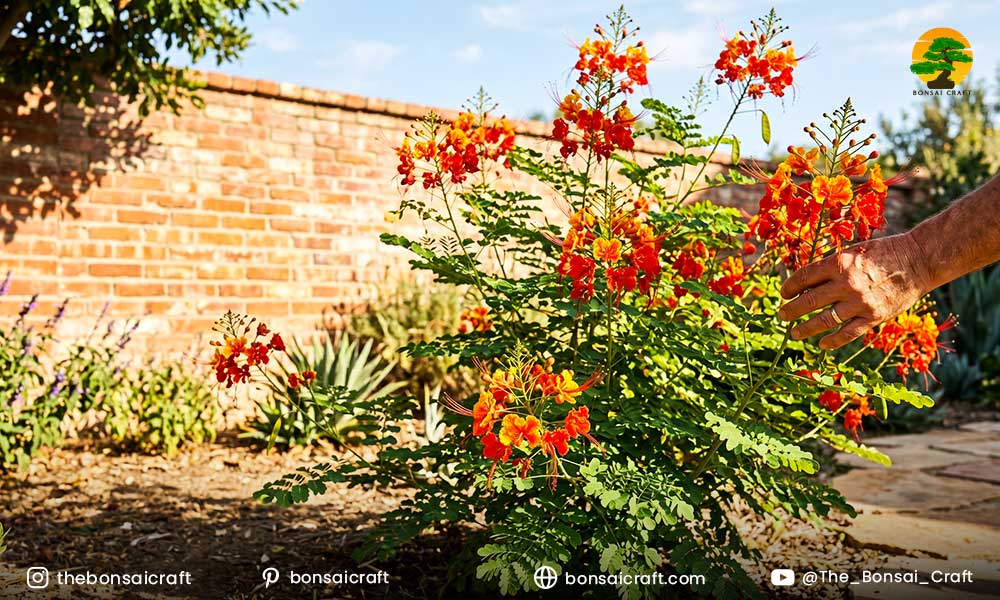
Pride of Barbados needs full sun, at least 6–8 hours of direct sunlight daily, to flower well. In shade the plant becomes leggy and bloom production drops sharply. The hotter and sunnier the site, the better it performs.
In extreme afternoon heat, light midday shade prevents leaf scorch without sacrificing flowering. A south-facing wall position adds reflected warmth, which is valuable in marginal zones.
Expert Tip: In Zone 8 gardens, position the plant against a south- or southwest-facing wall. Reflected heat from masonry or paving can extend the growing season by several weeks.
Caesalpinia pulcherrima Soil Requirements
Pride of Barbados grows best in well-drained soil with a pH of 6.0–7.0, though it tolerates 5.5–8.5. Poor drainage is the fastest way to kill it. Root rot sets in quickly in waterlogged conditions.
- Drainage: Essential; amend clay soils with coarse sand or perlite
- pH: Tolerates alkaline soils well; thrives in Texas alkaline conditions
- Organic matter: Compost or aged manure improves fertility and structure
- Humid climates: Use raised beds to guarantee drainage
Expert Tip: In containers, use potting soil mixed with coarse perlite and horticultural grit. Avoid moisture-retaining tropical mixes. They hold too much water for this drought-tolerant shrub.
Pride of Barbados Watering Guide
Water newly planted Pride of Barbados 2–3 times per week until established, then shift to infrequent deep watering. Once established after one full growing season, it is highly drought-tolerant.
| Stage | Frequency |
| Weeks 1–4 | 2–3 times per week |
| Months 2–6 | Weekly, check the soil first |
| Established | Only when the top few inches are dry |
| Blooming season | Moderate; bone-dry conditions reduce flowering |
Check the soil 2–3 inches deep before watering. Overwatering causes far more damage than underwatering.
How to Fertilize Pride of Barbados
Pride of Barbados has modest fertilizer needs. In well-mulched garden soil, no additional feeding is usually required. In containers or depleted soils, apply a balanced organic fertilizer every 4–6 weeks during the growing season. Avoid high-nitrogen formulas, they push leafy growth at the expense of flowers. A phosphorus-forward product (such as 5-10-5) supports better blooming.
How to Prune Pride of Barbados
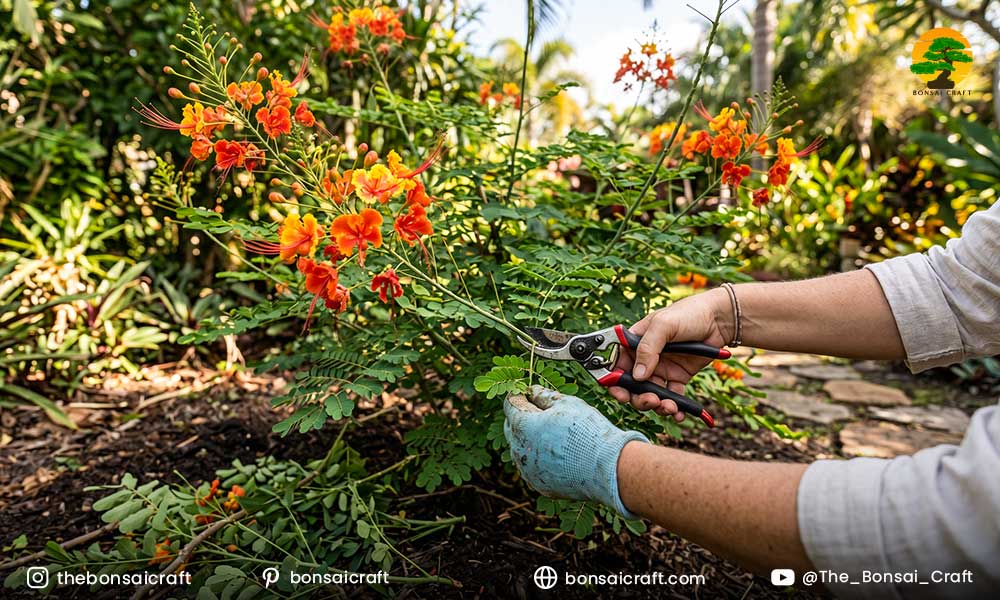
Prune in late winter or early spring before new growth begins. Remove all dead or frost-killed stems, cutting back to live green wood. In Zone 8, cut everything to the base.
- Wait until late February or March
- Scratch stems to check for green tissue beneath the bark
- Cut dead wood back to live growth, or to the ground if fully frozen
- Shape remaining stems to an outward-facing bud
- Do not prune in fall, it triggers frost-vulnerable new growth
Expert Tip: Wear thick gloves and long sleeves. The stems carry small but sharp spines.
How to Grow Pride of Barbados from Seed
Germination takes 10–14 days under warm conditions, and plants bloom within one to two years from seed.
- Scarify the seeds with fine sandpaper or nick with a knife
- Soak in warm water for 24–48 hours
- Sow at 1/4 inch deep in a perlite/peat/vermiculite mix
- Maintain warmth at 77–86°F (25–30°C)
- Keep moist but not wet until germination
- Transplant to individual pots about two months after sprouting
Transplant volunteer seedlings from the garden while small. The taproot develops quickly and deep.
How to Propagate from Cuttings
Semi-hardwood cuttings taken in spring or summer root reliably and reach flowering size faster than seed-grown plants.
- Select a partially matured stem, green but beginning to firm up
- Cut a 4–6 inch section just below a node; remove lower leaves
- Dip the cut end in rooting hormone
- Insert into equal parts perlite and peat
- Cover loosely with plastic to maintain humidity
- Keep at 70–80°F out of intense direct sun
- Expect rooting in 4–6 weeks
Hardiness and Climate Zones
| USDA Zone | Behavior | Winter Action |
| Zone 11 | Evergreen tree up to 20 ft | Prune for shape only |
| Zone 10 | Semi-evergreen shrub | Frost cloth if freeze forecast |
| Zone 9 | Deciduous shrub | Cut back after freeze |
| Zone 8b | Dies to the ground; regrows in spring | Cut to base; survives to 18°F |
| Zone 7 and below | Does not survive outdoors | Grow in containers; overwinter indoors |
South-facing exposures with reflected warmth emerge weeks earlier than north-facing sites in the same garden.
Landscape Uses
- Specimen plant: Natural focal point with summer-long color
- Flowering hedge: Spiny stems create a practical barrier; space plants 6–8 feet apart
- Pollinator border: Feeds hummingbirds and Giant Swallowtail butterflies through peak summer heat
- Container specimen: Use a 15–20 gallon pot; overwinter indoors in cool climates
- Challenging sites: Tolerates reflected pavement heat, alkaline soil, and drought
Pride of Barbados Common Mistakes to Avoid
- Giving up in spring: The plant often does not emerge until late May or June
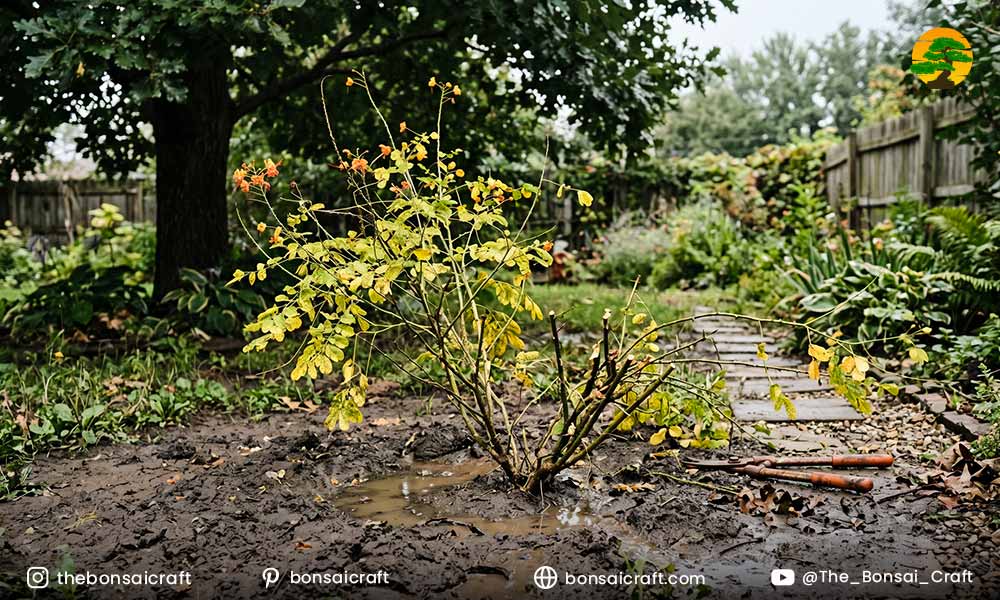
- Overwatering: The most common cause of death, especially in containers
- Planting in shade: Even partial shade reduces flowering significantly
- Pruning in fall: Stimulates new growth that frost will kill
- Planting too close to paths: Allow at least 4–5 feet due to spiny stems
- Clay soil without amendment: In humid climates, poor drainage is fatal
Seasonal Care Calendar
| Season | Tasks |
| Spring | Cut back dead stems; apply fertilizer; sow seeds; watch for emergence |
| Summer | Deep water during dry spells; feed containers; deadhead spent clusters |
| Fall | Reduce watering; collect seed pods; do NOT prune; apply mulch before frost |
| Winter | No feeding; maintain mulch; protect containers; check stems in late February |
Pests and Diseases
Spider Mites: Fine webbing and stippled leaves. Treat with neem oil or insecticidal soap on leaf undersides.
Aphids: Sticky honeydew and distorted shoot tips. Knock off with water; use insecticidal soap for severe cases.
Scale Insects: Shell-like bumps on stems. Apply horticultural oil below 90°F.
Root Rot: Yellowing and wilting despite moist soil. Caused by poor drainage; rarely reversible once advanced.
Leaf Spot: Brown or black spots with yellow halos. Improve air circulation; apply copper fungicide if severe.
Expert Tip: Most pest problems signal cultural stress. A plant in full sun with excellent drainage is naturally resistant to most issues.
Toxicity Warning
Pride of Barbados is toxic to dogs, cats, horses, and humans if ingested. Mature seeds carry the greatest risk and cause vomiting and diarrhea in pets. Keep the plant away from children and pets, and contact a veterinarian immediately if ingestion occurs.
Frequently Asked Questions
What is the common name for Caesalpinia pulcherrima?
The most widely used name is Pride of Barbados. It is also known as Peacock Flower, Dwarf Poinciana, Red Bird of Paradise, and Barbados Flower Fence. “Red Bird of Paradise” is most common in Texas and the Southwest.
How do you grow Pride of Barbados from seed?
Scarify the seed coat, soak in warm water for 24–48 hours, then sow 1/4 inch deep at 77–86°F. Germination takes 10–14 days. First blooms arrive within one to two years.
Does Pride of Barbados survive frost?
Established plants in Zone 8b have survived down to 18°F (-8°C), dying to the ground but resprouting each spring. In Zone 7 and colder, grow in containers and overwinter indoors.
How do you prune Pride of Barbados?
Prune in late winter or early spring before new growth begins. Cut back to live wood, or to the ground in Zone 8. Never prune in fall.
How fast does Pride of Barbados grow?
Very fast. In warm climates with full sun, it puts on 3–5 feet of new growth per season and reaches 4–6 feet with heavy blooms within 60 days of spring emergence, even after freezing to the ground.
Closing Thoughts
Pride of Barbados earns its place in any warm-climate garden. Give it full sun, excellent drainage, and infrequent deep water. It will reward that simple care with one of the most dramatic flowering displays available, season after season.