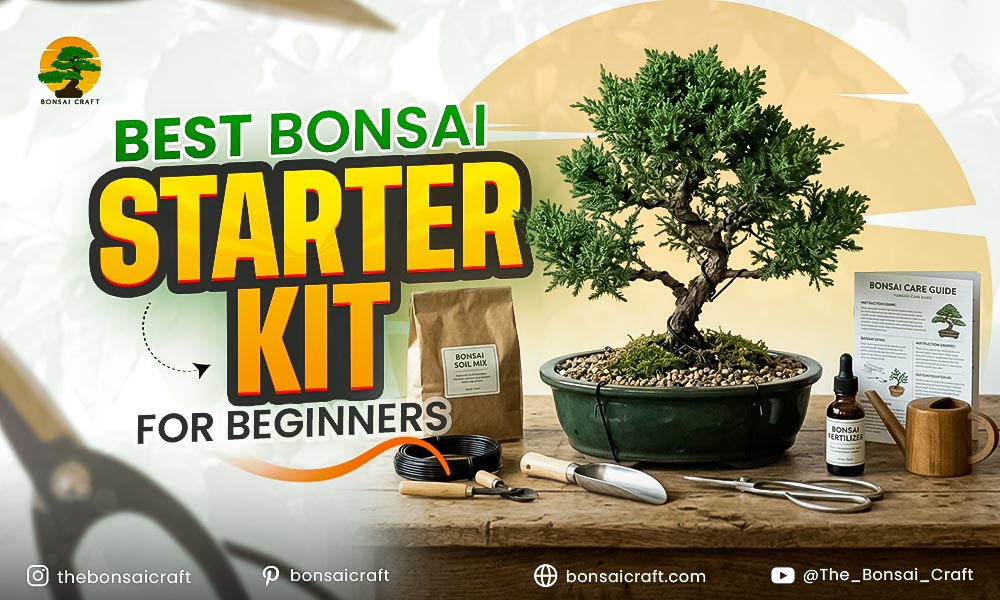
The best bonsai starter kit for most beginners is the Planters’ Choice Bonsai Tree Starter Kit for seed growing, or a Live Juniper Kit from Bonsai Outlet for immediate results. A quality kit includes seeds or a young tree, soil, a pot, pruning shears, training wire, markers, and a step-by-step guide. Prices range from under $30 for seed kits to $80 and above for live-tree sets.
Starting a bonsai journey is easier than most beginners expect when they have the right kit. Rather than sourcing seeds, soil, pots, tools, and species-specific guides separately, a well-assembled bonsai starter kit puts everything into one package. This guide covers the best kits available in 2025, what each contains, which species work for indoor growing, how to read bonsai starter kit instructions correctly, what makes a Japanese bonsai starter kit different, and where to buy a bonsai starter kit from a retailer you can trust.
What Is a Bonsai Starter Kit?
A bonsai starter kit is a ready-to-use package with every essential item needed to grow a miniature tree at home. Also called a bonsai tree starter kit, it bundles seeds or a live tree, soil, a pot, tools, and a care guide into one beginner-friendly box – rather than forcing you to source each component separately.
The word “bonsai” (盆栽) translates to “tray planting” in Japanese, though the art originated in China around 200 AD before being refined in Japan through Zen Buddhist influence. Today bonsai is practiced in over 90 countries. For modern beginners, the biggest challenge is not skill – it is knowing where to start. A well-chosen kit removes that confusion entirely.
Expect to spend roughly 15 to 20 minutes per day caring for an active bonsai. Seed kits require months of patience before germination; live-tree kits let you begin shaping immediately.
What Is Included in a Bonsai Starter Kit?
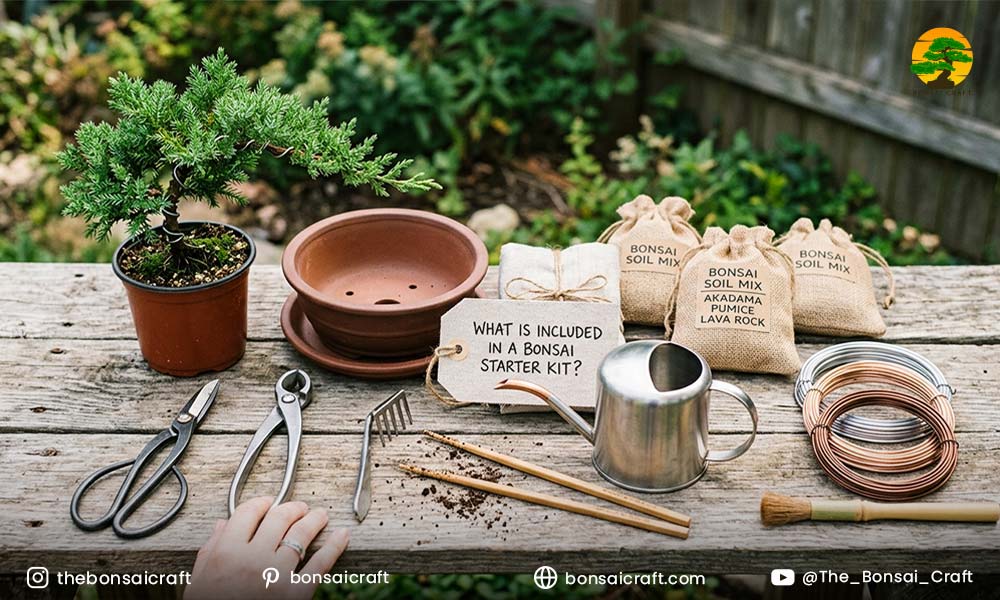
A complete bonsai starter kit includes seeds or a live tree, a container, bonsai soil, training wire, pruning shears, plant markers, and an instruction guide. Here is what each component does and what to look for.
Seeds or a live tree are the kit’s centerpiece. Seed kits offer three to eight varieties – typically Jacaranda, Norway Spruce, Rocky Mountain Pine, Flame Tree, or Crape Myrtle – stored in protective vials. Live-tree kits include a pre-grown specimen (Juniper, Ficus, Chinese Elm, or Jade) already potted and ready for shaping.
The container matters more than beginners expect. Budget kits use plastic pots; better kits include glazed ceramic pots that regulate moisture more effectively. Some kits include biodegradable jute bags that allow pot-to-pot transfer without disturbing roots.
Bonsai soil in most kits comes as a compressed expanding disc, adequate for early growth. As the tree matures, upgrading to a specialist granular mix with proper drainage and aeration will produce better results. Two popular components used by experienced growers are Akadama soil and pumice, both of which significantly improve root health and water management compared to basic starter kit soil.
Training wire – usually aluminum alloy – wraps around branches to guide growth direction. Quality kits include multiple coil thicknesses. Check wire every two to three weeks to prevent it cutting into bark.
Pruning shears are the first tool you will use. Look for high-carbon steel blades, which hold a sharp edge far longer than aluminum alternatives. The best bonsai tools starter kit sets expand to 12 to 24 pieces, adding a concave cutter, leaf trimmers, root rake, wire cutters, and gloves – giving you a professional-grade toolkit from day one. Once your tree is established, our step-by-step guide to trimming a bonsai tree will walk you through exactly how to use these tools correctly.
Bonsai seed starter kits deserve a special note on seed storage. Quality kits keep seeds in sealed protective vials or packets that preserve freshness and germination rates. Always check that the kit includes multiple seeds per variety, not just one or two, as not every seed is guaranteed to sprout.
Best Bonsai Starter Kit Comparison Table
| Kit | Type | Key Species | Best For | Price |
|---|---|---|---|---|
| Planters’ Choice Deluxe | Seed | Pine, Spruce, Jacaranda, Flame Tree | All-round beginners | $25–$40 |
| AVERGO 5-Variety Kit | Seed | Crape Myrtle, Blue Jacaranda, Flame Tree | Indoor variety seekers | $20–$35 |
| Nature’s Blossom Kit | Seed | Jacaranda, Rocky Mountain Juniper, Black Spruce | Gift givers | $25–$40 |
| Garden Republic Kit | Seed | 4 non-GMO varieties | Compact/budget gift | $20–$30 |
| Planters’ Choice Deluxe 5-Pack | Seed | Black Locust, Jacaranda, Crape Myrtle, Delonix Regia | Multi-species learners | $20–$35 |
| Eastern Leaf Rock Juniper Kit | Live tree | Rock Juniper | Outdoor, immediate results | $40–$70 |
| Eastern Leaf Trained Juniper Kit | Live tree | Trained Juniper Procumbens Nana | Outdoor, pre-styled beginners | $50–$80 |
| Bonsai Outlet Ginseng Ficus Kit | Live tree | Ginseng Ficus | Indoor beginners | $40–$70 |
| Bonsai Outlet Chinese Elm Kit | Live tree | Chinese Elm | Indoor/outdoor dual use | $45–$75 |
| Bonsai Outlet Starter Kits | Live tree | Multiple species | Gift quality, all beginners | $30–$80 |
Seed Kit vs. Live-Tree Kit: Which Should You Choose?
Seed kits suit beginners who enjoy the full growing experience; live-tree kits are better for anyone who wants immediate, shapeable results. There is no biological “bonsai seed” – kits use standard tree seeds that would grow full-sized if planted in the ground. Bonsai is entirely a training art, not a genetic trait.
The key limitation of seed kits is germination uncertainty. Choose kits with multiple seeds per variety and backup packets. Growing from seed to a recognizable bonsai shape typically takes three to five years. Live-tree kits cost more but deliver an established tree you can style the same day it arrives.
For uncertain beginners, a seed kit in the $25 to $40 range is a low-risk entry point. For committed beginners who want satisfying early results, a live-tree kit is worth the investment.
Best Bonsai Species for Beginners
The best beginner bonsai species are Ficus, Jade, Chinese Elm, and Juniper, chosen for resilience and tolerance of beginner mistakes. If you are shopping for a bonsai tree starter kit indoor, species selection is the single most important decision you will make – the wrong tree in a home environment will decline no matter how carefully it is tended. Temperate species like Juniper, Pine, and Maple require outdoor conditions and winter dormancy – keeping them permanently indoors causes irreversible decline.
Ficus is the top indoor choice worldwide, tolerating lower humidity and recovering from occasional missed watering. The Ginseng Ficus variety is especially forgiving. Jade is the easiest indoor bonsai for beginners worried about overwatering – as a succulent, it stores water in its leaves (note: toxic to cats and dogs). Chinese Elm works well both indoors and outdoors, recovering quickly from pruning errors. Juniper is the most iconic outdoor species, satisfying to style but strictly requires outdoor sun and seasonal temperature change.
Japanese Bonsai Starter Kit: What Makes It Different?
A genuine Japanese bonsai starter kit emphasizes tool quality, species authenticity, and methods rooted in Japanese Zen tradition. According to EBSCO Research Starters, the word bonsai comes from “bon” (dish or container) and “sai” (planted tree). The art originated in ancient China around 700 AD and was later refined in Japan under Zen Buddhist influence. Go! Go! Nihon notes the oldest National Treasure bonsai in the Tokyo Imperial Palace collection is over 500 years old.
Authentic Japanese species such as five-needle pine and Japanese Maple are prized for their seasonal character and classical silhouette. Genuine Japanese tools are forged from Yasugi steel, a high-carbon material from Shimane Prefecture, and differ significantly from mass-produced alternatives. Our review of the best Japanese bonsai tools explains which brands represent real Japanese craftsmanship and how to evaluate quality before buying.
Bonsai Starter Kit Instructions: How to Use Your Kit
Read the instruction manual in full before touching any components – different species have very different requirements. For seed kits: soak the soil disc until it expands, fill the pot to three-quarters, plant two to three seeds at 1 to 2 centimeters depth, label each pot, and water with a fine mist spray. Place in a warm spot (65°F to 75°F) with indirect light. Once seedlings appear, shift gradually toward brighter light. The most critical habit to build: water by feel, not by schedule. Press a finger 1 to 2 centimeters into the soil – water only when it feels dry. Overwatering is the leading cause of bonsai failure.
For live-tree kits: let the tree acclimate for one to two weeks before pruning or wiring. Apply training wire at a 45-degree angle, bend gently, and check every few weeks to prevent bark damage. When you are ready to make your first cuts, our complete guide to trimming a bonsai tree covers every technique you need, from maintenance pruning to structural shaping.
Where to Buy a Bonsai Starter Kit
The best places to buy a bonsai starter kit are specialist bonsai retailers and trusted online platforms. Eastern Leaf offers several proven live-tree options for beginners, including the Rock Juniper Starter Kit (4–5 year old tree, thinning shear, humidity tray, training wire, fertilizer, and pocket guide) and the Trained Juniper Bonsai Starter Kit for those who want a pre-styled tree ready to shape from day one. Both come with a 30-day plant replacement guarantee.
Bonsai Outlet (operating since 1987, with over 250,000 trees shipped) assembles kits at their own nurseries in Florida and Massachusetts. Their Ginseng Ficus Bonsai Kit is one of the best all-in-one indoor starter sets available, pairing a live tree with specialist Tinyroots bonsai soil, a glazed ceramic pot, wire, and a care guide. Their Chinese Elm kit suits beginners who want a tree that works both indoors and outdoors. Browse their full bonsai starter kits range for additional species options.
For seed kits on Amazon, the Planters’ Choice Bonsai Starter Kit remains one of the most popular beginner choices, including 4 seed varieties, burlap pots, a soil disc, a bonsai clipper, and a comprehensive instruction booklet. The AVERGO 5-Variety Kit includes free extra seed packets, a reassuring addition for beginners concerned about germination. Nature’s Blossom and Garden Republic round out the best seed kit options at accessible prices.
When evaluating any kit: look for drainage holes in the pot, multiple seeds per variety, a detailed instruction guide, and a satisfaction guarantee.
Frequently Asked Questions
What is included in a bonsai starter kit?
A complete kit includes seeds or a young tree, a pot, bonsai soil, training wire, pruning shears, plant markers, and a care guide. Premium kits also add humidity trays, fertilizer pellets, a concave cutter, and a root rake, giving you everything needed without additional purchases.
What is the best bonsai starter kit for beginners?
The best choice for most beginners is a live-tree kit from Eastern Leaf or Bonsai Outlet, which includes a pre-grown tree, tools, a humidity tray, and a care guide. For a budget seed option, the Planters’ Choice Deluxe Kit offers reliable germination and a solid instruction manual at $25 to $40.
Can you grow bonsai indoors with a starter kit?
Yes, but only with indoor-suitable species like Ficus, Jade, or Chinese Elm. These tropical varieties tolerate lower light and stable room temperatures. Temperate species such as Juniper and Pine require outdoor conditions and seasonal dormancy – placing them permanently indoors causes long-term decline regardless of care quality.
How long does it take to grow a bonsai tree from a seed kit?
Growing from a seed kit takes three to five years before the tree shows recognizable bonsai characteristics. Germination alone ranges from two weeks to several months depending on species. Beginners who want faster results should choose a live-tree kit with a pre-grown specimen ready to shape on arrival.
Where is the best place to buy a bonsai starter kit?
Specialist retailers – Eastern Leaf, Bonsai Outlet, and Bonsai Boy of New York – are the best sources for live-tree kits. For seed kits, Amazon offers the widest selection from brands like Planters’ Choice and AVERGO. Target carries beginner-friendly Garden Republic kits in physical stores for convenient same-day pickup.
Closing Thoughts
A seed-based bonsai tree starter kit like Planters’ Choice, AVERGO, or Garden Republic suits beginners who want to understand every phase of a tree’s life, from germination to first styling. A live-tree kit from Bonsai Outlet or Eastern Leaf suits those who want to begin shaping and caring for a tree immediately. Match your kit to your space, your light, your climate, and your patience. The tree you tend carefully from the beginning is the one that eventually becomes something remarkable.