
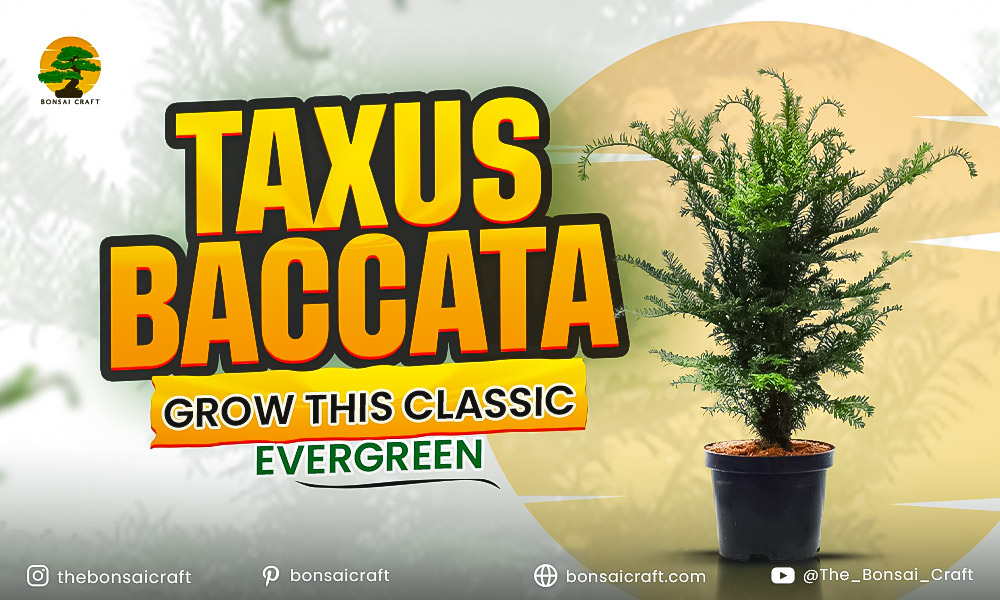
Taxus baccata is a slow-growing evergreen conifer known for its longevity, dense foliage, and exceptional tolerance to pruning. Often called the European yew or English yew, this species has been cultivated for centuries in formal gardens, historic churchyards, hedgerows, and estate landscapes across Europe and beyond. Its ability to thrive in shade, regenerate from old wood, and maintain a refined structure over decades makes it one of the most enduring and versatile evergreen trees available to gardeners.
Unlike most conifers, Taxus baccata does not produce cones; instead, female plants form a single seed enclosed in a bright red aril, a feature that makes the tree easily recognizable. The plant’s slow growth rate allows for precise shaping, which is why it has long been favored for hedges, topiary, and increasingly, bonsai cultivation. However, its well-documented toxicity means that proper placement and awareness are essential when growing it in residential spaces.
When planted in suitable conditions with well-drained soil and thoughtful maintenance, Taxus baccata can live for hundreds of years, offering unmatched structural beauty, year-round greenery, and long-term landscape value.
For readers new to bonsai and evergreen tree cultivation, this complete bonsai care guide explains core principles such as watering balance, pruning timing, and long-term maintenance.
What Is Taxus Baccata? (European Yew Explained)
Taxus baccata is an evergreen conifer native to Europe, western Asia, and parts of North Africa. Unlike most conifers, it does not produce woody cones; instead, the female plant forms a single seed surrounded by a fleshy red aril. Botanically, it belongs to the Taxaceae family and is considered one of the oldest and longest-living tree species in Europe, with some specimens estimated to be over a thousand years old.
Taxus baccata is dioecious, meaning male and female reproductive structures grow on separate plants. This characteristic is important for gardeners, as only female trees produce the red arils often mistaken for berries.
To better understand how European yew fits into the broader bonsai tradition, this history of bonsai trees provides cultural and historical context behind long-lived species.
Taxus Baccata Tree Characteristics and Growth Habit
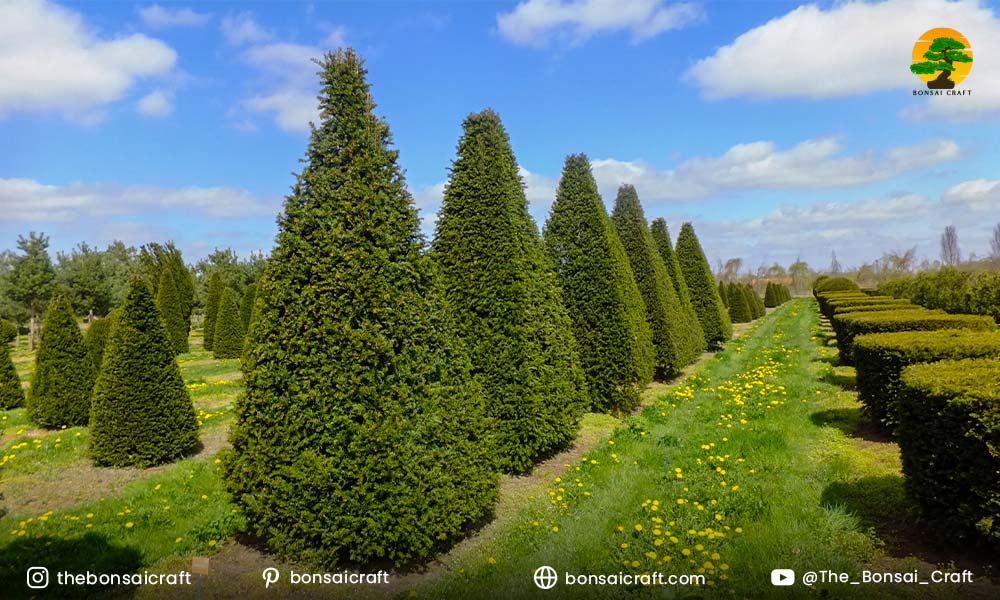
Taxus baccata typically grows as a medium-sized tree or large shrub with a dense, rounded crown. In open landscapes, mature specimens commonly reach 9–18 meters (30–60 feet) in height, while hedged or pruned plants remain significantly smaller. Growth is slow, especially in the early years, but the plant compensates with remarkable durability and longevity.
The needles are flat, dark green, and arranged in two rows along the shoots, while the bark is thin and scaly. One of the most notable traits of yew is its ability to produce new shoots from old wood, which is uncommon among conifers and explains its long-standing use in topiary and hedging.
How Fast Does Taxus Baccata Grow?
Taxus baccata grows slowly, averaging approximately 15–30 cm (6–12 inches) per year under garden conditions. Growth rate depends heavily on soil drainage, climate, and light exposure. In shaded locations, growth slows further but foliage density often improves. Because of its slow pace, yew is not ideal for those seeking rapid screening, but it excels where permanence and refined structure are priorities.
Popular Varieties of Taxus Baccata
Taxus Baccata ‘Fastigiata’ (Irish Yew)
Taxus baccata ‘Fastigiata’ is a narrow, upright cultivar known for its columnar form. Often called the Irish yew, this variety grows vertically with dense, upward-pointing branches, making it ideal for tight spaces, architectural planting, and formal garden designs. Despite its vertical habit, it retains the same slow growth rate and pruning tolerance as the species.
Taxus Baccata ‘Repandens’ (Spreading Yew)
Taxus baccata ‘Repandens’ is a low-growing, spreading cultivar used primarily as ground cover. This form rarely exceeds 0.5 meters (1.5 feet) in height but spreads several meters wide over time. Its arching branches and dark foliage make it suitable for slopes, shaded banks, and woodland-style gardens where traditional shrubs struggle.
Taxus Baccata USDA Hardiness Zone and Climate Requirements
Taxus baccata grows reliably in USDA Hardiness Zones 5 through 7. It tolerates cold winters well and prefers temperate climates with moderate summers. While it can handle full sun, yew performs best in partial shade, particularly in warmer regions, where shade reduces heat stress and needle scorch.
The species is sensitive to poorly drained or waterlogged soils. Root rot caused by excess moisture is one of the most common causes of decline, making soil drainage more important than soil fertility.
How to Plant Taxus Baccata Successfully
Taxus baccata should be planted in well-drained soil at the same depth it grew in the nursery container. When planting, loosen the surrounding soil deeply and avoid compacting it around the root ball. For hedges, plants are commonly spaced 45–60 cm (18–24 inches) apart to allow dense growth over time.
Newly planted yews require consistent moisture during establishment, but overwatering should be avoided. Once established, they become relatively drought-tolerant compared to many evergreen species.
Taxus Baccata Care Guide (Watering, Feeding, Maintenance)
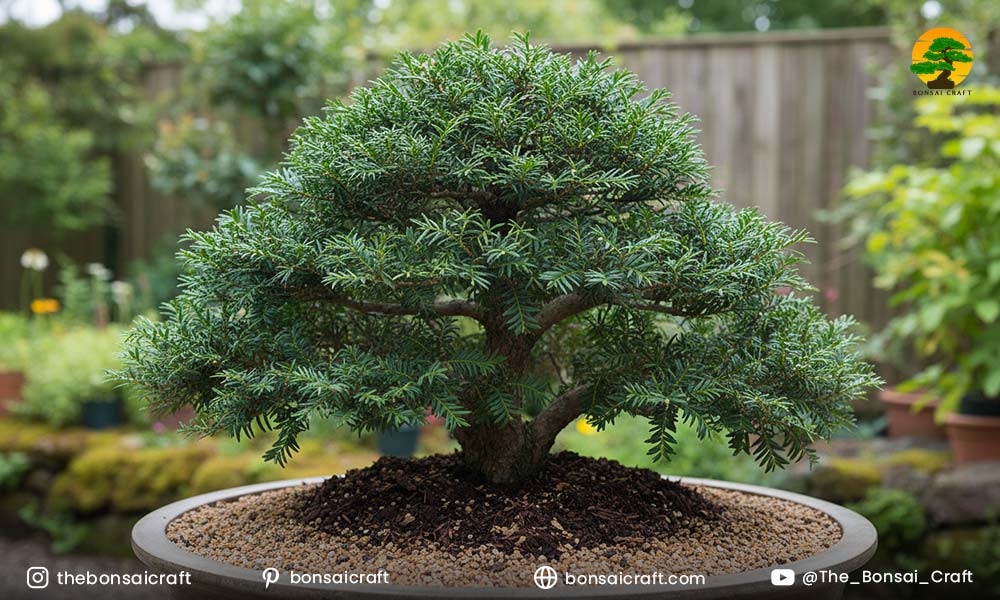
Established Taxus baccata plants require minimal maintenance beyond occasional watering and pruning. Watering should be moderate, allowing the soil surface to dry slightly between irrigations. Mulching helps retain moisture while keeping roots cool.
Fertilization is rarely necessary in fertile soils, but a balanced, slow-release fertilizer in spring can support steady growth. Regular inspection for pests such as vine weevils and scale insects helps prevent long-term damage.
Water management is especially critical for slow-growing evergreens, and this ultimate guide to watering bonsai trees explains how moisture balance protects roots from rot.
When to Prune Taxus Baccata for Best Results
Taxus baccata is best pruned in late spring or late summer when active growth has slowed. One of the defining strengths of yew is its tolerance for heavy pruning, even into old wood. This makes it ideal for formal hedges, topiary, and size control.
While it can withstand aggressive shaping, repeated severe pruning should be spaced out over the years to maintain plant vigor and avoid stress.
Using Taxus Baccata as a Hedge or Landscape Feature
Taxus baccata is one of the finest evergreen species for formal hedging and structured landscapes. Its dense foliage, slow growth, and ability to resprout from old wood allow for crisp, long-lasting hedge forms. Historically, yew hedges have been used in European gardens for centuries due to their reliability and visual elegance.
In landscape settings, yews also function as specimen trees, foundation plantings, and shaded garden anchors.
Taxus Baccata Seeds: What You Need to Know
Taxus baccata seeds are enclosed in a red aril and require lengthy stratification to germinate. Propagation from seed is slow and unpredictable, often taking more than a year for successful germination. For this reason, most cultivated yews are propagated from cuttings to ensure uniform growth and known characteristics.
Birds commonly disperse yew seeds after consuming the aril, but natural germination rates remain low.
Is Taxus Baccata Poisonous? Safety and Toxicity Explained
All parts of Taxus baccata are highly toxic except the red aril surrounding the seed. The plant contains taxine alkaloids, which interfere with cardiac function if ingested. Leaves, bark, and seeds are particularly dangerous, and even small amounts can cause severe symptoms or death in humans and animals.
Due to this toxicity, yews should be planted cautiously in areas accessible to children or grazing animals, and ingestion requires immediate medical attention.
How to Pronounce Taxus Baccata
Taxus baccata is pronounced “TAX-us bak-AH-tuh.”
The name originates from Latin, with “Taxus” referring to yew and “baccata” meaning “bearing berries,” a reference to the red arils.
Taxus Baccata as Bonsai
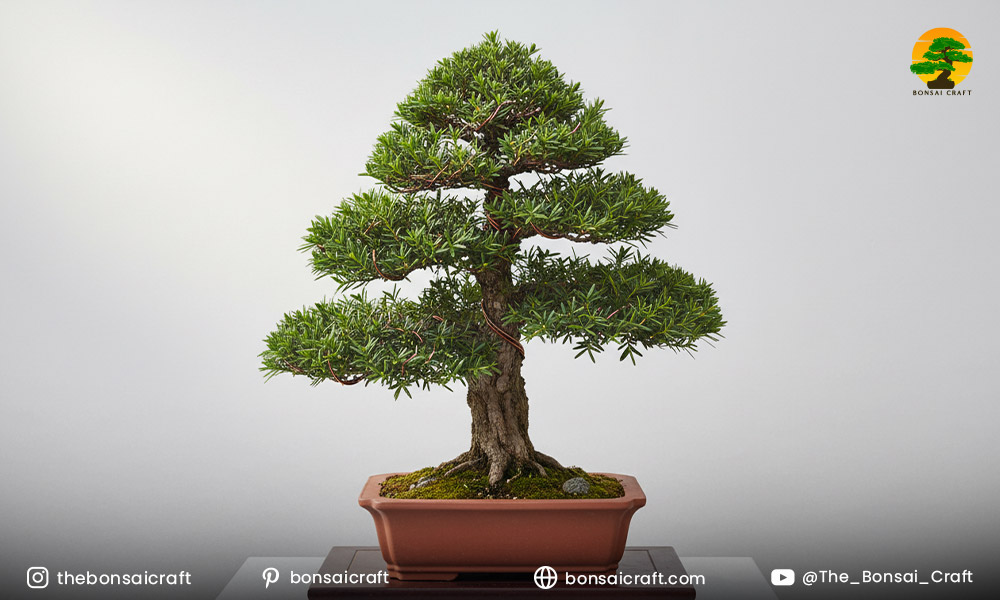
Taxus baccata is a respected bonsai species due to its fine needles and strong back-budding ability. European yew responds exceptionally well to pruning and wiring, allowing for refined branch structure and classic bonsai forms. It prefers bright light with protection from intense heat and requires excellent drainage to avoid root issues.
Because of its slow growth, yew bonsai development is gradual, but mature specimens display exceptional character and longevity.
Common Problems When Growing Taxus Baccata
The most common issues with Taxus baccata involve poor drainage, pests, and nutrient stress. Root rot caused by waterlogged soil is the leading cause of decline. Scale insects and vine weevils may weaken plants if left untreated. Yellowing needles often indicate root stress or compacted soil rather than nutrient deficiency.
Preventative care and correct site selection resolve most problems before they become severe.
Final Thoughts: Is Taxus Baccata Right for Your Garden?
Taxus baccata is ideal for gardeners seeking a long-lived, structurally adaptable evergreen. Its unmatched pruning tolerance, shade adaptability, and historical reliability make it suitable for hedges, specimen trees, and bonsai alike. However, its toxicity and slow growth require thoughtful placement and patience.
When planted correctly and maintained responsibly, European yew remains one of the most enduring evergreens available to temperate gardens.
Frequently Asked Questions About Taxus Baccata
Is Taxus baccata easy to grow for beginners?
Taxus baccata is relatively easy to grow once established but requires correct site selection and good drainage. It tolerates shade, pruning, and a wide range of soils, but beginners must avoid waterlogged conditions, which are the most common cause of failure. With proper planting and moderate care, it becomes a very low-maintenance evergreen.
Can Taxus baccata grow in full shade?
Taxus baccata grows well in partial to full shade, making it one of the most shade-tolerant evergreen trees. While it can grow in full sun, shaded locations often result in denser, darker foliage, especially in warmer climates. This adaptability makes it ideal for north-facing gardens and woodland-style landscapes.
How long does Taxus baccata live?
Taxus baccata is one of the longest-living tree species in Europe, with some specimens surviving for over a thousand years. Its slow growth, durable wood, and ability to regenerate contribute to its exceptional lifespan, which is why historic yews are commonly found in churchyards and ancient estates.
Is Taxus baccata safe to grow around children and pets?
Taxus baccata is highly toxic if ingested and should be planted cautiously in areas accessible to children or animals. All parts of the plant except the red aril are poisonous, including the seeds, leaves, and bark. Awareness and proper placement significantly reduce risk in residential gardens.
Can Taxus baccata be grown as a bonsai tree?
Taxus baccata is well-suited for bonsai due to its fine needles, strong back-budding, and tolerance of heavy pruning. Although it grows slowly, it responds well to shaping and wiring, allowing growers to create refined bonsai forms with long-term structure and character.