
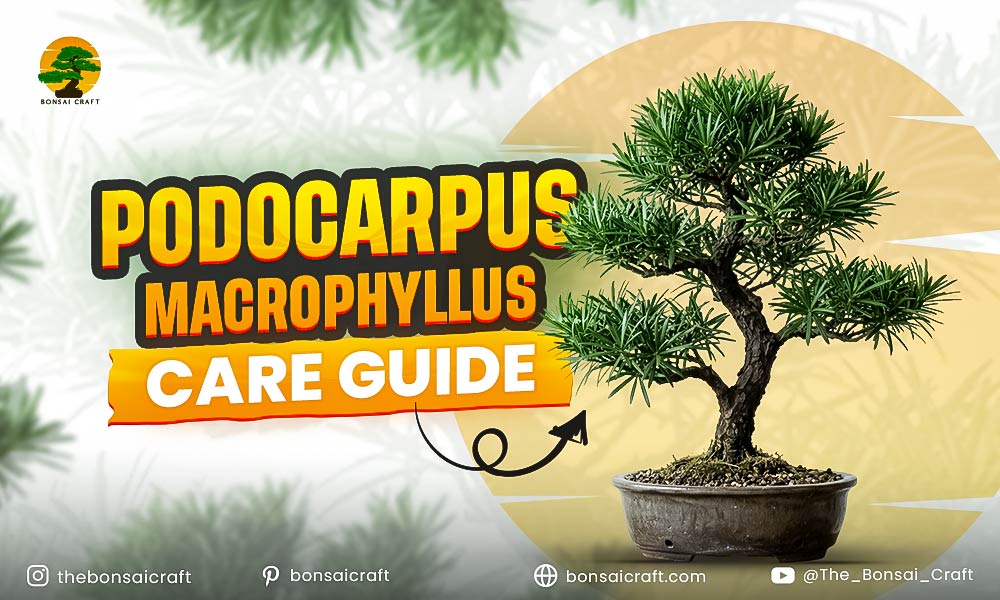
Podocarpus macrophyllus care is straightforward once you understand three essentials: sharp drainage, moderate watering, and regular pruning. Commonly known as Japanese yew or Buddhist pine, this elegant evergreen is valued for its dense foliage, refined shape, and ability to adapt to hedges, ornamental planting, containers, and bonsai.
Whether you want to grow a formal garden specimen, a privacy screen, or a compact bonsai, Podocarpus macrophyllus is a reliable choice. It tolerates heat, humidity, shaping, and life in pots better than many ornamental evergreens, which is why it remains popular across tropical and subtropical landscapes.
This guide explains how to grow, prune, water, propagate, and troubleshoot podocarpus successfully, with practical advice for gardens, containers, and indoor settings.
What is Podocarpus macrophyllus?
Podocarpus macrophyllus is an evergreen conifer grown as a hedge, small tree, specimen plant, or bonsai. Although it is often called Japanese yew, it is not a true yew. It belongs to the Podocarpaceae family and is recognized by its narrow, leathery, dark green leaves and naturally upright growth habit.
In the ground, it can develop into a dense shrub or a tree reaching roughly 5 to 15 meters, depending on climate and pruning. In containers, it stays much smaller and responds well to shaping. Its neat foliage and high pruning tolerance make it especially useful in structured gardens and formal landscape design.
What are the best growing conditions for Podocarpus macrophyllus?
The best conditions for podocarpus macrophyllus care are warm temperatures, well-drained soil, and full sun to partial shade.
This species grows best in:
-
Soil: well-drained, slightly acidic to neutral soil (similar to a bonsai plant soil mix).
-
Light: full sun to partial shade.
-
Climate: warm, humid, frost-free to mildly cool conditions.
-
Airflow: good ventilation, especially for container and indoor plants.
The biggest mistake growers make is planting podocarpus in soil that stays wet for too long. While the plant appreciates regular moisture when young, it does not tolerate soggy roots. Heavy clay soil should be improved with organic matter and drainage material before planting. In very hot climates, afternoon shade can reduce stress, especially for young or newly transplanted plants.
How often should you water Podocarpus macrophyllus?
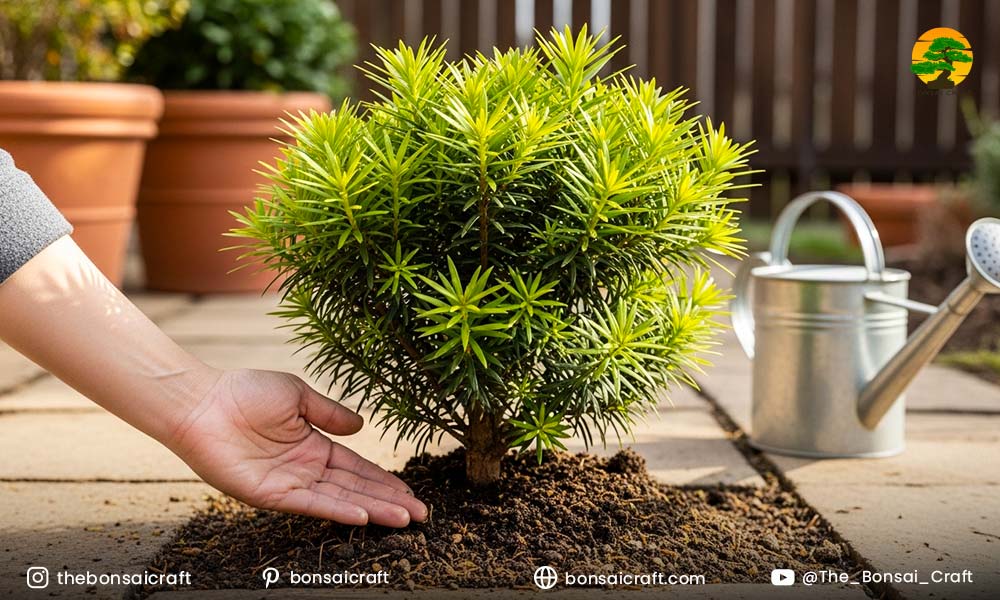
Water Podocarpus macrophyllus when the top layer of soil feels dry. The goal is even moisture without keeping the root zone constantly wet. This is a critical part of bonsai care.
Newly planted podocarpus needs more consistent watering while roots establish. Once mature, it becomes moderately drought tolerant and usually performs better slightly on the dry side than in waterlogged soil.
A simple watering rule:
-
Young plants: water regularly to keep soil lightly moist.
-
Established garden plants: water deeply, then allow the surface to dry slightly.
-
Container plants: check more often, because pots dry faster (refer to our watering guide for more details).
-
Indoor plants: water carefully, since indoor soil stays moist longer.
Yellowing leaves, weak growth, and root problems are often linked to overwatering rather than lack of water.
What is the Podocarpus macrophyllus growth rate?
The podocarpus macrophyllus growth rate is generally slow to moderate. It does not grow aggressively, which is one reason it is so useful for hedges, topiary, and miniature bonsai.
Growth speed depends on light exposure, soil quality, watering consistency, feeding, pruning style, and climate. In warm outdoor conditions with good care, it will fill out more quickly than it does indoors or in cooler regions. Still, it remains a controlled grower compared with many fast-growing hedge plants.
How fast does Podocarpus macrophyllus grow in real garden conditions?
If you are wondering how fast does podocarpus macrophyllus grow, the answer is: steadily, but not rapidly. It adds height and density over time rather than producing sudden, unruly growth.
That makes it ideal for:
-
Formal hedges
-
Privacy screens
-
Foundation planting
-
Container specimens
For bonsai growers, the moderate growth rate is an advantage. It gives you better control over branch development and shape refinement.
How to prune Podocarpus macrophyllus correctly
Knowing how to prune podocarpus macrophyllus properly is key to keeping it dense, healthy, and attractive. This plant responds well to regular trimming, but hard cuts into old, bare wood should be avoided whenever possible.
Best pruning practices:
-
Do structural pruning in late winter or early spring.
-
Do light shaping during the active growing season.
-
Remove dead, damaged, or crossing branches.
-
Trim within green growth to encourage fuller branching.
For hedges, frequent light trimming works better than occasional severe cutting. For tree forms, selective pruning helps preserve a graceful natural outline. Bonsai growers should pinch back new growth regularly to maintain compact foliage pads.
How to grow Podocarpus macrophyllus bonsai
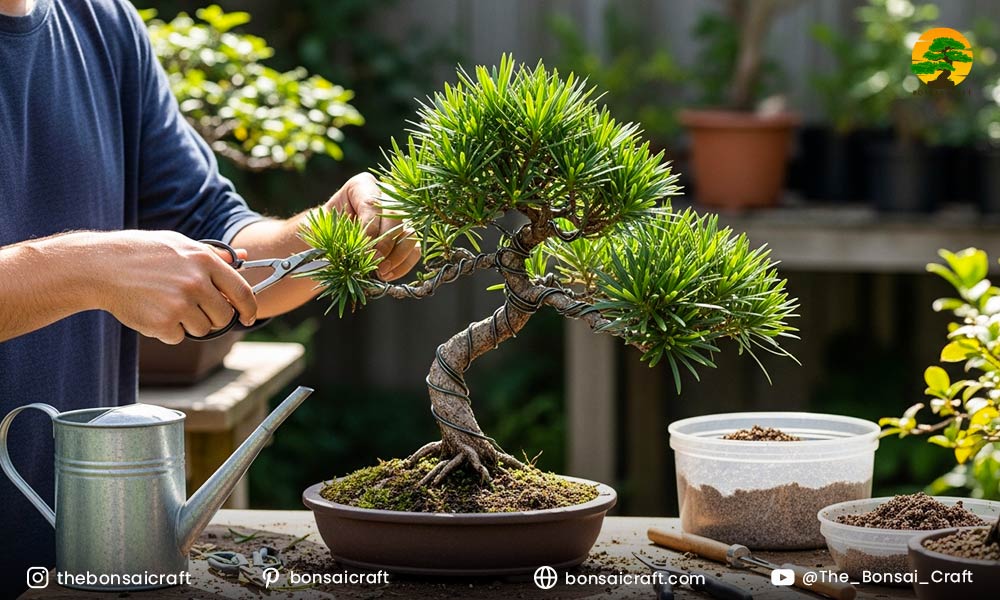
Podocarpus bonsai is popular because the species has fine-textured foliage, flexible young branches, and a calm, elegant appearance. It can be trained into upright, informal upright, slanting, or cascade-inspired forms.
For successful bonsai care:
-
Use a fast-draining bonsai mix.
-
Provide bright light.
-
Water when the soil begins to dry.
-
Prune new growth regularly.
-
Repot every 2 to 3 years, depending on root development.
One of the strengths of podocarpus bonsai is that it tolerates wiring well while maintaining a refined evergreen look year-round. Pinching soft new growth helps create denser branching and smaller foliage structure over time.
Can Podocarpus macrophyllus grow indoors?
Yes, podocarpus macrophyllus indoor growth is possible, but success depends mainly on light. Similar to many indoor bonsai trees, this is not a low-light houseplant. It performs best near a bright window where it receives strong indirect light or some gentle direct morning sun.
For indoor care:
-
Place it in the brightest area available.
-
Avoid dark corners.
-
Make sure the pot drains well (see our bonsai pot selection guide).
-
Keep air moving around the plant.
-
Water less often than outdoor container plants.
Poor indoor conditions usually lead to sparse growth, dull foliage, and weak stems. If you plan to keep podocarpus indoors long term, consistent brightness matters more than almost anything else.
How to propagate Podocarpus macrophyllus
If you want to know how to propagate podocarpus macrophyllus, the most reliable method is with semi-hardwood cuttings. This is faster and more dependable than growing from seeds.
Steps for propagation:
-
Take healthy semi-hardwood cuttings during active growth.
-
Remove lower leaves.
-
Insert the cuttings into a moist, well-draining rooting mix.
-
Keep humidity high while roots develop.
-
Place them in bright, indirect light.
Rooting can take several weeks to a few months depending on warmth, humidity, and the condition of the cutting. Patience is important, because podocarpus is not one of the fastest plants to root.
Can podocarpus macrophyllus be grown from seeds?
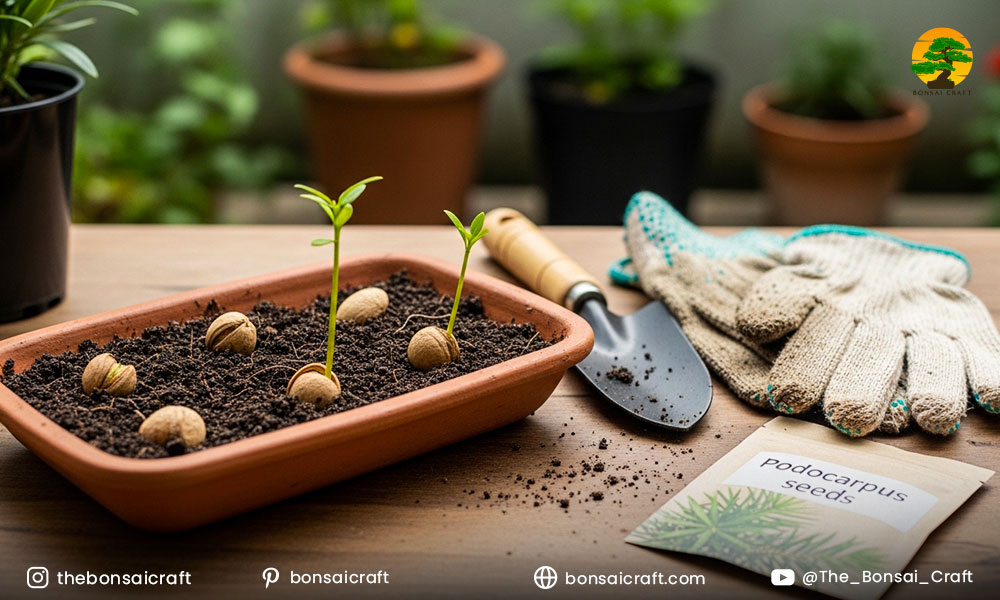
Yes, podocarpus macrophyllus seeds can be used, but seed propagation is much slower and less predictable than using cuttings.
Seeds are typically collected from female plants after fruiting. Germination may take time, and early growth is slow. For most home growers, cuttings are the easier option. Seeds are better suited to growers who want larger numbers of plants or who are interested in natural variation.
Does podocarpus macrophyllus produce flowers or fruit?
Many gardeners search for podocarpus macrophyllus flower and podocarpus macrophyllus fruit, but this plant is mainly grown for foliage rather than floral display.
Podocarpus does not produce showy flowers like many ornamental shrubs. Instead:
- male plants produce pollen cones
- female plants produce fleshy, berry-like fruit after pollination
The fruit can add ornamental interest and may attract birds. However, flowering and fruiting are not usually the main reasons people grow this species.
What fertilizer does podocarpus macrophyllus need?
A light, balanced fertilizer supports healthy foliage and steady growth. In garden beds, a slow-release fertilizer applied during the growing season is usually enough. In containers or bonsai pots, lighter but more regular feeding may be helpful because nutrients are used up faster.
Good feeding principles:
- fertilize during active growth
- avoid heavy feeding in cool or dormant periods
- never over-fertilize dry soil
- reduce feeding if the plant is stressed or recently repotted
Too much fertilizer can burn roots and encourage weak, overly soft growth.
How to use podocarpus macrophyllus in the garden
Podocarpus macrophyllus plant forms are highly versatile, which is why this species is so widely used in landscape design. It works well in both formal and tropical-style gardens.
Popular uses include:
- clipped boundary hedges
- privacy screens
- topiary and sculpted forms
- accent trees
- container features for patios and entrances
- bonsai displays
A podocarpus macrophyllus tree can also be trained as a narrow upright specimen, making it useful in smaller spaces where broad-canopied trees would be too large.
What are common podocarpus macrophyllus care problems?
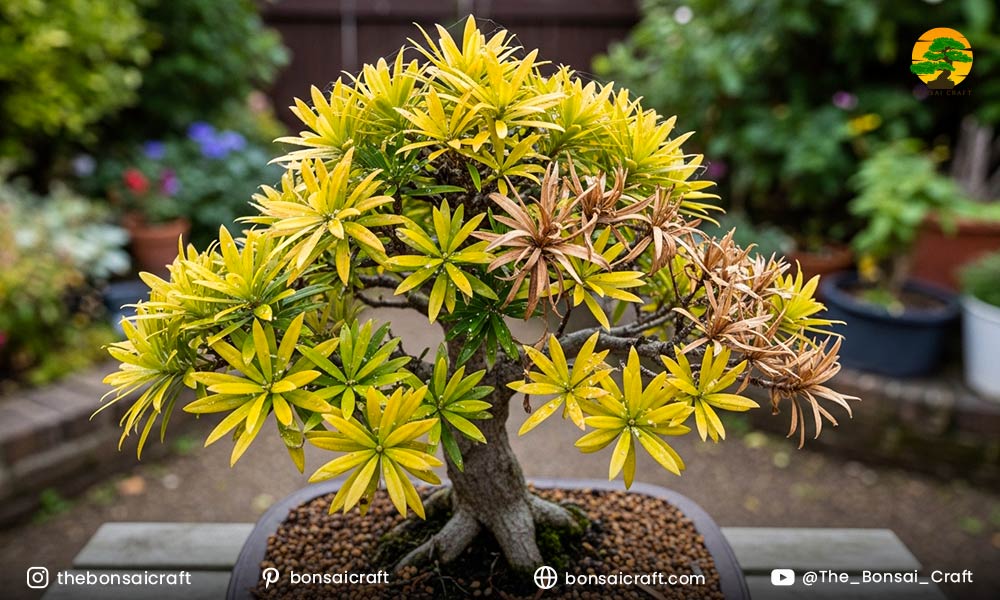
Most problems with podocarpus macrophyllus care come from unsuitable moisture, poor drainage, or weak light.
Common issues include:
- yellow leaves: often caused by excess water or poorly drained soil
- root rot: usually linked to constant wet conditions
- thin or sparse growth: often caused by inadequate light
- pest activity: occasional scale insects or aphids may appear, especially on stressed plants
The best prevention is simple: plant in free-draining soil, avoid overwatering, and provide enough light and airflow.
FAQs
How fast does podocarpus macrophyllus grow?
It grows at a slow to moderate pace. In warm outdoor conditions it develops steadily, but it is not a fast-growing hedge plant.
How to prune podocarpus macrophyllus for a hedge?
Trim lightly and regularly during the growing season to encourage dense growth. Avoid cutting deep into old, leafless wood.
Can podocarpus macrophyllus grow indoors long term?
Yes, but only with strong light, good drainage, and decent airflow. Poor light is the main reason indoor plants decline.
How to propagate podocarpus macrophyllus easily?
Semi-hardwood cuttings are the easiest and most reliable method. They root more consistently than seeds.
Does podocarpus macrophyllus produce fruit?
Yes, female plants can produce small, fleshy fruit after pollination. Male and female plants are both needed for fruit production.
Conclusion
Podocarpus macrophyllus care becomes much easier once you focus on the basics: well-drained soil, moderate watering, good light, and careful pruning. This adaptable evergreen can be grown as a hedge, specimen tree, container plant, or best bonsai for beginners, making it one of the most flexible ornamental evergreens for warm-climate gardens.
Whether you are shaping a formal hedge or training a podocarpus macrophyllus bonsai, steady care will reward you with dense foliage, elegant structure, and long-term garden value.