
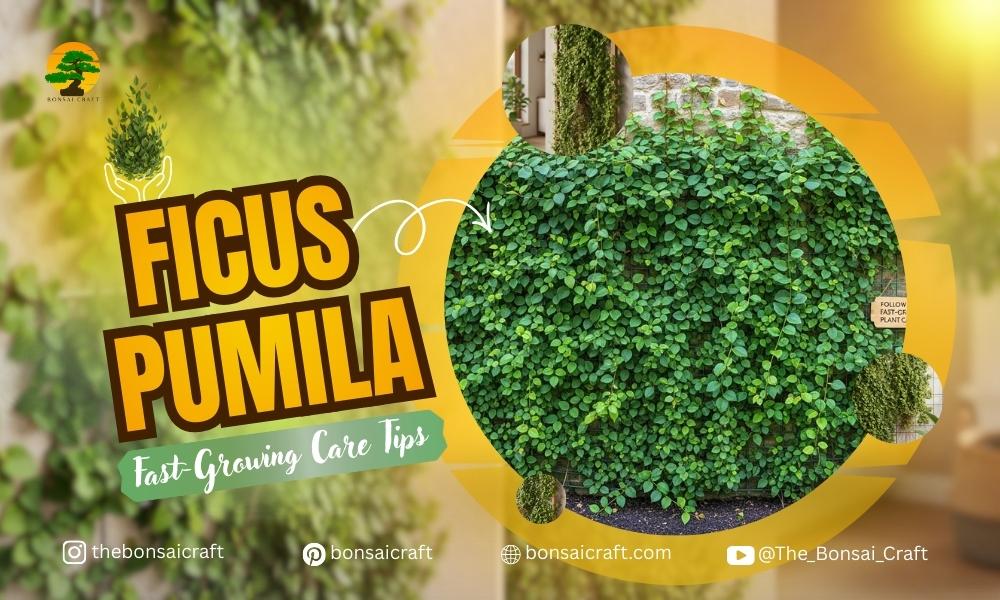
Ficus pumila is a fast-growing evergreen climbing fig valued for its adaptability, ornamental foliage, and ability to thrive both indoors and outdoors. Often referred to as creeping fig, this species is native to East Asia and has become a popular choice for walls, trellises, ground cover, and decorative indoor displays. Its vigorous growth, aerial root system, and tolerance for pruning make it both attractive and functional in a wide range of settings.
Unlike many ficus species grown primarily as trees, Ficus pumila behaves as a climber or trailer, attaching itself to surfaces using adhesive aerial roots. This growth habit allows it to cover vertical spaces efficiently, but it also requires informed management to prevent overgrowth. When grown indoors, its growth is slower and more controlled, making it suitable for containers, shelves, and hanging baskets.
Understanding proper ficus pumila care is essential, as its fast growth and environmental sensitivity can lead to leaf drop, poor attachment, or stress if conditions are not suitable. With the right balance of light, moisture, and pruning, this plant can remain healthy and visually appealing for many years.
What Is Ficus Pumila?
Ficus pumila is an evergreen climbing fig species native to East Asia and a member of the Moraceae family. It is closely related to other fig species but differs in growth habit, as it spreads laterally and vertically rather than forming a traditional tree structure. The plant produces two distinct leaf forms: small juvenile leaves that cling closely to surfaces and larger adult leaves that appear when the plant matures or grows without support.
Botanically, Ficus pumila produces flowers enclosed within a fig structure known as a syconium, though flowering and fruiting are rarely observed in indoor cultivation. Its adaptability has led to widespread ornamental use in both residential and commercial landscapes.
To understand how creeping fig fits into the wider bonsai and miniature tree tradition, this history of bonsai trees article provides cultural and botanical context.
Ficus Pumila Plant Characteristics and Growth Habit
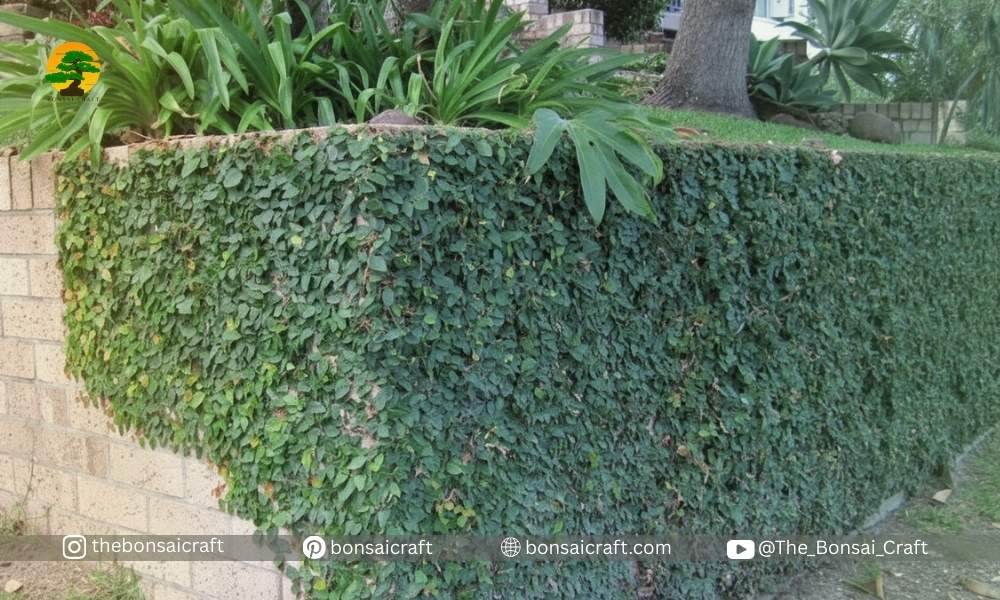
Ficus pumila grows as a vigorous climber or ground cover using aerial roots to attach to surfaces. The juvenile growth stage is characterized by small, heart-shaped leaves that lie flat against walls or supports, creating a dense green covering. As the plant matures or grows unsupported, the leaves become larger, thicker, and less compact.
This shift in leaf size is a natural part of the plant’s life cycle and does not indicate a health problem. Because of this trait, gardeners often prune mature growth to maintain the attractive juvenile foliage form, especially on walls and decorative structures.
How Fast Does Ficus Pumila Grow?
Ficus pumila grows rapidly and can extend several feet per year under warm, humid conditions. Growth rate depends heavily on temperature, humidity, light exposure, and moisture availability. Outdoors in warm climates, the plant can quickly cover fences, walls, and trellises, sometimes requiring regular trimming to keep it in check.
Indoors, growth is slower due to reduced light and lower humidity, but the plant still maintains a steady pace compared to many houseplants. This fast growth makes regular pruning an important part of ficus pumila care.
How Long Does Ficus Pumila Take to Grow Fully?
Ficus pumila establishes quickly and can provide visible coverage within a few months of planting. Full coverage of large surfaces typically takes one to three years, depending on growing conditions and available support. Once established, the plant becomes increasingly resilient and capable of sustained growth with minimal intervention.
Ficus Pumila Indoor Care Guide
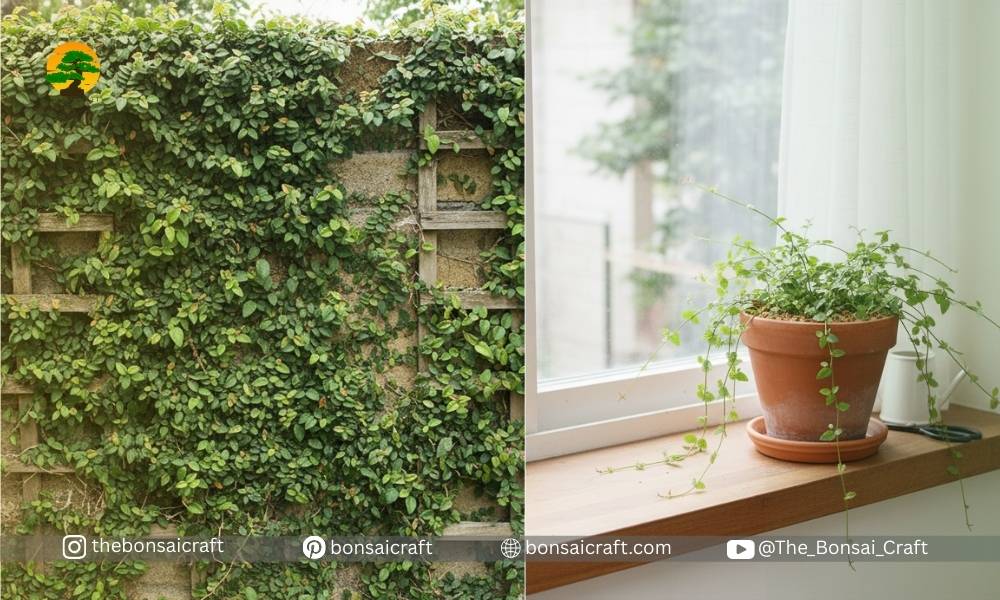
Ficus pumila can be grown indoors successfully with bright, indirect light and consistent moisture. When grown as a houseplant, it prefers locations near windows with filtered light, avoiding direct midday sun that can scorch the leaves. Low light slows growth but usually does not kill the plant.
Indoor ficus pumila benefits from evenly moist soil, though waterlogged conditions should be avoided. Dry air can cause leaf drop, so higher humidity or occasional misting improves plant health and appearance.
For growers keeping ficus pumila inside, this indoor bonsai trees guide explains lighting limitations, airflow, and humidity management for indoor plant success.
How to Care for Ficus Pumila Outdoors
Ficus pumila thrives outdoors in warm climates where frost is minimal. It performs best in partial shade, especially in regions with intense sun, and requires well-drained soil to prevent root problems. Outdoors, the plant can become aggressive if not pruned regularly, especially when climbing masonry or wood surfaces.
Gardeners should be cautious when planting near buildings, as aerial roots can adhere strongly and may damage paint or delicate surfaces over time.
To better compare indoor and outdoor growing conditions, this outdoor bonsai tree guide explains seasonal exposure, airflow, and sun tolerance.
Ficus Pumila Variegata Care
Ficus pumila ‘Variegata’ requires brighter light and slower growth expectations than the green form. This cultivar features cream-colored leaf margins and is prized for its decorative appearance. However, variegated leaves contain less chlorophyll, resulting in slower growth and greater sensitivity to low light conditions.
Consistent light and careful watering help maintain variegation and prevent reversion to solid green foliage.
Ficus Pumila Quercifolia Overview
Ficus pumila ‘Quercifolia’ is a compact cultivar known for its small, oak-shaped leaves. Often used in terrariums and small containers, this variety grows more slowly and stays finer in texture. Its miniature leaves make it particularly attractive for bonsai-style plantings and controlled indoor environments.
Ficus Repens vs Ficus Pumila
Ficus repens is a historical synonym and not a separate species from Ficus pumila. Modern botanical classification recognizes Ficus repens as an outdated name, and both terms refer to the same plant. Understanding this helps avoid confusion when researching care guides or purchasing plants.
How Do You Propagate Ficus Pumila?
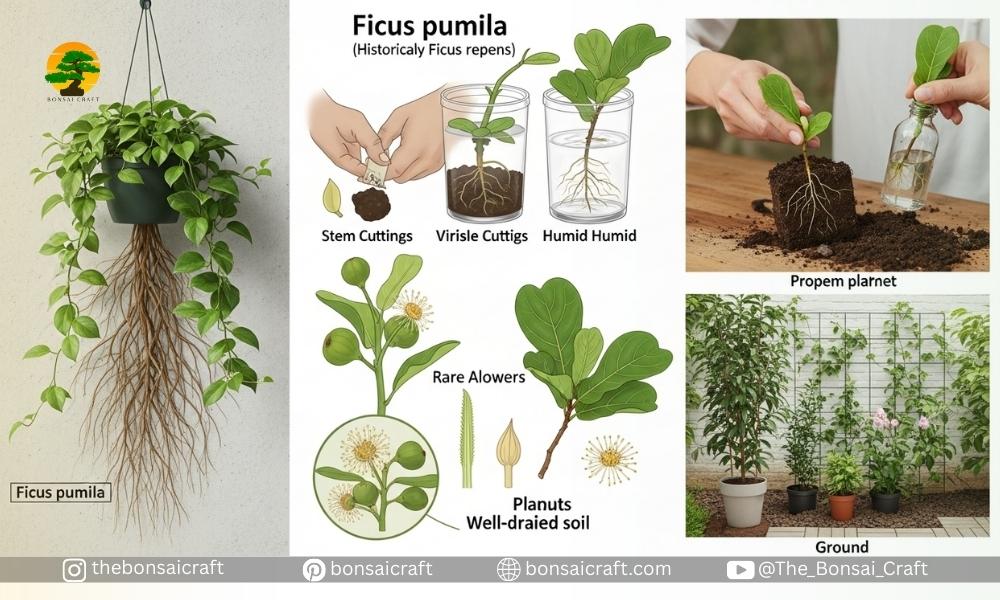
Ficus pumila is most easily propagated through stem cuttings. Cuttings taken from healthy stems root readily in moist soil or water under warm conditions. Propagation success is high when humidity is maintained and cuttings are kept out of direct sunlight during rooting.
This ease of propagation contributes to the plant’s popularity among gardeners and indoor plant enthusiasts.
How to Plant Ficus Pumila Properly
Ficus pumila should be planted in well-drained soil with access to vertical or horizontal support. Whether planting in the ground or a container, proper drainage is essential to prevent root rot. Providing a trellis, wall, or surface encourages controlled climbing and reduces unwanted spread.
Ficus Pumila Flower and Fruit Facts
Ficus pumila produces flowers and fruit only under specific natural conditions. The flowers are enclosed within a fig structure and typically require pollination by specialized fig wasps, which are absent in most non-native environments. As a result, flowering and fruiting are rare in indoor or ornamental settings.
Ficus Pumila Bonsai Use
Ficus pumila can be trained as a bonsai-style plant due to its small leaves and strong rooting ability. Although less common than other ficus species, it responds well to pruning and can be shaped creatively. Regular trimming is required to maintain scale and prevent excessive elongation.
Its fast root development makes proper drainage and root pruning especially important in bonsai containers.
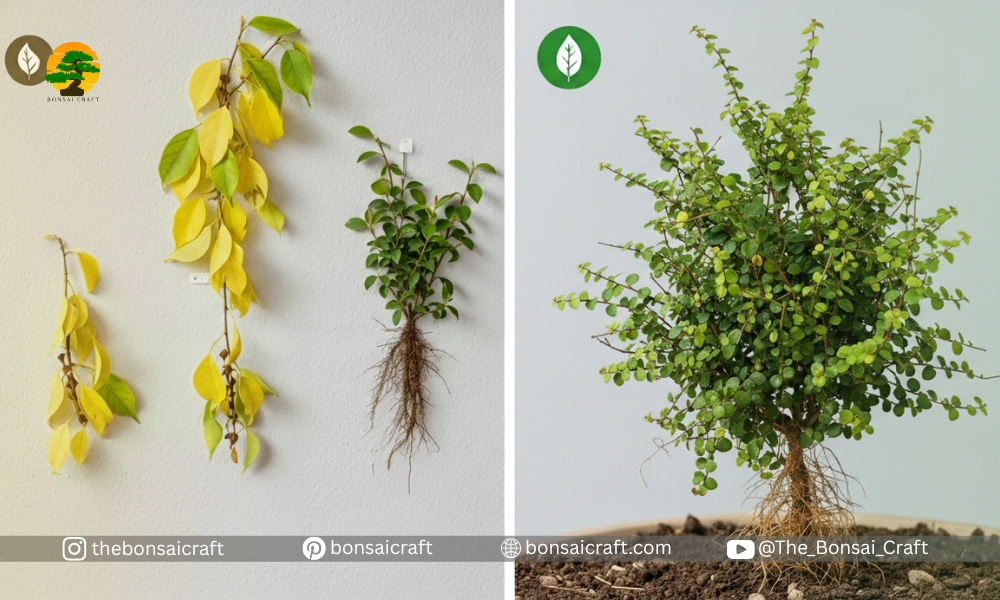
Because pruning and shaping are essential for ficus pumila bonsai, this detailed bonsai wiring guide explains safe branch training techniques for flexible species.
Common Problems With Ficus Pumila
Most ficus pumila problems are caused by improper watering, low humidity, or insufficient light. Leaf drop, slow growth, and poor attachment are common signs of stress. Root rot occurs when soil remains waterlogged, while dry air can cause foliage decline indoors.
Correcting environmental conditions typically resolves most issues without long-term damage.
Conclusion
Ficus pumila is an excellent choice for gardeners and indoor plant enthusiasts seeking fast growth and visual impact. Its versatility, ease of propagation, and adaptability make it suitable for walls, containers, bonsai projects, and indoor décor. However, its vigorous nature requires thoughtful care and regular pruning to keep it manageable.
When grown in the right conditions, Ficus pumila offers long-term ornamental value and remains one of the most flexible climbing plants available.
Frequently Asked Questions About Ficus Pumila
Is ficus pumila easy to care for?
Ficus pumila is easy to care for once its basic light, water, and humidity needs are met. It adapts well to indoor and outdoor environments, tolerates pruning, and recovers quickly from trimming. However, consistent moisture, proper drainage, and adequate light are essential to prevent leaf drop and slow growth.
Can ficus pumila grow indoors permanently?
Ficus pumila can grow indoors permanently when provided with bright, indirect light and stable humidity. While indoor growth is slower than outdoors, it remains healthy in containers if watering is consistent and the air is not overly dry. Regular pruning helps manage size and maintain attractive foliage indoors.
How fast does ficus pumila grow?
Ficus pumila grows very fast, often extending several feet per year under warm, humid conditions. Growth rate is highest outdoors in suitable climates and slows indoors due to reduced light and humidity. Consistent moisture and proper support significantly influence how quickly the plant spreads.
Is ficus pumila aggressive when grown outdoors?
Ficus pumila can become aggressive outdoors if left unmanaged. Its aerial roots allow it to cling tightly to walls, fences, and trees, enabling rapid spread. Without regular pruning, it may overgrow surfaces and become difficult to remove, especially in warm climates.
Is ficus pumila toxic to humans or pets?
Ficus pumila is not highly toxic, but its sap may cause mild skin irritation in sensitive individuals. Direct contact during pruning can sometimes trigger itching or redness. Wearing gloves and washing hands after handling helps minimize irritation, especially for people with sensitive skin.