
The cherry laurel (Prunus laurocerasus), often simply called the English laurel, is a cornerstone of professional landscape design across temperate climates. Known for its thick, leathery, and polished green leaves, this evergreen shrub provides an immediate sense of structural permanence. Whether you are searching for laurel in English gardening traditions or looking for a robust North American screen, the cherry laurel tree offers a unique combination of aesthetic beauty and functional privacy. Because it belongs to the Prunus genus, it is more closely related to plum and cherry trees than the culinary bay laurel, which is a critical distinction for both identification and garden safety.
Choosing the right laurel plants for your property involves understanding the subtle differences between various cultivars. For those with limited space, a dwarf English laurel might be the perfect fit, while those seeking a towering boundary might opt for the standard English laurel hedge. Throughout this guide, we will explore the nuances of the laurel tree, from the cold-hardy skip laurels to the heat-loving Carolina cherry laurel, ensuring you have the expert knowledge required to cultivate a thriving, glossy sanctuary.
If you’re comparing evergreen species for structure and longevity, you may also explore our detailed guide to Taxus baccata (English Yew).
What is the Cherry Laurel (Prunus laurocerasus)?
The cherry laurel (Prunus laurocerasus) is a large, evergreen shrub or small tree native to regions around the Black Sea and Southwest Asia. It is prized for its large, oblong leaves and its ability to thrive in a wide variety of soil types and lighting conditions, including deep shade. In late spring, the plant produces laurel flowers, which are upright spikes (racemes) of fragrant white blossoms that attract bees and butterflies, followed by small, cherry-like fruits that turn black when ripe.
While many people refer to it as laurel or simply laurels, it is vital to distinguish it from its cousins. The Carolina cherry laurel (Prunus caroliniana) is a North American native better suited for humid southern climates, while the English laurel is the go-to for cooler, maritime regions. Despite the name, laurel trees in this family are toxic if ingested by humans or pets, as the leaves and seeds contain cyanogenic glycosides, making them strictly ornamental additions to the landscape.
Gardeners interested in flowering ornamental trees may also appreciate our guide to Magnolia grandiflora care.
How Fast Does Prunus laurocerasus Grow?
The cherry laurel growth rate is remarkably fast, with healthy specimens typically adding 12 to 24 inches of height per year. This vigor is the primary reason why homeowners choose the laurel hedge when they need a privacy screen established in a short timeframe. If you are asking how fast Prunus laurocerasus grows, the answer depends largely on water and light; while it survives in shade, its most explosive growth occurs in full sun with consistent moisture.
Because of this rapid development, laurel trees can quickly reach heights of 15 to 20 feet if left unmanaged. This makes the cherry laurel tree an excellent windbreak, but it also means the gardener must be prepared for regular maintenance. For those who want the look of a laurel screen without the aggressive height, selecting a specific cultivar like the skip laurel can provide a more controlled growth habit while still maintaining the dense, evergreen foliage the species is known for.
For growers seeking structured evergreen forms in containers, see our guide to boxwood bonsai for comparison in controlled shaping.
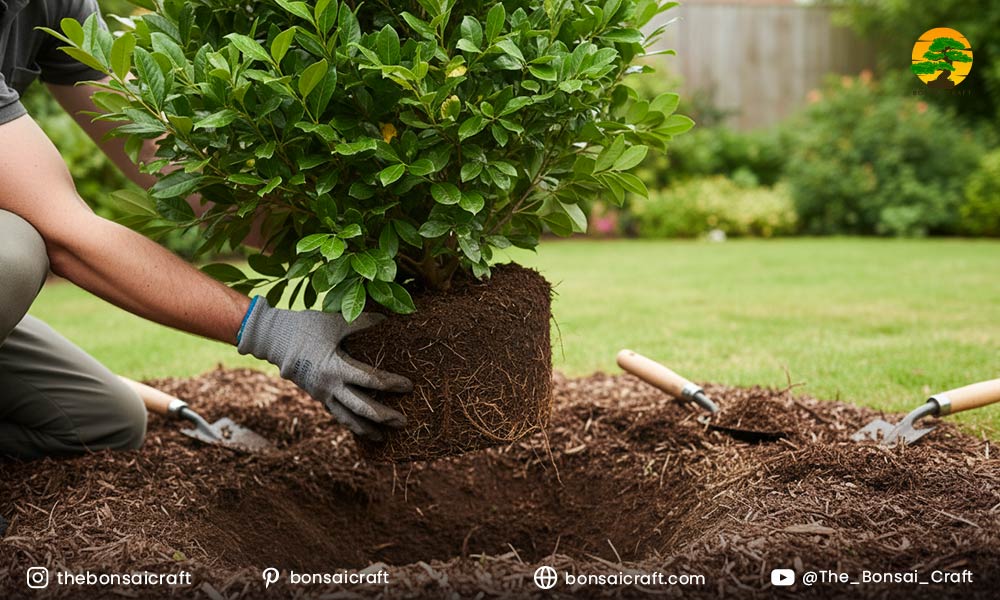
To plant Prunus laurocerasus successfully, you must provide a hole that is twice as wide as the root ball to allow for easy lateral root expansion. These laurel plants prefer well-draining soil enriched with organic compost, as they do not tolerate “wet feet” or standing water, which can lead to root rot. If you are installing an English laurel hedge, space the individual plants 2 to 3 feet apart to ensure they have enough room to breathe while still allowing the canopy to knit together into a solid wall.
Before placing your chip laurel or skip laurel into the ground, ensure the top of the root ball is level with the soil surface. Backfill the hole with a mixture of native soil and a high-quality soil conditioner, tamping down firmly to eliminate air pockets. Immediately after planting, a deep watering is essential to settle the soil around the roots of your new laurel tree, followed by a layer of mulch to help retain moisture and suppress weeds during the first year of establishment.
How to Prune Prunus laurocerasus Effectively
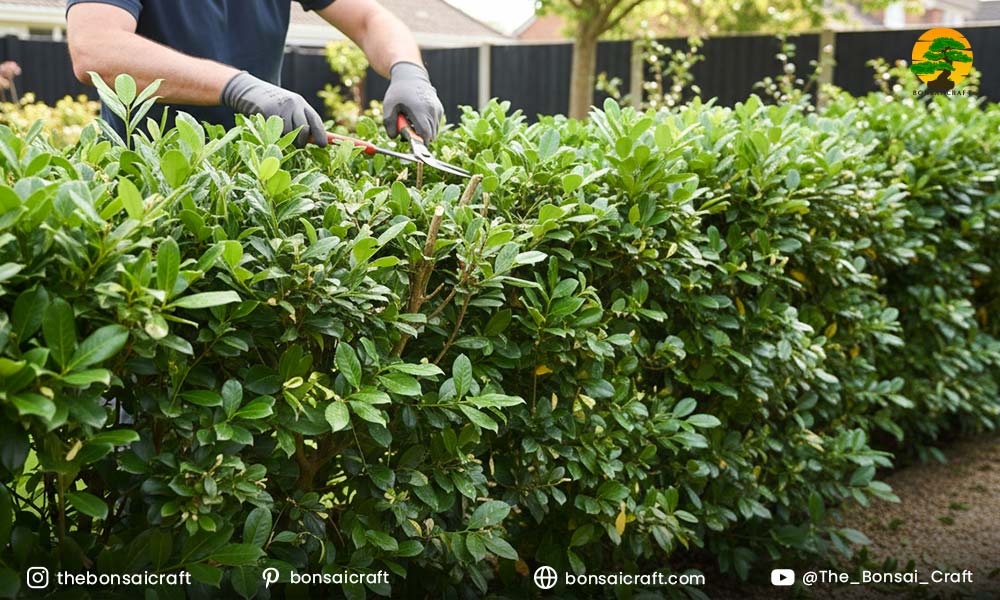
The most effective way to prune Prunus laurocerasus is to use manual secateurs or hand shears to cut individual stems back to a leaf node or side branch. Avoid using electric hedge trimmers on a cherry laurel if possible, as the large, leathery leaves will be shredded and torn by the blades, leading to brown, unsightly edges that take months to grow out. Manual pruning preserves the integrity of the foliage and results in a much cleaner, more professional appearance for your laurel hedge.
If your laurel trees have become overgrown or leggy, they respond exceptionally well to “hard pruning.” You can cut an English laurel back to within a few feet of the ground in early spring, and it will vigorously sprout new growth from the old wood. This rejuvenation technique is perfect for restoring an old laurel screen that has lost its lower leaves. Regular thinning of the interior branches also helps improve air circulation, which is vital for preventing common fungal issues.
Using high-quality tools ensures clean cuts. Explore our recommendations for bonsai tools for beginners to advanced growers.
When to Prune Prunus laurocerasus
The ideal window for pruning Prunus laurocerasus is late spring or early summer, immediately after the fragrant white laurel flowers have faded. Pruning at this time allows the plant to put its energy into a fresh flush of growth that will have plenty of time to harden off before the winter frost arrives. If you prune too late in the autumn, the resulting new shoots may be too tender to survive freezing temperatures, leading to tip dieback.
For a formal English laurel hedge, a second light trim in late August can help maintain a crisp, tidy shape throughout the winter. If you are growing a Carolina cherry tree or a skip laurel, you might only need to prune once a year due to their slightly different growth habits. Always check for nesting birds before you begin pruning your laurel plants, as the dense foliage of a laurel hedge is a favorite sanctuary for local wildlife during the spring months.
English Laurel vs. Cherry Laurel: Key Differences
In the gardening world, “English laurel” and “cherry laurel” are interchangeable common names used to describe the same species, Prunus laurocerasus. The name cherry laurel refers to the plant’s small, cherry-like fruit, while English laurel is a regional common name frequently used in the United States and the United Kingdom to distinguish it from true laurels. Despite the different labels, both names describe the same robust, glossy-leaved evergreen that serves as a staple of privacy landscaping.
However, it is critical to distinguish these from the Carolina cherry laurel (Prunus caroliniana). The Carolina cherry laurel is a separate species native to the American South; it features narrower leaves and possesses a much higher tolerance for extreme heat and humidity than the standard English laurel. When purchasing laurel plants, always check the botanical name to ensure you are getting the correct variety for your specific hardiness zone and soil conditions to avoid stunted growth or plant failure.
Understanding species differences is similar to distinguishing among various types of bonsai trees, where botanical accuracy determines care success.
The Versatility of Skip Laurel (Prunus laurocerasus ‘Schipkaensis’)
The skip laurel is a refined, cold-hardy cultivar of the cherry laurel that features a narrower, more upright growth habit than the standard species. Unlike the broad, spreading nature of typical laurel trees, the skip laurels stay more contained, making them the ideal choice for smaller gardens or tighter spaces where a massive laurel screen would be intrusive. Their leaves are a slightly darker, more elegant green, providing a sophisticated backdrop for other garden features or floral displays.
Caring for a skip laurel involves the same basic principles as the parent species, but with the added benefit of requiring less frequent pruning. Because they naturally maintain a vase-like shape, they are often used as standalone specimen plants rather than just for a functional laurel hedge. They are also notably more resistant to “shot hole” disease, a common fungal issue that can plague other laurel plants. If you live in a region with harsh winters, the skip laurel is the most reliable choice for maintaining vibrant evergreen color through heavy snow.
Growing the Carolina Cherry Laurel (Prunus caroliniana)
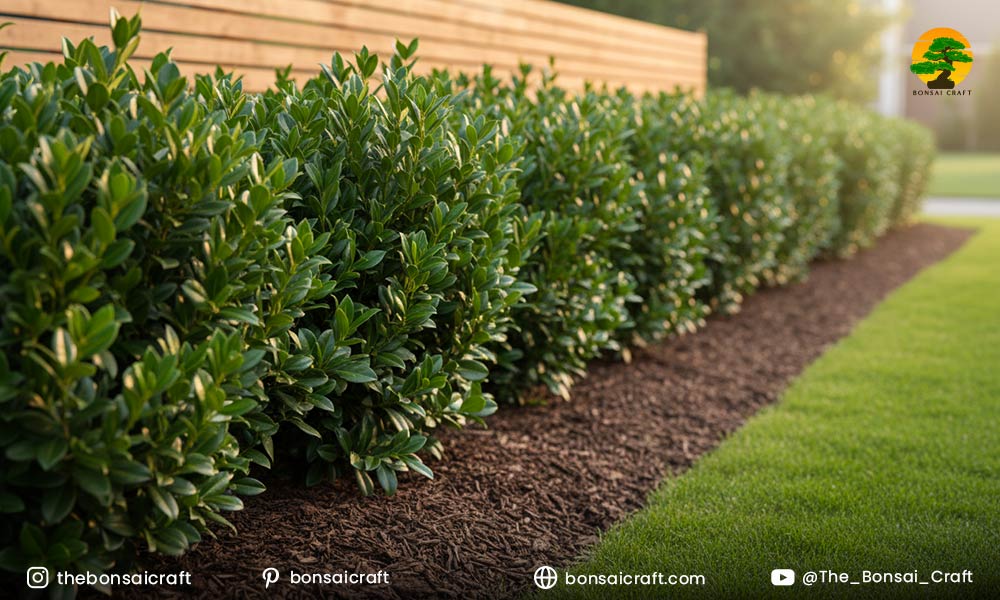
The Carolina cherry laurel is a heat-tolerant evergreen tree native to the Southeastern United States, often utilized as a taller, native alternative to the European cherry laurel. This Carolina cherry tree can grow significantly taller, sometimes reaching heights of 40 feet, and features glossy leaves that emit a distinct maraschino cherry scent when crushed. It is highly valued for its drought tolerance and its ability to act as a fast-growing privacy screen in warmer USDA zones where the English laurel might struggle with fungal wilt.
While the Carolina cherry laurel produces beautiful clusters of laurel flowers in the spring, gardeners should be aware of its aggressive self-seeding nature. Birds are highly attracted to the fruit and will disperse the seeds throughout the property, often resulting in “volunteer” laurel plants appearing in unwanted garden beds. If you want a low-maintenance, native alternative for a tall laurel hedge, the Prunus caroliniana is an excellent choice, provided you have the ample space required for its mature size.
For gardeners exploring native flowering species, our article on Cercis canadensis (Eastern Redbud) provides another attractive landscape alternative.
Common Issues: Pests and Leaf Health
The most frequent issue affecting laurel plants is “shot hole” disease, a condition caused by bacteria or fungi that creates small holes in the leaves, making them look as if they were hit by a shotgun. This is usually caused by a bacterial or fungal infection that thrives in damp, stagnant air or through overhead irrigation. To prevent this in your laurel hedge, ensure proper spacing during planting and avoid watering the foliage directly. If your English laurel shows signs of infection, pruning out the most affected branches and improving airflow usually allows the plant to recover naturally without chemical sprays.
Another pest to watch for on laurel trees is the vine weevil or various scale insects. Scale appears as small, waxy bumps on the stems, while vine weevil larvae can damage the root systems of younger laurel plants, leading to sudden wilting. Maintaining the general health of your cherry laurel through proper fertilization and deep watering during droughts is the best defense; a stressed plant is far more likely to succumb to pests than a vigorous, well-cared-for laurel hedge.
Balanced nutrition strengthens plant resistance. See our expert overview of bonsai fertilizer principles for guidance on feeding woody plants.
Frequently Asked Questions
Is the cherry laurel toxic to dogs and cats?
Yes, the cherry laurel is highly toxic to pets and livestock because every part of the plant contains cyanogenic glycosides. When the leaves or seeds are crushed (through chewing), they release hydrogen cyanide, which is a life-threatening medical emergency for animals. It is best to keep pets away from laurel plants and ensure all clippings are disposed of in a secure bin rather than left in the yard.
How often should I water a newly planted laurel hedge?
A newly planted laurel hedge should be watered twice a week deeply during its first growing season to ensure the root system establishes properly. Once the laurel trees are fully established, they are quite drought-tolerant, but they will still benefit from supplemental watering during extreme summer heatwaves. Always check the soil moisture an inch below the surface before watering to avoid over-saturation and root rot.
Can I grow a cherry laurel in a pot?
Yes, you can grow a cherry laurel or a dwarf English laurel in a large container, provided the pot has excellent drainage and you use high-quality potting soil. Container-grown laurel plants require more frequent watering and regular feeding with a balanced liquid fertilizer compared to those in the ground. Because of their fast cherry laurel growth rate, they will eventually become root-bound and may need to be transplanted to a larger vessel or the garden.
What is the best fertilizer for laurel trees?
The best fertilizer for laurel trees is a balanced, slow-release granular fertilizer applied in early spring just as the new leaf buds begin to break. Products specifically formulated for evergreens or hedges work well, providing the nitrogen needed for lush, dark green foliage. Avoid over-fertilizing your laurel hedge late in the summer, as this can stimulate tender new growth that will be easily killed by the first winter frost.
Why are my laurel flowers falling off so quickly?
Laurel flowers typically only last for a few weeks in the spring, and it is natural for the petals to drop once the plant has finished its blooming cycle. If the flowers fall prematurely before opening, it could be due to a sudden cold snap or extreme water stress. Once the blooms are gone, it is the perfect time to begin your annual pruning of the cherry laurel to maintain its shape for the rest of the year.
Conclusion
Mastering the care of the cherry laurel (Prunus laurocerasus) allows any gardener to create a lush, evergreen sanctuary that provides both privacy and elegance. Whether you choose the traditional English laurel hedge, the cold-hardy skip laurels, or the native Carolina cherry laurel, these plants offer unparalleled versatility in the landscape. By following proper techniques for how to prune Prunus laurocerasus and ensuring the right initial planting conditions, you can enjoy a healthy, fast-growing screen for decades. While they require a bit of vigilance regarding toxicity and air circulation, the rewards of a glossy, deep-green laurel hedge are well worth the effort.