Bonsai tree watering is one of the most crucial aspects of bonsai care, as it directly impacts the tree’s health, growth, and longevity. Unlike regular plants, bonsai trees are grown in small, shallow containers with limited soil, which makes water retention more challenging. Proper watering ensures that roots receive adequate moisture for nutrient absorption, photosynthesis, and overall vitality. Without consistent attention to watering, bonsai trees can suffer from root rot, drought stress, or stunted growth.
Understanding the unique needs of your bonsai species, seasonal adjustments, and indoor versus outdoor conditions will help maintain a healthy bonsai collection. Mastering bonsai tree watering not only supports the tree’s survival but also encourages flowering, fruiting, and the overall aesthetic beauty that makes bonsais so rewarding to cultivate.
For detailed care tips on keeping your bonsai healthy, visit our Ultimate Guide to Watering Bonsai Tree.
Bonsai Tree Watering Is Crucial for Its Growth and Longevity
Bonsai tree watering is essential to keep your tree alive and thriving. Water transports nutrients from the soil to the roots and supports photosynthesis, which is critical for growth and leaf development. Inadequate or excessive watering can lead to stress, disease, or even death. Bonsai trees are particularly sensitive because their roots are confined in shallow soil, which dries out faster than garden soil. Proper hydration ensures that branches, leaves, and roots remain healthy and can respond positively to pruning, shaping, and fertilization.
Consistent watering routines also help prevent problems like weak root systems or yellowing leaves. For bonsai enthusiasts, understanding the importance of watering forms the foundation for all other bonsai care techniques, making it one of the first steps in achieving a flourishing, long-lived miniature tree.
Mastering watering is essential before moving on to other bonsai techniques, which you can learn in Steps to Create a Bonsai.
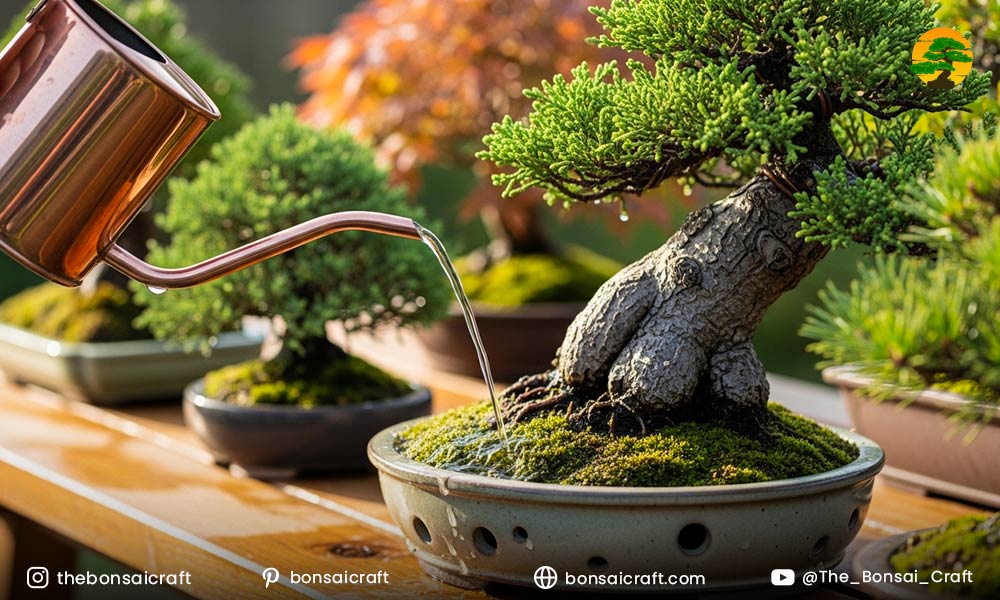
Proper Watering Ensures Your Bonsai Tree Stays Healthy
Watering a bonsai tree properly keeps it strong and reduces the risk of common problems like leaf drop or root decay. Proper watering involves supplying enough moisture to reach the entire root system without causing waterlogging, which can suffocate roots. Bonsai tree watering also helps maintain the correct balance between soil humidity and oxygen levels, which is critical for root health. By watering correctly, bonsai trees can better absorb nutrients, respond to pruning, and produce flowers or fruit.
In addition, appropriate watering prevents stress that can make the tree vulnerable to pests and fungal infections. For indoor and outdoor bonsai trees alike, a consistent watering method forms the foundation of healthy growth, ensuring that your miniature tree remains vibrant, resilient, and capable of achieving its full ornamental potential.
Maintaining correct watering also improves nutrient uptake and overall tree vigor, see more at Bonsai Care Guide.
Watering Needs Depend on Bonsai Tree Species, Pot, and Environment
Watering a bonsai tree varies depending on its species, pot size, and growing environment. Tropical bonsai trees, such as ficus or black olive, require consistently moist soil, while coniferous trees like junipers prefer the top layer of soil to dry slightly before watering again. Indoor bonsai trees in heated or air-conditioned rooms may need more frequent watering due to faster evaporation.
Pot size also influences watering frequency: smaller pots dry out faster, while larger containers retain moisture longer. Environmental factors, such as temperature, humidity, and sunlight exposure, play a crucial role in determining how often to water a bonsai tree. Adjusting your watering routine to match the specific needs of your bonsai ensures optimal hydration, root health, and overall tree vitality.
Different species have different water requirements; for example, tropical trees need constant moisture, learn more in our Ficus Microcarpa Care Guide
Tropical Bonsai Trees Need Consistent Moisture
Tropical bonsai trees must be watered regularly to prevent the soil from drying out completely. These species thrive in moist, humid conditions, so neglecting to maintain consistent soil moisture can quickly stress the tree and reduce leaf quality. Using techniques like misting the leaves or placing the bonsai on a humidity tray can help tropical species maintain optimal hydration.
Frequent observation of soil moisture and environmental conditions allows you to adjust watering and prevent issues such as wilting or leaf drop. Proper tropical bonsai tree watering promotes lush foliage, supports healthy root growth, and encourages the development of vibrant flowers.
Ensure proper moisture for tropical species with tips from our Elephant Bush Bonsai Tree Care
Coniferous Bonsai Trees Prefer the Topsoil to Dry Before Watering
Coniferous bonsai trees, like junipers and pines, require a different approach to watering. These trees prefer their topsoil layer to dry slightly before the next watering session. Overwatering conifers can lead to root rot or fungal diseases, so checking soil moisture before each watering is critical. Water should reach the roots thoroughly without saturating the soil excessively.
This technique encourages deeper root growth and overall tree resilience. Coniferous bonsai tree watering should be adjusted seasonally, with more frequent watering during hot or dry months and reduced frequency during dormancy in cooler seasons. Monitoring moisture levels ensures the bonsai remains healthy and maintains its natural structure.
Conifer species like junipers benefit from soil that dries slightly; check our Juniper Bonsai Tree Care for more techniques.
Indoor Bonsai Tree Watering Requires Extra Attention and Humidity
Indoor bonsai trees need careful monitoring because indoor conditions often reduce natural humidity and air circulation. Watering indoors requires frequent checks of soil moisture, as soil in small pots can dry quickly, especially in heated or air-conditioned rooms. Using humidity trays or misting leaves can supplement water absorption and prevent leaf desiccation.
Indoor bonsai tree watering must be consistent but avoid standing water, which can cause root rot. Light levels also affect how much water the tree needs; low light slows growth, reducing water demand, while bright, indirect light increases evaporation. By understanding the specific indoor environment, you can tailor watering practices to maintain a healthy and thriving bonsai tree.
Indoor bonsais need careful humidity management; for indoor bonsai tips, see Indoor Bonsai Trees.
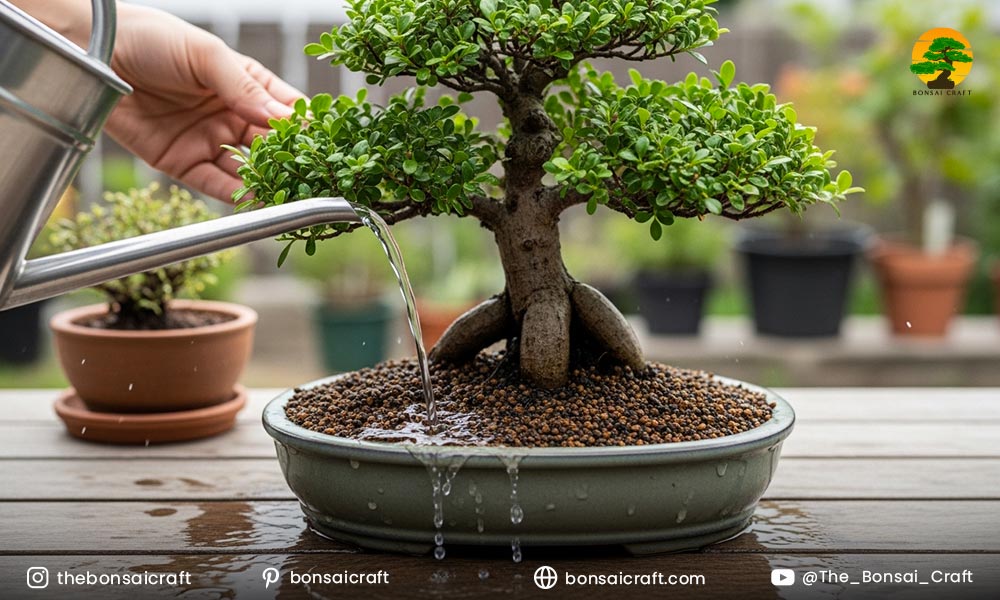
You Can Decide When to Water a Bonsai Tree by Checking Soil Moisture
You can decide when to water a bonsai tree by testing the soil for dryness and observing the tree’s signs. A simple method is to insert a finger about an inch into the soil; if it feels dry, it’s time to water. Lighter-colored soil usually indicates dryness, while darker soil shows it’s still moist. Overwatering a bonsai tree can lead to root rot, yellowing leaves, and fungal problems, whereas underwatering causes wilted or brittle foliage.
Seasonal changes also influence watering schedules: bonsai trees grow faster in spring and summer, needing more frequent watering, while dormant winter periods require less. Paying attention to your bonsai tree’s reaction and soil moisture ensures proper hydration, supports root health, and maintains vibrant leaves. Consistent observation is the key to mastering bonsai tree watering frequency and preventing stress to the plant.
Watering a Bonsai Tree Properly Requires Specific Techniques
Watering a bonsai tree requires techniques that ensure deep, even hydration without disturbing roots. Start by using a bonsai tree watering can with a fine, long spout for precision. Pour water slowly over the soil until it drains from the bottom holes, allowing the entire root system to absorb moisture. Avoid letting water pool in the tray, as stagnant water can cause root rot. For tropical bonsai trees, occasional leaf misting helps maintain humidity and prevents stress.
The submersion or Smbmrsn method, briefly soaking the bonsai pot in water, ensures soil from the bottom absorbs enough moisture. Outdoor bonsai trees may benefit from a drip irrigation system, which provides steady hydration for multiple trees. Combining these methods ensures your bonsai tree watering is effective, promotes healthy growth, and prevents overwatering or inconsistent soil moisture levels.
For precise watering methods, explore our Bonsai Self-Watering Plant Guide.
Bonsai Tree Watering Tools Make Care Easier and More Precise
Bonsai tree watering is more efficient with the right tools designed for miniature trees. A bonsai tree watering can with a fine spout allows water to reach the soil without disturbing delicate roots. Lightweight and ergonomic designs make watering multiple trees easier while maintaining precision. Using a moisture meter can measure soil moisture accurately, helping determine when to water a bonsai tree. Distilled water is preferred to prevent mineral buildup, which can weaken roots.
Self-watering pots are another useful option for consistent hydration, especially for indoor bonsai tree watering. Investing in high-quality tools ensures that your bonsai tree receives the proper amount of water regularly, reducing mistakes like overwatering or underwatering. These tools help maintain vibrant leaves, healthy roots, and long-lasting tree vitality.
High-quality tools make watering more accurate, see our recommendations at Best Japanese Bonsai Tools
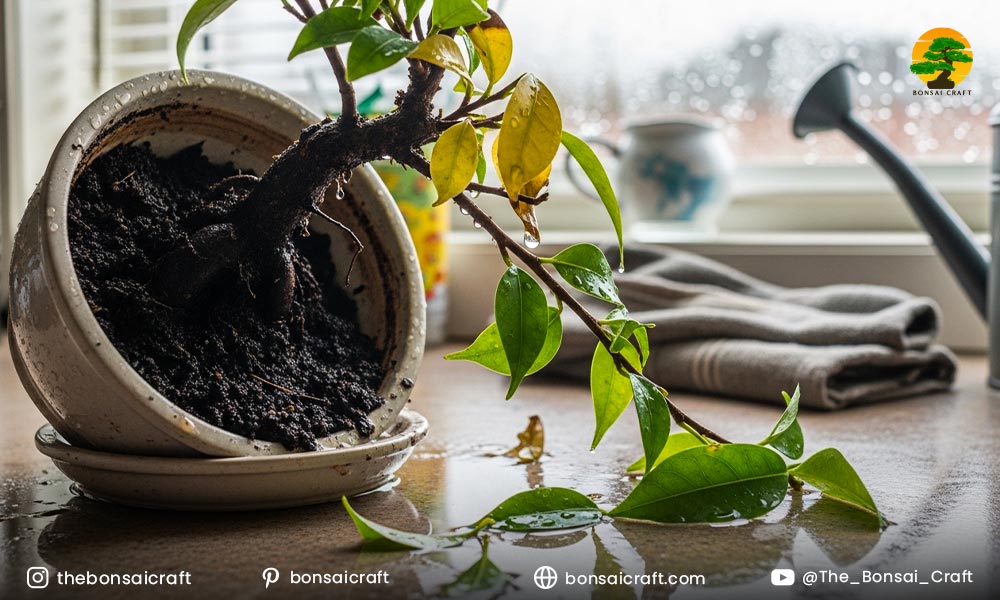
Overwatering a Bonsai Tree Can Seriously Damage Its Health
Overwatering a bonsai tree is one of the most common mistakes and can quickly harm the tree’s root system. Excess water in the soil reduces oxygen availability, causing weak, soggy roots and fungal growth. Signs of overwatering a bonsai tree include yellowing leaves, foul odor from the soil, mold formation, and poor growth. Using a proper bonsai tree watering schedule and checking soil moisture before watering prevents overwatering.
Bonsai enthusiasts should avoid letting water pool in trays or pots and ensure soil drains well. Balancing watering frequency with the species’ requirements, tropical, coniferous, indoor, or outdoor, helps prevent root rot. Maintaining consistent but not excessive hydration ensures your bonsai tree thrives and continues to grow strong branches, vibrant foliage, and overall aesthetic appeal.
Indoor Bonsai Tree Watering Needs Extra Attention
Indoor bonsai tree watering requires careful monitoring because indoor conditions often reduce humidity and airflow. Trees in apartments, offices, or heated rooms may dry out faster or retain uneven moisture, affecting growth. Check the soil frequently by inserting a finger or using a moisture meter. Tropical indoor bonsai species may require additional misting to maintain humidity levels.
Avoid standing water in trays to prevent root rot. Using a consistent bonsai tree watering schedule indoors ensures that roots stay hydrated, leaves remain lush, and the tree continues to develop flowers or fruit. Proper indoor watering promotes health, prevents stress, and allows indoor bonsai enthusiasts to enjoy miniature trees year-round, even without a garden space.
Keep indoor bonsais healthy by checking moisture levels and using techniques from Indoor Bonsai Trees.
Bonsai Tree Watering Frequency Varies by Season and Species
Bonsai tree watering frequency depends on species, pot size, and seasonal growth patterns. During spring and summer, active growth requires more frequent watering, sometimes daily for tropical bonsais. In contrast, dormant winter periods need minimal watering to prevent root suffocation. Coniferous species like junipers prefer their topsoil to dry slightly before the next watering session, while tropical bonsai trees need consistently moist soil.
Outdoor bonsai trees may require adjustments due to rainfall, sunlight, and temperature. Maintaining a seasonal bonsai tree watering schedule ensures healthy roots, optimal leaf growth, and improved flowering or fruiting. Monitoring soil moisture and the tree’s response allows precise adjustments to watering frequency, ensuring long-term health and vitality.
Adjust watering schedules according to season and species, see our Guide to Bonsai Seeds for seasonal care tips.
Bonsai Tree Self-Watering Pots and Watering Systems Ensure Consistent Hydration
Bonsai tree self-watering pots and watering systems provide consistent moisture without constant monitoring. These containers have built-in reservoirs that allow soil to absorb water slowly from the bottom, reducing the risk of overwatering a bonsai tree. Self-watering systems are particularly useful for indoor bonsai tree watering, where humidity can fluctuate and evaporation is higher. For outdoor bonsai, drip irrigation systems can deliver steady hydration, ideal for multiple trees or during hot seasons.
Using these systems ensures that the bonsai tree watering frequency is balanced according to the species’ needs and the tree’s growth stage. Consistent hydration promotes healthy roots, vibrant leaves, and optimal flowering or fruiting. These tools simplify maintenance, especially for beginners, while protecting delicate soil layers and minimizing root disturbance, making them an essential part of modern bonsai tree care.
Self-watering systems help maintain ideal moisture; learn more at Bonsai Self-Watering Plant Guide.
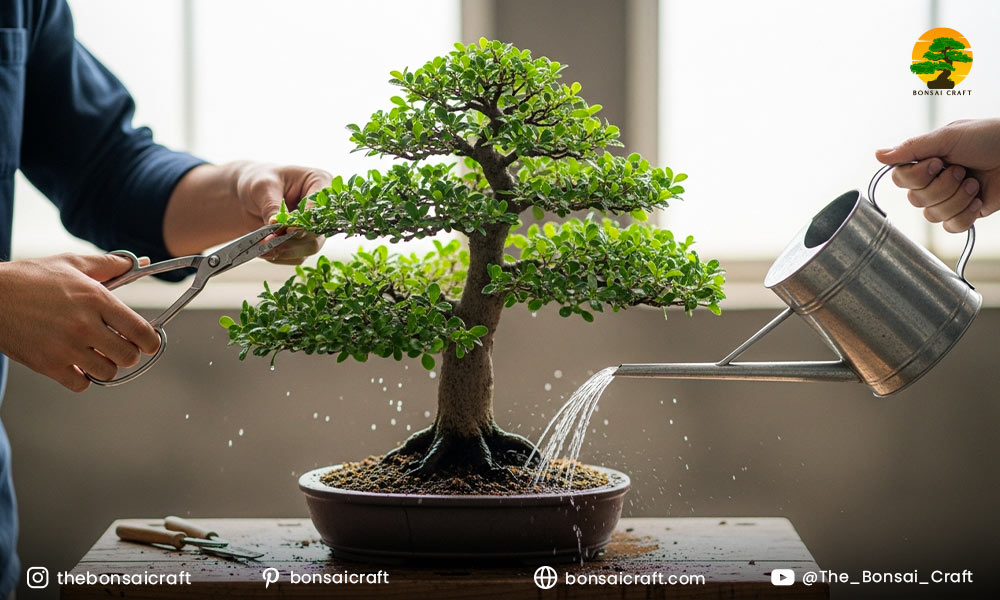
Combining Bonsai Tree Watering and Pruning Techniques Improves Health
Bonsai tree watering and pruning techniques work together to maintain a tree’s health and aesthetics. Proper watering supports leaf and root development, while pruning ensures the plant’s energy is focused on strong branches and new growth. Overwatered trees may suffer from root rot, which affects pruning success, while underwatered trees produce brittle branches that break easily during shaping. Maintaining a balanced bonsai tree watering schedule allows careful pruning without stressing the tree.
Misting leaves for tropical bonsai species and using a submersion method ensures moisture reaches roots effectively. Pairing watering with seasonal pruning encourages flowering, fruit production, and a compact, visually appealing canopy. Understanding the interplay between hydration and pruning helps enthusiasts prevent common mistakes, promotes long-term tree vitality, and ensures the bonsai remains a beautiful and healthy miniature representation of its natural counterpart.
Pair watering with pruning for better growth; check Wire Bonsai Tree Step-by-Step Guide for shaping techniques.
Recognizing Signs of Incorrect Bonsai Tree Watering
You can recognize incorrect bonsai tree watering by observing leaves, soil, and roots for specific symptoms. Overwatering a bonsai tree often leads to yellowing leaves, moldy soil, and a foul smell, while underwatering results in dry, brittle leaves and a light-colored, shriveled trunk. Indoor bonsai trees may show stress faster due to limited airflow and low humidity.
Seasonal factors also affect these signs; for example, rapid leaf drop in spring could indicate excessive watering or sudden changes in temperature. Checking soil moisture regularly, using a bonsai tree watering can or self-watering pot, and adjusting the watering frequency prevent these issues. Recognizing these signs early allows corrective action, protecting the roots and maintaining the tree’s growth, health, and ability to flower or bear fruit.
Final Tips for Effective Bonsai Tree Watering Care
Effective bonsai tree watering care relies on consistency, observation, and the right tools. Always check soil moisture before watering, avoid standing water, and tailor watering frequency to species and season. Use a bonsai tree watering can with a fine spout for precision, mist tropical bonsais for humidity, or employ self-watering pots and drip systems for convenience. Pair watering with regular pruning to ensure energy is focused on healthy growth and branch development. Indoor bonsai trees may require extra attention to humidity and temperature, while outdoor trees benefit from seasonal adjustments.
Proper bonsai tree watering care supports root health, promotes vibrant foliage, and encourages flowering or fruiting. Following these expert practices allows both beginners and experienced gardeners to maintain thriving bonsai trees with long-lasting beauty and vitality.
Frequently Asked Questions About Bonsai Tree Watering
How often does a bonsai tree need watering?
A bonsai tree needs watering when the top inch of soil feels dry, which may vary daily in hot weather or weekly in winter, depending on species, pot size, and environmental conditions. Regular checks prevent under- or overwatering.
Can I use a regular watering can for bonsai tree watering?
Yes, but a bonsai tree watering can with a long, fine spout provides better control, prevents soil disturbance, and ensures water reaches the roots evenly, which is essential for miniature pots.
Are self-watering pots effective for indoor bonsai tree watering?
Yes, self-watering pots provide steady moisture, reduce watering frequency, and maintain proper soil hydration, especially for indoor bonsai trees where evaporation rates and humidity can vary.
How do I prevent overwatering a bonsai tree?
Prevent overwatering by checking soil moisture before watering, using well-draining soil, avoiding standing water, and monitoring for signs like yellow leaves, mold, or foul odor.
Can I combine bonsai tree watering and pruning for better growth?
Yes, proper watering supports healthy root and leaf growth, while pruning directs energy to strong branches, enhances flowering, and maintains the tree’s shape and health.
