Jade bonsai shapes and jade bonsai styles describe the structured techniques used to train a jade plant into a miniature tree form. A jade bonsai is created from Crassula ovata, a drought-tolerant succulent native to South Africa that naturally develops thick stems and woody structure over time.
Because of its water-storing leaves and adaptable growth habit, bonsai jade is significantly easier to manage indoors than many traditional temperate bonsai species. Whether referred to as a jade bonsai tree, jade tree bonsai, crassula bonsai, or bonsai jade plant, the plant’s horticultural characteristics remain the same: bright light, controlled watering, and structured pruning.
Growing a jade plant bonsai allows enthusiasts to experiment with various jade plant bonsai shapes while maintaining a resilient and low-maintenance indoor specimen.
If you’re new to cultivation fundamentals, our complete bonsai care guide covers these principles in depth.
Why Choose a Jade Bonsai Tree?
A jade bonsai tree is chosen primarily for its resilience, adaptability, and suitability for indoor cultivation. Unlike many traditional bonsai species that require seasonal dormancy, a jade plant bonsai can thrive year-round in bright indoor environments. Its succulent structure allows it to tolerate occasional watering delays, reducing beginner error.
Because a bonsai jade plant stores moisture in its leaves and stems, it is less sensitive to short-term drought stress. However, overwatering remains the most common issue, especially in poorly draining soil. For new growers exploring bonsai with a jade plant, this balance of durability and structure makes it an accessible entry point into bonsai training.
Jade is frequently recommended among the most adaptable indoor bonsai trees for beginners.
The Appeal of Jade Bonsai
The appeal of jade bonsai lies in its sculptural trunk, glossy leaves, and compatibility with traditional jade bonsai styles. As the plant matures, its stems lignify and develop a textured, bark-like surface, enhancing the illusion of a mature tree. Compared to delicate temperate bonsai, a crassula bonsai tolerates indoor humidity levels and steady room temperatures.
In addition, jade plant bonsai shapes are easier to refine through clip-and-grow methods rather than intensive wiring. This makes the bonsai jade approach more practical for growers who prefer structural pruning over complex shaping techniques.
Expert Insight:
Jade bonsai are perfect for beginners because they require less attention than most traditional bonsai. Their ability to store water in their thick leaves makes them resilient to occasional neglect, making them an excellent option for indoor growers.” – Bonsai Expert with 10+ years of experience.
Jade bonsai trees are ideal for beginners, thanks to their easy-care nature, resilience, and appealing appearance. These plants thrive indoors and require minimal maintenance.
Types of Jade Bonsai
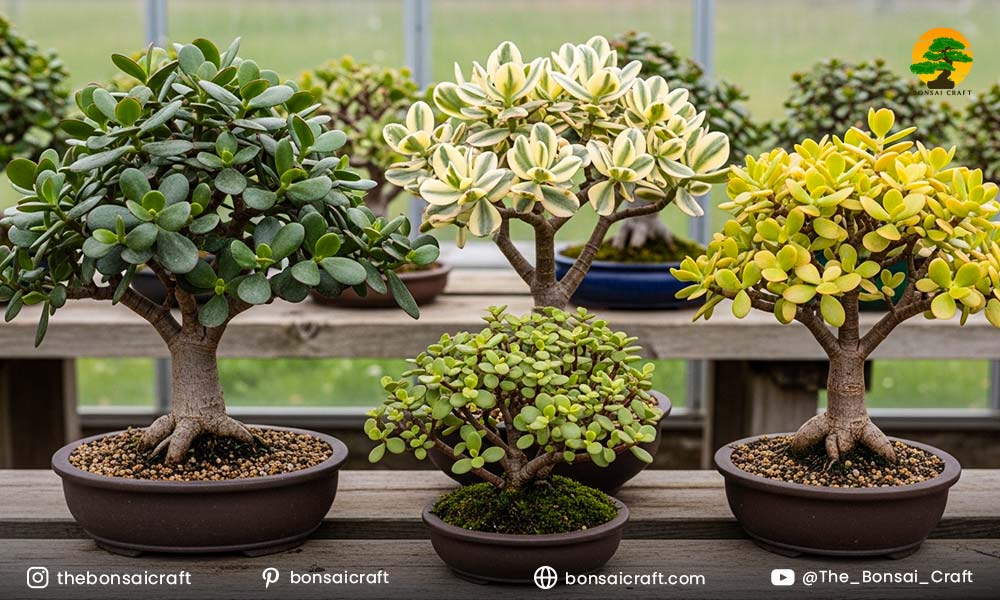
The main types of jade bonsai include standard green Crassula ovata, variegated cultivars, compact dwarf forms, and golden-leaf varieties. All are forms of Crassula ovata, but they differ in coloration, internode spacing, and growth compactness, which influences jade bonsai shapes and styling potential.
You can explore the broader framework in our complete guide to types of bonsai trees.
1. Crassula Ovata (Common Jade) Bonsai
Crassula ovata is the most widely used plant for creating a jade bonsai tree. This classic jade bonsai features thick, oval green leaves that may develop red edges under strong light. Over time, the trunk thickens and branches form naturally, making it ideal for traditional jade bonsai styles.
For jade plant bonsai shapes such as upright or broom styles, this variety provides structural stability. Bright light encourages compact growth, while infrequent watering prevents root issues. Use a well-draining succulent mix and allow the soil to dry fully before watering.
2. Variegated Jade Bonsai (Crassula Ovata ‘Tricolor’)
Variegated jade bonsai offers decorative foliage with green, cream, and pink tones. This bonsai jade plant grows more slowly due to reduced chlorophyll in its leaves. For collectors interested in distinctive jade bonsai shapes, variegated cultivars add visual contrast.
Because variegation depends on adequate light, this jade tree bonsai requires brighter exposure to maintain color. Water conservatively and avoid overly rich fertilizers, which can reduce color intensity.
3. Dwarf Jade Bonsai
Dwarf jade bonsai varieties, often labeled ‘Minima,’ are compact versions ideal for small-scale jade plant bonsai shapes. Their shorter internodes and smaller leaves help create proportional miniature designs.
A bonsai jade plant in dwarf form is particularly suitable for indoor tabletops or smaller containers. Like other Crassula bonsai forms, it requires bright light and soil that drains quickly to avoid root rot.
4. Golden Jade Bonsai (Crassula Ovata ‘Limpopo’)
Golden jade bonsai develops yellow and reddish tones when grown in strong light. This variation is frequently chosen for ornamental jade bonsai styles because its coloration enhances visual depth.
In lower light, this jade bonsai tree may revert to greener tones. Consistent bright exposure and careful watering maintain its vibrant appearance while preserving healthy growth structure.
Jade Bonsai Styles
Jade bonsai styles describe the classical shaping methods used to train a jade plant bonsai into recognizable miniature tree forms. Because the jade bonsai trunk thickens naturally, it adapts well to upright and structured forms. However, wiring should be applied cautiously, as mature stems can be brittle.
Traditional jade bonsai styles commonly include formal upright (Chokkan), informal upright (Moyogi), cascade (Kengai), and broom (Hokidachi). These jade plant bonsai shapes mirror classic bonsai aesthetics while adapting to succulent growth patterns.
These classical structures are explained in more detail within our full bonsai style classification guide.
1. Formal Upright (Chokkan)
The formal upright style creates a straight, tapering trunk with balanced branching. This is one of the most traditional jade bonsai styles and works well for a jade bonsai tree with a dominant central trunk.
To achieve this jade bonsai shape, maintain a strong vertical leader and prune competing stems. Gradual structural refinement helps develop trunk taper while preserving proportional branch spacing.
2. Informal Upright (Moyogi)
The informal upright style features a gently curved trunk with balanced branch placement. This jade bonsai style complements the plant’s natural growth tendencies and produces organic, flowing lines.
For bonsai a jade plant in Moyogi form, prune above outward-facing leaf pairs to guide direction. This method gradually creates a layered branch distribution while preserving trunk movement.
3. Cascade (Kengai)
The cascade style trains the jade bonsai to grow downward below the rim of the pot. This dramatic jade tree bonsai shape resembles a tree growing over a cliff.
Because Crassula bonsai stems become woody and brittle with age, cascade shaping must begin early when stems are flexible. Use gentle support methods and refine structure through pruning rather than aggressive wiring.
4. Broom Style (Hokidachi)
The broom style develops a straight trunk with a rounded canopy spreading outward. This jade plant bonsai shape emphasizes symmetry and balance, making it one of the most visually structured jade bonsai styles.
Encourage radial branching and prune regularly to maintain a fan-like canopy. This approach works best on jade bonsai specimens with multiple evenly spaced branches.
How to Care for a Jade Bonsai Tree
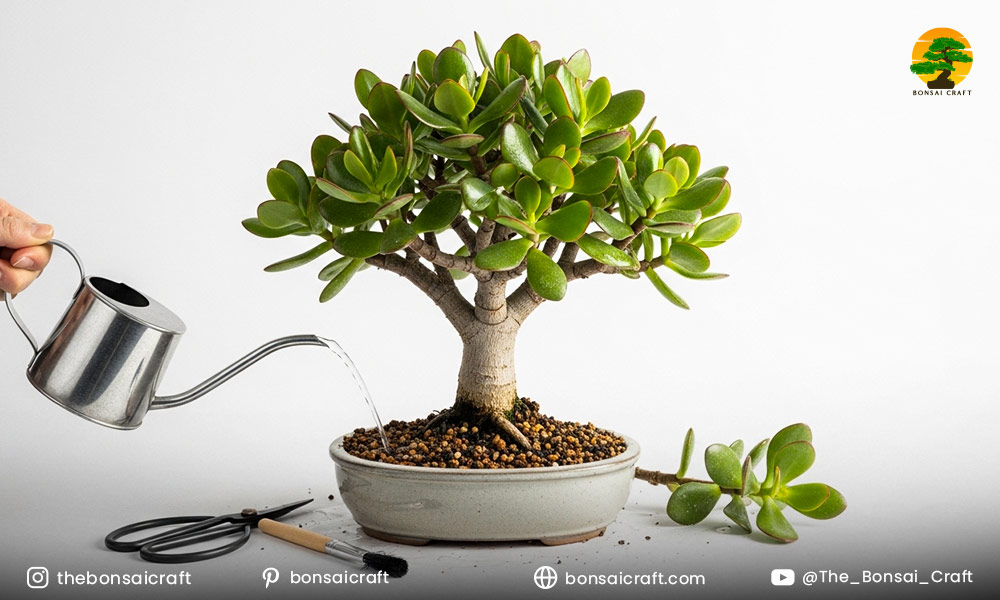
Caring for a jade bonsai tree requires bright light, controlled watering, and well-draining soil. Whether cultivating a bonsai jade plant indoors or near a bright window, light intensity directly influences leaf compactness and trunk strength.
Use containers with drainage holes and avoid leaving water in trays. A crassula bonsai thrives when the soil dries fully between waterings. Balanced fertilization during active growth supports healthy branch development without encouraging weak, leggy growth.
Watering Jade Bonsai
Jade bonsai should only be watered once the soil has completely dried. As a succulent species, the bonsai jade plant stores moisture in its tissues and does not tolerate constant wet conditions.
Watering frequency varies depending on light, temperature, and pot size. In warm, bright environments, watering may occur every 1–2 weeks, while cooler conditions require less frequent irrigation. Proper drainage is essential to prevent root rot in any jade bonsai tree.
Pruning and Shaping Jade Bonsai
Pruning is the primary method for shaping jade bonsai and refining jade plant bonsai shapes. Cut stems above leaf nodes to encourage branching and maintain compact structure.
Clip-and-grow techniques are generally safer than heavy wiring for bonsai jade specimens. When wiring is necessary, apply light pressure and monitor carefully to prevent stem damage.
For those just starting out, jade is frequently listed among the best bonsai trees for beginners due to its resilience.
Where to Buy Jade Bonsai
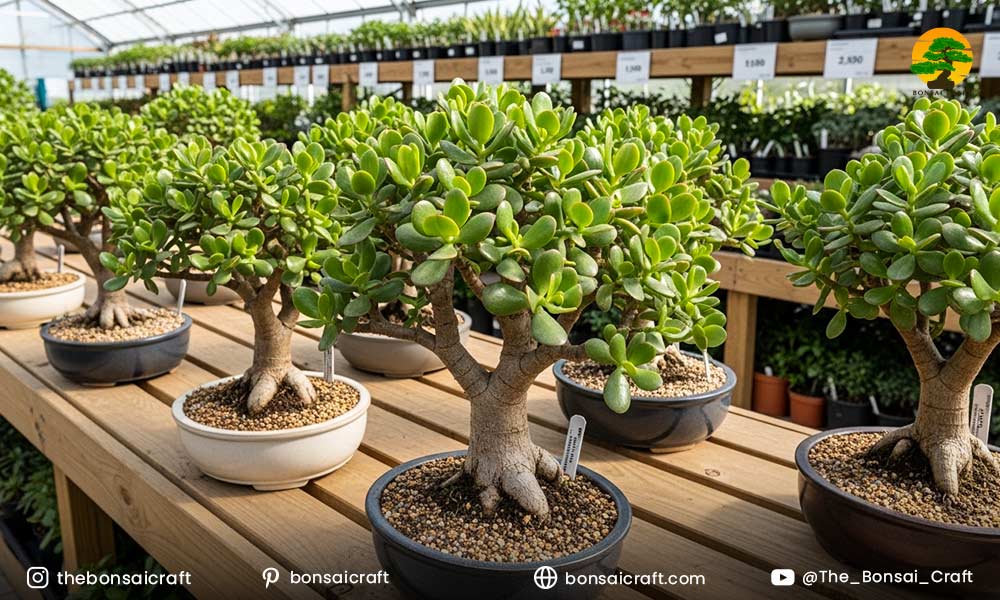
Jade bonsai can be purchased from reputable bonsai nurseries, succulent specialists, and established garden centers. When selecting a jade bonsai tree, choose specimens with firm leaves, stable trunks, and properly draining soil.
Buying from experienced bonsai growers may provide better-structured bonsai jade plants, while succulent nurseries often offer healthy starter material for developing custom jade bonsai shapes.
Conclusion: A Beautiful and Resilient Bonsai Choice
Jade bonsai combines durability, sculptural form, and adaptability, making it one of the most practical bonsai options for indoor growers. Whether styled in traditional jade bonsai styles or shaped into creative jade plant bonsai shapes, this resilient species offers long-term growth potential.
With structured pruning, controlled watering, and adequate light, a jade bonsai tree can mature into a balanced, miniature representation of a full-sized tree while remaining manageable for both beginners and experienced enthusiasts.
FAQs
How do you prune a jade bonsai?
Prune a bonsai jade plant by cutting just above leaf nodes to stimulate branching and refine jade bonsai shapes. Avoid removing too much growth at once, and allow recovery time between structural pruning sessions.
How often should I water my jade bonsai?
Water jade bonsai only after the soil has fully dried. Frequency depends on light and temperature but often ranges from every 1–2 weeks in bright conditions.
What is the best style for a jade bonsai?
The most common jade bonsai styles include formal upright, informal upright, cascade, and broom forms. These traditional jade bonsai styles complement the plant’s thick trunk and branching habit.
How do I shape a jade bonsai tree?
Shape a jade plant bonsai primarily through selective pruning. Guide branch direction by trimming above outward-facing leaves and refining the structure gradually.
Is a Crassula bonsai suitable for beginners?
Yes, a crassula bonsai, commonly called jade bonsai, is well-suited for beginners because it tolerates indoor conditions and infrequent watering better than many traditional bonsai species.