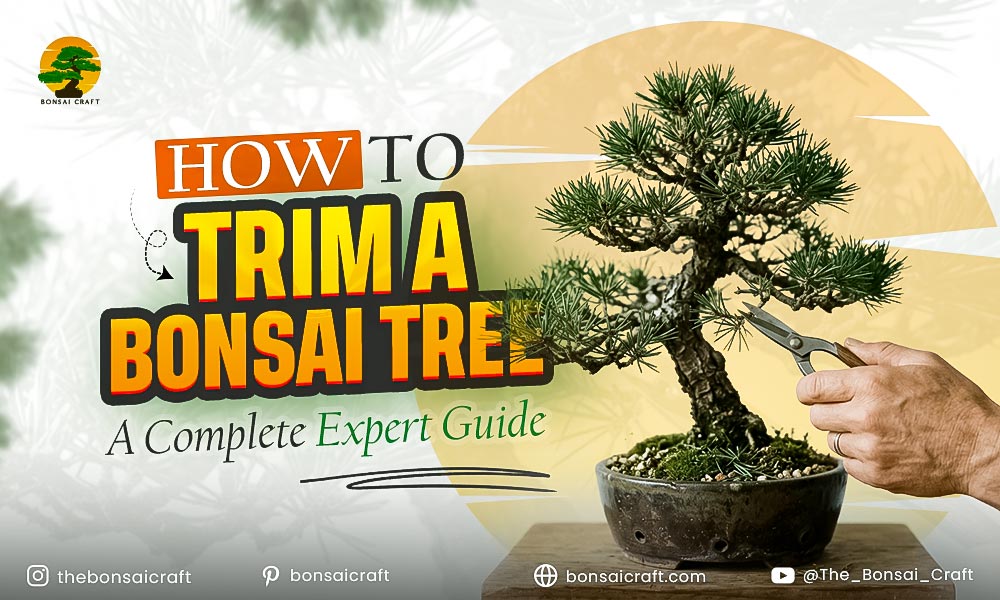
Trimming a bonsai tree is the core technique that keeps the tree miniature, balanced, and visually mature. Unlike normal gardening, bonsai pruning is not just about removing excess growth, it is a deliberate process that controls shape, encourages fine branching, and maintains the artistic proportions of the tree.
In nature, trees grow freely and often become tall with irregular branch structures. Bonsai cultivation intentionally restricts that growth through pruning and training so the tree retains the appearance of a full-sized tree in miniature form. Regular trimming forces the tree to distribute energy more evenly and develop dense foliage.
Successful bonsai pruning requires understanding when to cut, where to cut, and how much to remove. Beginners often assume trimming is simply shortening branches, but professional bonsai growers distinguish between structural pruning (major design changes) and maintenance pruning (keeping the shape refined). Timing, technique, and species characteristics all influence how the tree responds.
This guide explains exactly how to trim a bonsai tree properly, including pruning techniques, seasonal timing, tools, mistakes to avoid, and after-care practices.
What Does It Mean to Trim a Bonsai Tree?
Trimming a bonsai tree means selectively pruning branches and shoots to maintain the miniature shape and encourage dense foliage.
Trimming a bonsai tree involves removing unwanted growth to preserve the tree’s design while promoting healthy branching and compact foliage. In bonsai cultivation, pruning controls both size and structure so the tree maintains the illusion of a mature, full-sized tree in miniature form.
When new shoots extend beyond the desired canopy outline, they are trimmed back using bonsai shears or scissors. This process redistributes growth energy throughout the tree and encourages ramification, which is the development of many small twigs that create a refined canopy structure.
Unlike standard pruning in gardening, bonsai trimming follows aesthetic guidelines. Branches that grow straight upward, downward, or cross through the tree’s center are typically shortened or removed because they disrupt the visual balance.
Why Trimming Is Essential for Bonsai Health and Shape
Trimming is essential because it controls growth, maintains the bonsai design, and encourages finer branching.
Bonsai trees naturally grow just like full-size trees, so without trimming they quickly lose their compact structure. Regular pruning forces the plant to redistribute growth evenly across the canopy rather than allowing a few dominant branches to grow unchecked.
Another important benefit is ramification. By cutting back shoots repeatedly, the tree develops multiple new buds behind the cut, producing finer branch structures that make the bonsai appear older and more detailed.
Pruning also improves air circulation and light penetration within the canopy. When dense foliage is thinned, inner branches receive more sunlight, allowing them to stay alive and produce new growth.
Over time, consistent trimming transforms a young bonsai into a mature tree with complex branching patterns and a well-balanced silhouette.
Types of Bonsai Trimming
Bonsai trimming consists mainly of maintenance pruning and structural pruning.
Bonsai growers typically divide pruning into two categories depending on the goal and intensity of the cut.
Maintenance Pruning
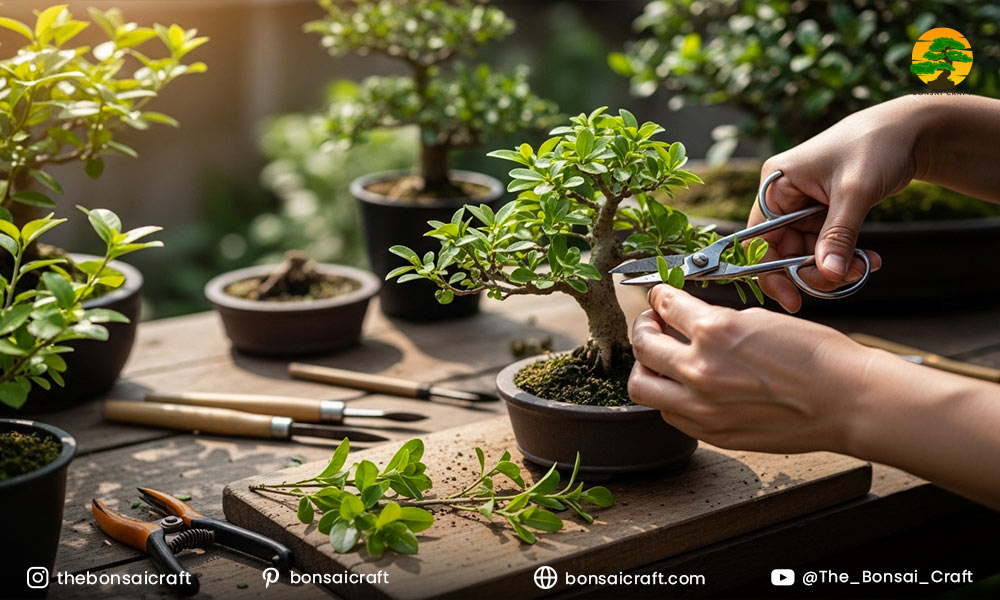
Maintenance pruning keeps the bonsai within its intended shape by trimming back new growth that extends beyond the canopy. This type of trimming is done regularly during the growing season.
As shoots grow longer, they are shortened so the tree maintains its compact appearance. Many growers cut new shoots back to a few leaf nodes to stimulate additional branching.
Maintenance trimming is usually light and frequent. Healthy deciduous trees may tolerate several light trims during a single growing season.
Structural Pruning
Structural pruning involves removing larger branches to redesign or correct the tree’s overall structure.
This technique is used to eliminate problematic branches such as:
- Crossing branches
- Branches growing toward the trunk
- Strong vertical shoots
- Branches that disrupt the overall design
Structural pruning is more stressful for the tree, so it is typically performed once per year or even less often depending on the species.
When to Trim a Bonsai Tree
The best time to trim a bonsai tree depends on the species, but most structural pruning occurs in early spring or during dormancy.
Timing is one of the most important factors in successful bonsai pruning because it determines how quickly the tree recovers from cuts.
For many species, major structural pruning is performed in early spring just before the growing season begins. During this period, the tree is about to enter active growth and can heal wounds quickly.
Maintenance trimming, however, can occur throughout the growing season as shoots extend beyond the desired shape.
Seasonal pruning guidelines often look like this:
Late winter or early spring
Heavy structural pruning is commonly performed while the tree is still dormant. This reduces sap bleeding and allows new growth to develop naturally in spring.
Spring and early summer
This period is ideal for trimming new shoots, pinching tips, and refining the canopy shape.
Summer
Light maintenance pruning or leaf thinning may be used to improve light penetration.
Autumn
Only minor cleanup trimming should be performed because heavy pruning late in the season may weaken the tree before winter dormancy.
Indoor bonsai species such as ficus can often be pruned year-round since they do not experience strong seasonal dormancy cycles.
Tools Needed to Trim a Bonsai Tree
Trimming a bonsai tree requires specialized bonsai tools designed to make clean, precise cuts.
Using the correct tools prevents damage to the bark and allows wounds to heal quickly. Bonsai tools are designed for precision because small cuts greatly affect the tree’s appearance.
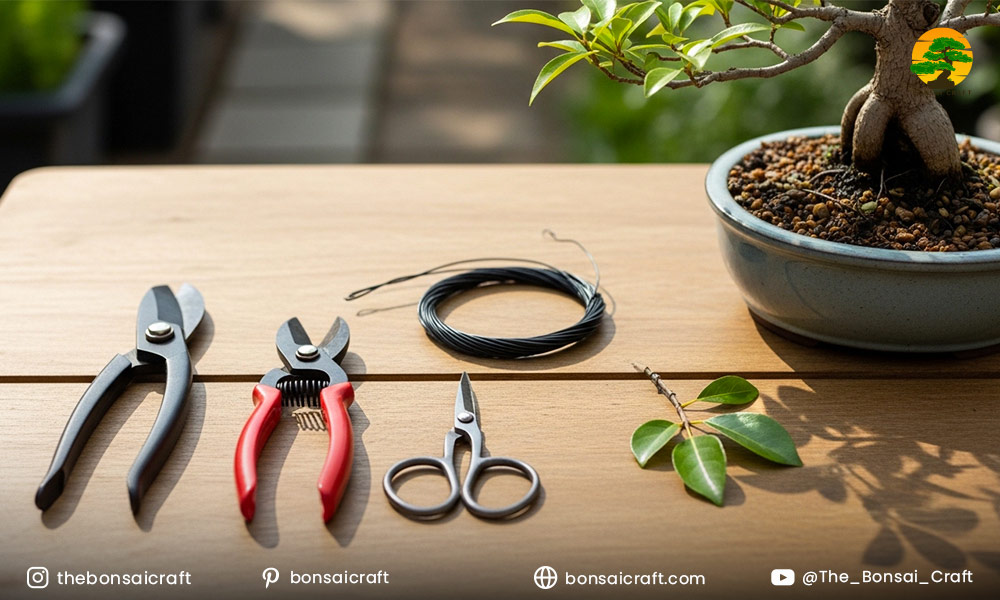
Common pruning tools include:
Twig shears
Twig shears are used for trimming small shoots and leaves during maintenance pruning.
Concave cutters
Concave cutters are designed for removing thicker branches. Their curved blades create a slightly hollow cut that heals more smoothly than a flat cut.
Bonsai scissors
These are used for delicate trimming of leaves or soft growth.
Professional bonsai growers also sanitize tools with alcohol between trees to prevent the spread of fungal diseases.
Step-by-Step Guide: How to Trim a Bonsai Tree
Trimming a bonsai tree involves inspecting the tree, removing unwanted branches, shortening shoots, and refining the canopy shape.
1. Observe the Tree from All Angles
The first step is carefully studying the bonsai from eye level to understand its structure and balance.
Professional bonsai artists often rotate the tree and examine it from every angle before making the first cut. This ensures the design remains harmonious and prevents unnecessary pruning.
2. Remove Dead, Damaged, or Diseased Branches
Dead or broken branches should always be removed first.
Eliminating these branches improves the tree’s health and allows it to direct energy toward new growth rather than maintaining damaged tissue.
3. Eliminate Crossing or Inward-Growing Branches
Branches that grow toward the trunk or cross other branches disrupt the visual flow of a bonsai tree.
These branches are typically shortened or removed entirely so the tree maintains an open and balanced structure.
4. Shorten Long Shoots
As shoots extend beyond the canopy outline, they should be trimmed back.
A common technique is cutting the shoot back to a few leaf nodes. When a branch develops several nodes, it can be trimmed to about half its length to stimulate new branching.
5. Thin the Interior Canopy
Thinning the inner canopy allows light to reach interior branches, preventing them from weakening or dying.
This step also improves airflow, which helps reduce fungal problems.
6. Protect Large Cuts
Large pruning wounds may be sealed with bonsai cut paste to protect them from infection and help the tree heal properly.
Small cuts usually heal naturally without treatment.

How Often Should You Trim a Bonsai Tree?
Most bonsai trees require maintenance trimming several times during the growing season.
Regular maintenance trimming helps keep the bonsai compact and encourages dense branching.
Healthy deciduous bonsai trees can tolerate several light pruning sessions during the growing season, while structural pruning is usually performed only once per year.
The exact frequency depends on factors such as species, climate, and growth rate. Fast-growing tropical species may need trimming every few weeks, while slower trees require less frequent maintenance.
Common Mistakes When Trimming Bonsai Trees
The most common bonsai trimming mistakes include over-pruning, cutting at the wrong time, and making rough cuts.
Beginners often remove too much foliage in a single session. Removing excessive leaves or branches weakens the tree and slows recovery.
Many bonsai growers recommend removing no more than about one-quarter to one-third of the foliage at once to prevent stress.
Another frequent mistake is pruning at the wrong time of year. Heavy trimming during late autumn can weaken the tree because it has limited time to recover before winter dormancy.
Finally, using dull tools can cause ragged cuts that damage bark and slow healing.
Aftercare Following Bonsai Trimming
Proper aftercare helps the bonsai recover quickly and continue healthy growth after pruning.
After trimming, the tree may temporarily experience stress as it redirects energy to heal wounds and produce new growth.
The following practices support recovery:
Water carefully
Maintain consistent watering without allowing the soil to become waterlogged. (Bonsai watering guide).
Avoid heavy fertilization immediately
Strong fertilizer immediately after pruning can stimulate weak, elongated growth.
Monitor sunlight
Ensure the tree receives sufficient light so new buds can develop properly.
Watch for pests or disease
Fresh cuts can occasionally attract pests or pathogens, so monitoring the tree during recovery is important.
FAQs
How often should you trim a bonsai tree?
Most bonsai trees require trimming several times during the growing season. Maintenance pruning is performed whenever shoots grow beyond the desired canopy shape, while structural pruning is typically done once a year or less to reshape the tree.
Can you trim a bonsai tree anytime?
Light trimming can be done throughout the growing season, but heavy structural pruning is usually performed in early spring or during dormancy. Pruning at the correct time helps the tree recover quickly and reduces stress.
How much of a bonsai tree can you safely remove?
You should generally avoid removing more than about 25–30% of the foliage at one time. Removing too much growth can weaken the tree and slow its recovery process.
Should beginners trim their bonsai trees?
Beginners can trim bonsai trees as long as they focus on light maintenance pruning. Learning to remove long shoots and small unwanted branches is a safe starting point before attempting major structural changes.
What happens if you don’t trim a bonsai tree?
If a bonsai tree is not trimmed, it will eventually lose its compact shape and develop long, uneven branches. Regular pruning is necessary to maintain the miniature proportions and refined structure that define bonsai.
Conclusion
Trimming is one of the most important skills in bonsai cultivation. With patience and consistent care, following tips from Bonsai Craft gradually transforms a young plant into a miniature tree that reflects elegance and maturity.
Successful bonsai trimming involves understanding seasonal timing, using proper tools, and making thoughtful cuts that enhance the tree’s design rather than simply shortening branches. Maintenance pruning keeps the tree compact throughout the growing season, while occasional structural pruning refines the overall form.
With patience and consistent care, proper trimming gradually transforms a young plant into a miniature tree that reflects the elegance and maturity of nature.