
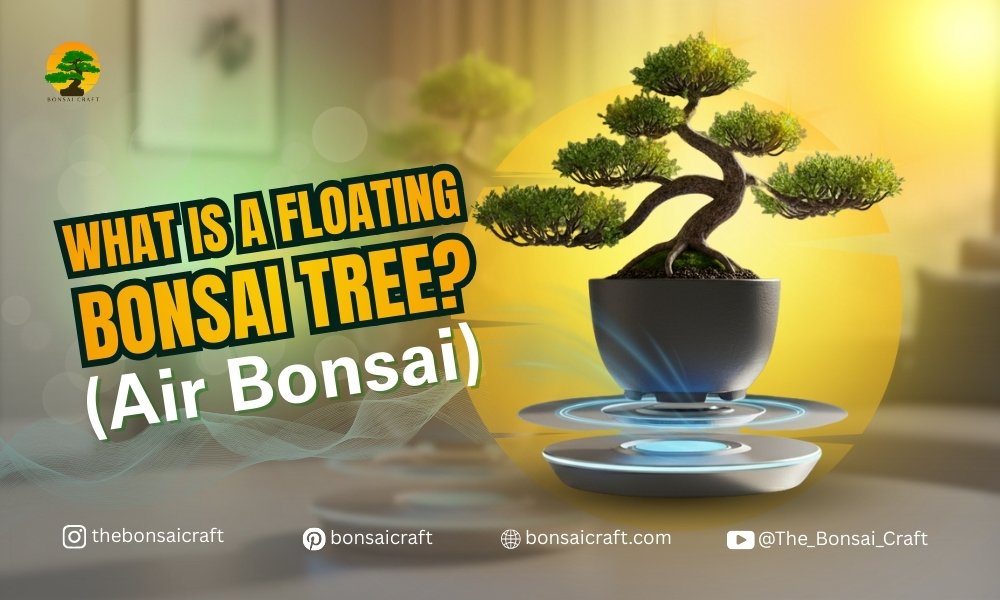
A floating bonsai is a high-tech botanical display that uses electromagnetic levitation to suspend a miniature tree in mid-air, allowing it to rotate 360 degrees without physical support. This innovation, often referred to as “Air Bonsai,” relies on the repulsive force between high-power magnets located in the base and the bottom of the plant’s pot. By combining the ancient, slow-paced art of bonsai with modern magnetic levitation (Maglev) technology, these displays create a striking visual metaphor for balance, tranquility, and the intersection of nature and human engineering. The result is a kinetic sculpture that serves as both a living organism and a futuristic interior design piece.
To better understand the traditional foundations behind this innovation, explore the history of bonsai trees and how the art form evolved over centuries.
What Makes the Floating Bonsai Tree So Captivating?
The primary allure of the floating bonsai tree lies in its ability to challenge human perception by presenting a living tree that appears to defy the fundamental laws of gravity. This surrealist presentation triggers a psychological response of wonder and curiosity, as the observer watches a grounded biological entity transform into a weightless, rotating object. Beyond the “wow factor,” the silent, rhythmic rotation provides a deep sense of tranquility and meditative focus, making it a powerful tool for stress reduction in modern, high-intensity environments.
A Brief History of Floating Bonsai and Its Rise in Popularity
Floating bonsai gained global recognition in 2016 following a viral Kickstarter campaign by a Japanese design team based in Kyushu, which introduced the “Air Bonsai” concept to the international market. This project successfully bridged the gap between traditional Japanese horticulture and modern “Eco-Tech,” amassing significant funding and sparking a new category in luxury home decor. Since its inception, the market has evolved from artisanal Japanese moss balls to a diverse array of sophisticated ceramic and wood-grain levitating systems, transitioning from a niche internet curiosity to a staple of high-end biophilic design.
Why Levitating Plants Are Trending in Modern Home Decor
Levitating plants are currently trending because they perfectly align with the “less is more” philosophy of minimalist design while providing a high-impact focal point for small urban living spaces. As residents of metropolitan areas seek ways to integrate nature into compact apartments, these displays offer a way to showcase greenery without the bulk of traditional large-scale planters. Their rise is further fueled by the “Biophilia” trend, which emphasizes the human need for connection with nature; the floating bonsai serves as a sophisticated, space-saving solution that satisfies this need through an innovative, tech-forward lens.
How Does a Floating Bonsai Tree Work?
Magnetic Levitation Explained
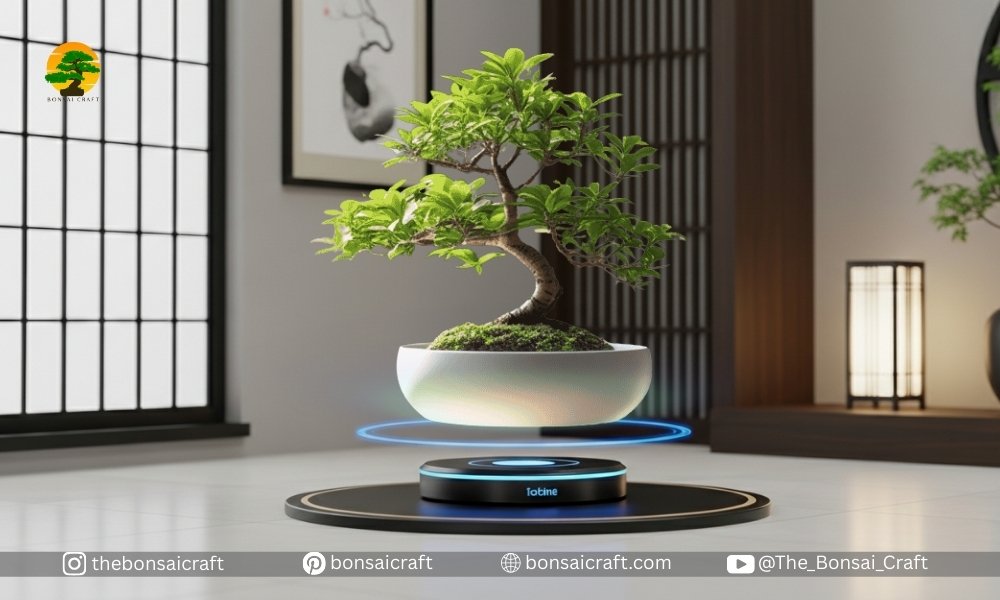
Floating bonsai systems operate using a specialized form of electromagnetic suspension known as “Maglev,” where a base containing copper coils and sensors generates a magnetic field that repels a permanent magnet inside the plant pot. This technology requires a sophisticated control system that monitors the position of the pot thousands of times per second to prevent it from drifting off-center or falling. The repulsive force between the like poles of the magnets creates an “air gap” that remains stable as long as the base is supplied with a constant electrical current, enabling the characteristic frictionless rotation.
Components of a Floating Bonsai Setup
A functional floating bonsai setup consists of four essential components: an electromagnetic base, a magnetized floating pot (or “Little Star”), a lightweight plant, and a dedicated AC power adapter. The base serves as the brain of the operation, housing the circuitry and the primary magnet, while the pot is engineered for buoyancy and balance to ensure its center of mass remains stable. The plant itself must be chosen for its low weight and shallow root structure, and the power source ensures the continuous magnetic field necessary to sustain the levitation effect.
Are Magnetic Floating Bonsai Trees Real Plants or Artificial?
Floating bonsai displays can accommodate both real, living botanical specimens and high-quality artificial replicas, depending on the owner’s desired balance of aesthetic appeal and maintenance commitment. Real plants, such as young Ficus or Juniper, provide the added benefit of air purification and the rewarding experience of horticultural care, but they require strict weight management. Artificial versions are frequently utilized in commercial settings or low-light offices where the environmental conditions would otherwise be unsuitable for a living tree to survive.
Best Bonsai Trees & Plants for Floating Displays
Popular Species That Thrive in Floating Bonsai Pots
The most successful species for floating displays are hardy, slow-growing tropical or subtropical plants that possess a high tolerance for indoor conditions and a compact root structure. Ficus Retusa (Ginseng Ficus) is widely considered the gold standard due to its lightweight trunk and resilience to varying light levels. Other recommended species include the Portulacaria Afra (Dwarf Jade), which has low water requirements, and certain types of Cotoneaster, which offer decorative berries and small, manageable foliage.
If you’re new to working with this species, our detailed Ficus Microcarpa care guide covers light, watering, and pruning essentials.
Floating Succulents and Their Advantages
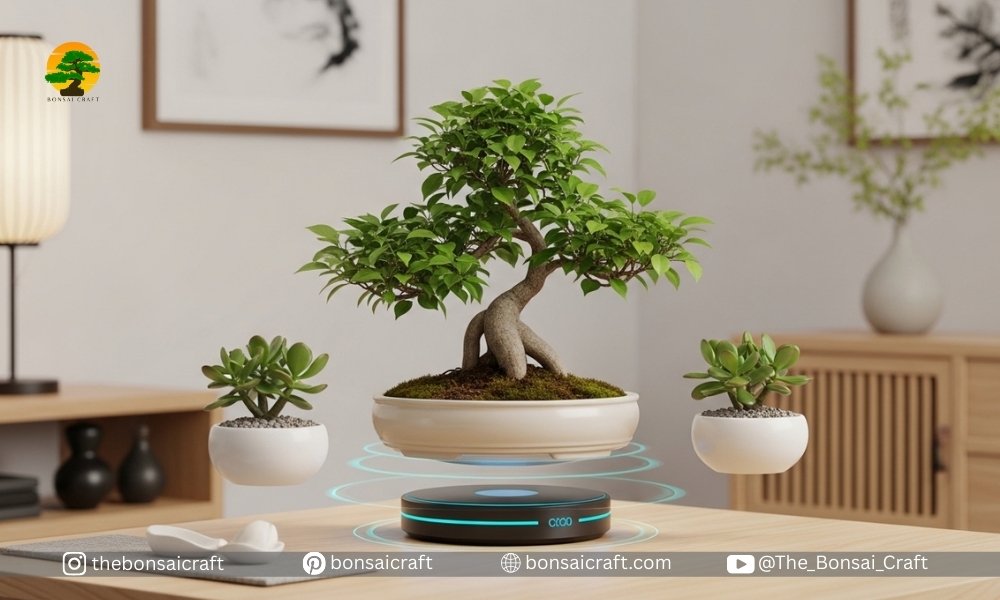
Floating succulents have emerged as a superior alternative to traditional bonsai for levitating pots because they are naturally lightweight and possess high drought tolerance, which minimizes the need for frequent watering. Species such as Echeveria or Crassula are ideal because their shallow root systems fit easily into the small dimensions of a magnetic pot. Furthermore, succulents generally grow more slowly than traditional trees, meaning the plant will not quickly exceed the weight limit of the magnetic base, ensuring a longer-lasting levitation experience.
Can You Use a Regular Bonsai in a Levitating Pot?
While it is possible to use a standard bonsai tree in a levitating pot, the specimen must be a juvenile “mame” or “shohin” size to remain within the typical 200–500 gram weight capacity of most magnetic bases. Using a regular tree requires the grower to utilize lightweight substrate mixes, such as Akadama or Pumice, and to strictly manage the tree’s growth through frequent pruning. If the tree becomes too heavy or its foliage grows asymmetrical, it will disrupt the magnetic center of gravity and cause the system to fail.
Choosing the Right Floating Bonsai Pot or Levitating Planter
With Floating Bonsai Pots, it becomes particularly critical to select the right container as carefully as the plant itself.
These pots help in the aesthetic and functional parts, and they should also align with the weight and root structure of your plant.
Magnetic Power, Safety, and Stability
When selecting a floating bonsai system, it is critical to evaluate the magnetic lift capacity and the presence of “anti-drop” safety features that protect the plant during a power failure. High-quality systems use industrial-grade magnets capable of suspending up to 500 grams with minimal wobble and include sensors that pull the pot down to the base safely if the electricity is cut. Stability is also determined by the “auto-centering” technology within the base, which helps users find the levitation point more easily without the pot snapping violently to the sides.
Floating Bonsai Chain vs. Magnetic Levitating Base
A magnetic levitating base offers true, contact-free suspension using electromagnetic fields, whereas a “floating bonsai chain” is typically a static display that uses tensegrity or hidden wires to create an illusion. While chain-based designs are more affordable and do not require electricity, they lack the active, 360-degree rotation and the high-tech appeal of a Maglev system. For the authentic “floating” experience that mimics modern engineering, the magnetic base is the only version that provides a genuine, frictionless hovering effect.
Materials and Design Aesthetics of Floating Plant Holders
Floating plant holders are available in a variety of materials, ranging from traditional Japanese ceramics and handcrafted hardwoods to modern, minimalist acrylics and synthetic resins. Wood-based designs, such as walnut or bamboo, are popular for Zen-inspired interiors because they hide the technology behind a natural facade. Ceramic options provide a clean, “gallery” look, while metallic or light-up bases are often preferred for tech-centric offices or futuristic displays that emphasize the mechanical nature of the product.
Setup & Maintenance Guide for Floating Bonsai Trees
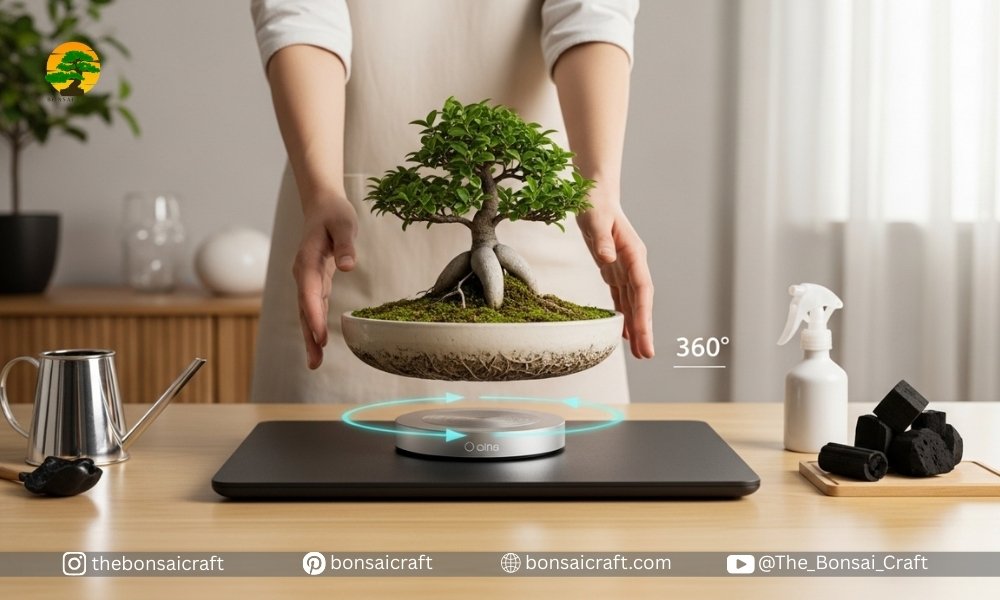
Owning a floating magnetic bonsai tree means engaging with both living plant care and smart device maintenance.
Step-by-Step: Setting Up a Floating Bonsai at Home
Setting up a floating bonsai requires placing the base on a flat, non-metallic surface and using a steady, two-handed grip to lower the pot into the magnetic “sweet spot” at the center of the base. Users should feel a strong upward resistance and a horizontal “lock-in” sensation before slowly releasing the pot. It is helpful to start with an unplanted pot to practice finding the center, as the magnetic pull can be quite strong and may cause the pot to slam into the base if misaligned.
Watering and Root Care Tips for Levitating Plants
To maintain a levitating plant, one must remove the pot from the magnetic base before watering to prevent moisture from damaging the sensitive electromagnetic coils. Because these pots are small, they dry out faster than traditional containers; therefore, a light misting or a specialized “dip” watering method is recommended. Owners should also add a small amount of activated charcoal to the soil to prevent anaerobic bacteria from forming, as the lack of a standard drainage tray can sometimes limit air circulation to the roots.
Troubleshooting: What to Do When It Stops Floating
If a bonsai stops floating, the most common causes are a disconnected power source, a weight imbalance due to plant growth, or magnetic interference from nearby metallic objects. First, verify that the AC adapter is functional and that the pot hasn’t gained too much weight from recent watering or new foliage. If the system is overheated from multiple failed setup attempts, it is best to unplug the base for 15 minutes to allow the magnets and circuitry to recalibrate before attempting to find the levitation point again.
Design Ideas & Decor Inspiration
Bonsai trees are not for plant enthusiasts; their beauty has captivated minimalist, modern, and interior designers. Their stunning bonsai showcase, combined with silent 360-degree rotation, makes for an adaptable centerpiece fitting any setting, from modern to traditional, showcasing their multifunctional attribute as a decorative element.
Zen and Minimalist Home Integration
In minimalist homes, the floating bonsai serves as a “living sculpture” that embodies the Japanese concept of Ma, or the beauty of empty space. Placing the display on a low-profile console table against a neutral-colored wall allows the shadow cast by the rotating plant to create a dynamic, ever-changing piece of wall art. To enhance the Zen aesthetic, designers often surround the base with smooth river stones or a small sand raking tray, further blurring the line between high technology and ancient garden traditions.
Office and Commercial Space Styling
For commercial environments, floating bonsai act as a symbol of innovation and balance, making them ideal for reception desks, executive suites, and collaborative “wellness” zones. Their presence can help humanize a high-tech office while signaling to clients that the firm is forward-thinking and attentive to detail. In larger spaces, grouping three levitating displays at varying heights can create a sophisticated botanical installation that draws the eye and prompts engagement.
DIY Floating Plant Stand Display Projects
Craft-oriented enthusiasts can customize their floating displays by integrating the magnetic base into a custom-carved hardwood slab or a stone pedestal to hide the plastic or ceramic exterior. By adding small LED spotlights beneath the floating pot, a DIYer can emphasize the “air gap” and create a dramatic nighttime display. Some hobbyists even experiment with adding natural elements like preserved moss or driftwood to the exterior of the magnetic base to create a more seamless “floating island” appearance.
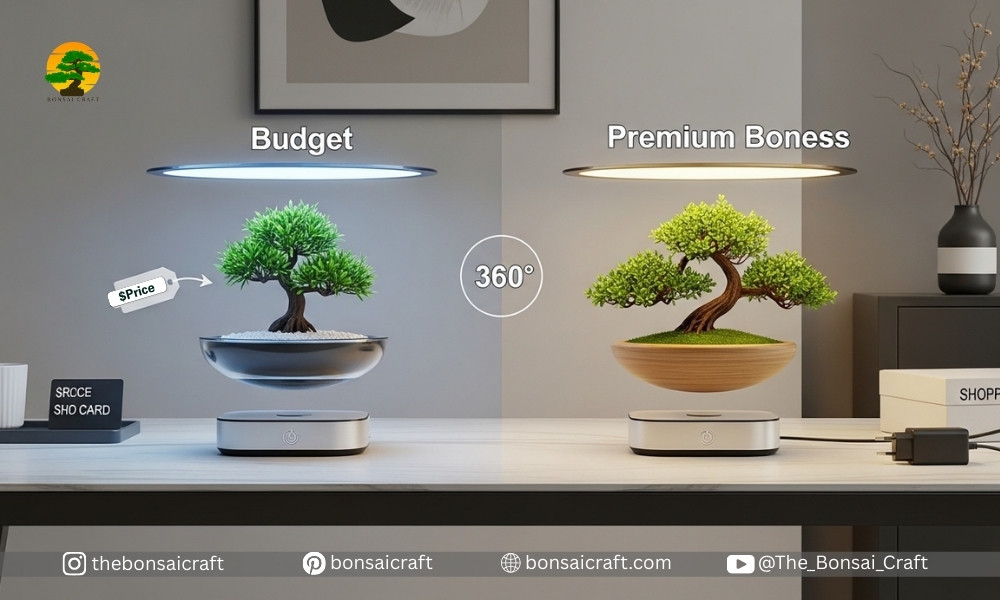
Are Floating Bonsai Trees Worth It? Cost & Buying Guide
Cost Breakdown: Tree + Pot + Tech
The cost of a floating bonsai setup typically ranges from $60 for basic models to over $300 for premium, artisanal systems, with the price dictated by the quality of the magnetic sensors and the type of plant included. Entry-level systems usually feature plastic bases and artificial plants, while premium versions utilize handcrafted ceramics and pre-trained live trees. When budgeting, owners should also factor in the small but continuous cost of electricity required to keep the electromagnet active 24/7.
Where to Buy Floating Bonsai Online
Authoritative platforms for purchasing floating bonsai include the original “Air Bonsai” boutique, specialized tech-lifestyle retailers like Hammacher Schlemmer, and artisanal marketplaces like Etsy. When shopping on marketplaces, it is essential to verify that the seller provides a specific weight rating for the magnets and a clear return policy in case of technical failure. Buyers should avoid “too good to be true” prices on unverified sites, as cheap magnetic systems often suffer from poor stability and lack safety features.
| Feature | Magnetic Levitating Base | Chain/Tensegrity Display |
| Active Levitation | Yes (Electromagnetic) | No (Mechanical Tension) |
| Motion | 360-Degree Rotation | Static or Swinging |
| Power Source | Requires AC Power | None |
| Maintenance | High (Tech + Plant) | Low |
Pros and Cons of Owning a Floating Bonsai
Pros
-
Unparalleled Visual Impact: Serves as a high-tech “wow factor” and conversation starter in any setting.
-
Biophilic Benefits: Combines the mental health benefits of greenery with the calming effects of kinetic motion.
-
Space Saving: Perfect for modern, small-footprint living where surface space is at a premium.
Cons
-
Weight Limits: Restricted to small, lightweight plants; cannot support traditional large-scale bonsai.
-
Power Dependency: The levitation effect ceases immediately if there is a power outage (unless equipped with a battery backup).
-
Price Point: Significantly more expensive than traditional pots due to the integrated Maglev technology.
Final Thoughts: Floating Bonsai in the Future of Eco-Tech
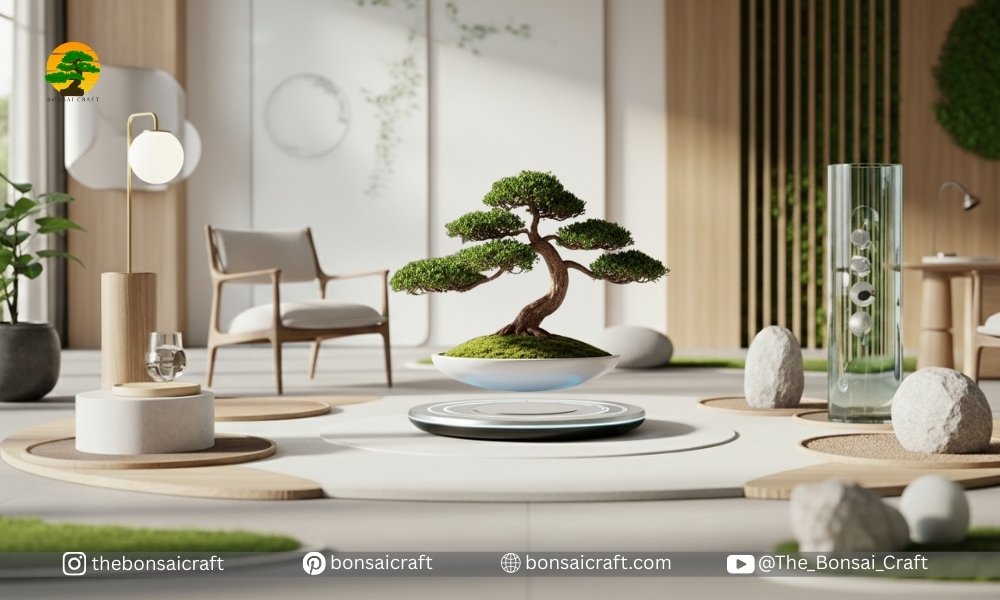
The floating bonsai tree represents a sophisticated evolution in “Eco-Tech,” demonstrating that nature and high technology can exist in a state of harmonious balance. As urban environments become increasingly digitized, these displays provide a necessary organic counterpoint that encourages mindfulness and aesthetic appreciation. They are not merely gadgets, but rather symbols of a future where human innovation is used to elevate and celebrate the natural world in unexpected, gravity-defying ways.
FAQs About Floating Bonsai Trees
Are floating bonsai trees real?
Yes, floating bonsai can be real living trees, provided they are species with compact root systems and are kept within the magnetic weight capacity of the base. However, many commercial sets include artificial trees for buyers who want the visual effect without the need for constant horticultural maintenance.
Can I use other plants in a levitating pot?
Users can float a wide variety of small plants, including succulents, air plants (Tillandsia), and miniature ferns, as long as the combined weight of the plant and soil does not exceed the magnet’s limit. Succulents are often preferred because they are naturally lightweight and require very little water.
Do floating bonsai trees run on batteries?
Most floating bonsai systems require a constant AC power adapter to maintain the electromagnetic field, though some high-end models may include a small internal battery for emergency stability. Continuous battery power is usually insufficient for the high-energy demands of the electromagnet over long periods.
How long do floating bonsai systems last?
The electromagnetic base and magnetic pot of a floating bonsai system are built with solid-state components that can last for many years with minimal mechanical wear. The longevity of the display is usually determined by the health of the plant; with proper care and regular pruning, a live floating tree can thrive for a decade or more.