
Salvia officinalis, commonly known as common sage (Salvia officinalis), is one of the most respected and widely cultivated herbs in the world. Appreciated for its strong aroma, culinary versatility, medicinal properties, and ornamental appeal, this sage plant Salvia officinalis has been grown in home gardens for centuries. Native to the Mediterranean region, Salvia officinalis is naturally adapted to dry, sunny environments, making it an excellent low-maintenance herb when its basic needs are understood and respected.
Growing sage (Salvia officinalis) successfully does not require advanced gardening skills. Instead, it relies on understanding the plant’s natural growth habits, soil preferences, and sensitivity to excess moisture. When these factors are aligned properly, Salvia officinalis can thrive for many years and provide a steady supply of flavorful, aromatic leaves.
What is Salvia officinalis?
If you’re wondering what is salvia officinalis, it is a perennial evergreen subshrub belonging to the Lamiaceae (mint) family, a family known for aromatic herbs such as rosemary, thyme, and basil. The salvia officinalis scientific name reflects its historical recognition in European apothecaries as a medicinal and culinary plant, highlighting the longstanding importance of sage salvia officinalis in herbal traditions.
The plant develops woody stems at the base as it matures, while newer growth remains soft and flexible. Its leaves are oval, slightly wrinkled, and covered with fine hairs, giving them a grayish-green appearance. These fine hairs help reduce water loss, an adaptation from its Mediterranean origin. During late spring to early summer, Salvia officinalis produces spikes of colorful salvia officinalis flowers—purple, blue, pink, or white—that attract pollinators and enhance garden biodiversity.
How to pronounce salvia officinalis: SAL-vee-uh uh-fis-ih-NAH-lis.
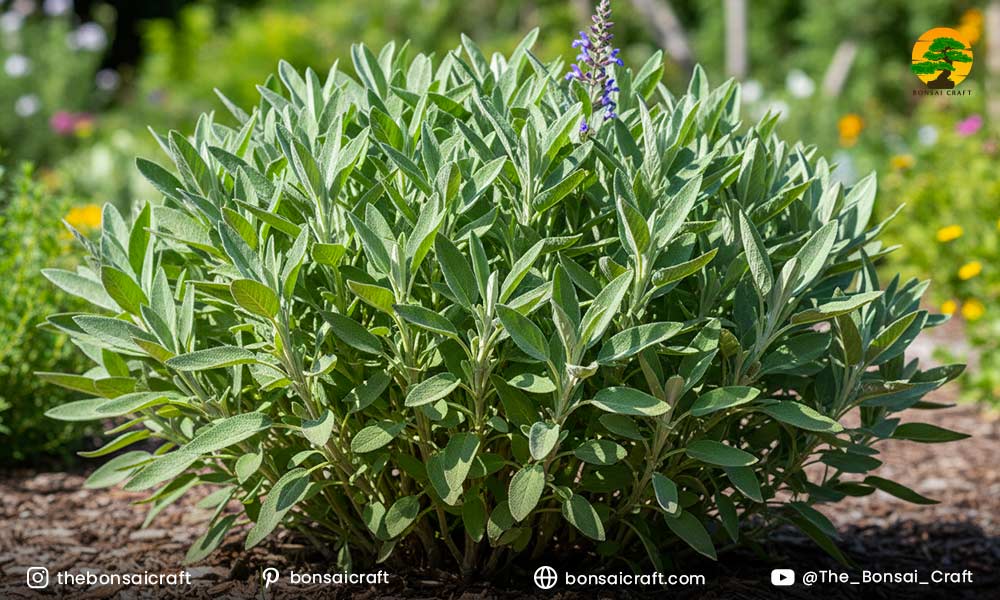
An overview of the Salvia officinalis sage plant, known for its aromatic leaves and easy care.
Overview of the Sage Plant (Salvia officinalis sage plant)
The sage plant salvia officinalis grows in a compact, bushy form, typically reaching between 1 and 3 feet in height, with a similar spread. Over time, the lower stems become woody, which is natural. While common sage (salvia officinalis) remains evergreen in mild climates, colder regions may see partial dieback in winter, followed by fresh growth in spring.
One of the most valuable characteristics of sage (salvia officinalis) is the essential oil contained in its leaves. This oil is responsible for the plant’s strong aroma and flavor, as well as its traditional medicinal uses. The concentration of these oils is influenced by sunlight, soil drainage, and pruning practices, making proper cultivation crucial.
Types and Varieties of Salvia officinalis
Although most gardeners grow common sage (salvia officinalis), there are several cultivated varieties, each with unique features. The standard green-leafed form is most common for culinary purposes due to its balanced flavor.
One notable variety is Salvia officinalis purpurascens, often called purple sage. This cultivar produces young leaves with a deep purple tint that fades to gray-green as they mature. While slightly milder in flavor than standard sage, it is prized for ornamental gardens and decorative plantings.
Other varieties, such as ‘Tricolor’ and ‘Berggarten,’ are selected for leaf color, compact growth, or reduced flowering, especially when the goal is high-quality leaf production rather than ornamental flowers.
Ideal Growing Conditions for Salvia officinalis
Successful cultivation of salvia officinalis sage plant begins by mimicking its native environment. Sunlight, airflow, and drainage are more important than rich soil or frequent watering. Sage plant salvia officinalis thrives in full sun, requiring at least six to eight hours of direct sunlight daily. Adequate sunlight ensures compact growth, strong stems, and high essential oil levels.
Soil is equally important. Salvia officinalis requires well-drained soil and struggles in heavy clay or water-retentive conditions. Sandy or light loamy soils are ideal, allowing excess moisture to drain. Sage tolerates mild pH variations but prefers neutral to slightly acidic soil.
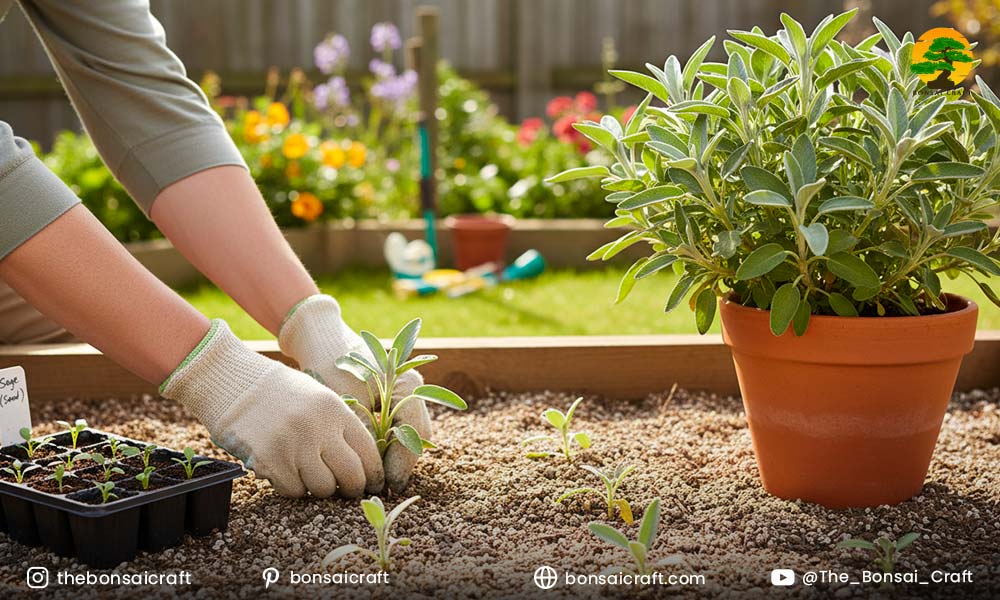
Follow a simple step-by-step guide to growing Salvia officinalis for strong, healthy plants.
How to Grow Salvia officinalis Step by Step
Sage can be grown from seeds, cuttings, or nursery plants, each with advantages. Seed propagation is cost-effective but slow, and early seedlings may vary in flavor and appearance. Sage (salvia officinalis) cuttings offer reliable reproduction of preferred cultivars, rooting quickly to produce mature plants faster than seeds.
When planting in the ground, proper spacing is essential. Crowded plants restrict airflow and increase fungal risk. Container planting is ideal in humid or rainy regions; terracotta pots are especially effective at absorbing excess moisture.
Watering and Feeding Salvia officinalis
Overwatering is a common mistake with salvia officinalis. Unlike many leafy herbs, it prefers soil that dries between waterings. Once established, sage salvia officinalis is drought-tolerant, requiring only occasional deep watering during prolonged dry spells. Frequent shallow watering weakens roots and encourages fungal disease.
Fertilization should be light. Sage evolved in nutrient-poor soils and does not respond well to heavy feeding. Excess nitrogen encourages leaf growth but reduces essential oil content, weakening flavor. A light compost application in early spring is sufficient.
Pruning and Ongoing Maintenance
Pruning is vital to maintain a healthy sage plant salvia officinalis. Without it, older plants become woody and produce fewer leaves. Light pruning after flowering promotes a compact shape and encourages new growth. Avoid cutting deeply into old woody stems, as these may not regenerate.
Common Problems When Growing Salvia officinalis
Most problems arise from excess moisture or poor airflow. Fungal diseases, such as powdery mildew and root rot, are common in unsuitable conditions. Pests such as aphids, spider mites, and whiteflies appear occasionally but rarely damage healthy sage (salvia officinalis) grown in full sun with good spacing.
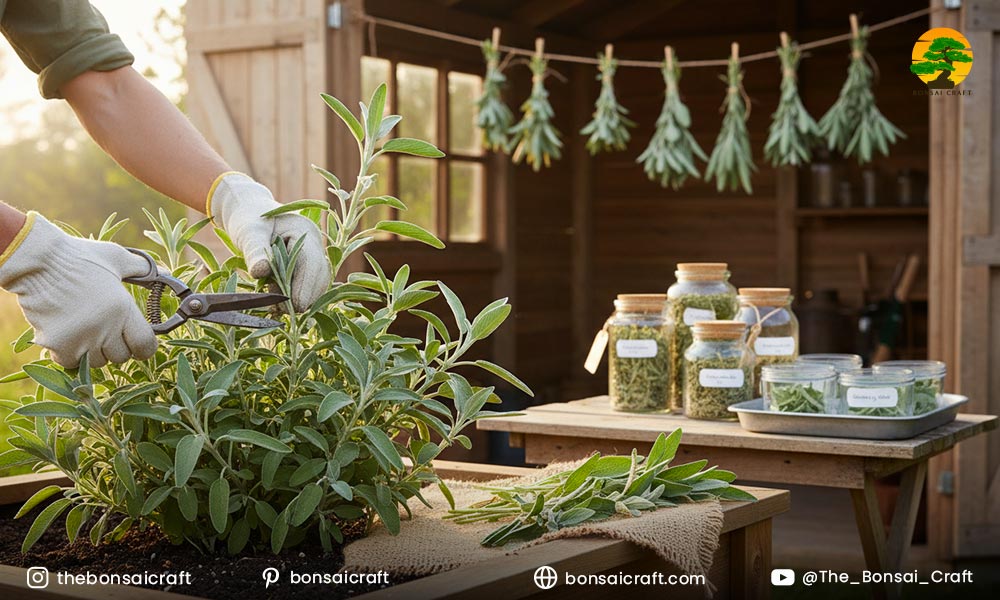
Learn the right way of harvesting and storing Salvia officinalis to preserve its flavor and aroma.
Harvesting and Storing Salvia officinalis
Leaves should be harvested when the plant is established, ideally during its second growing season. The best time is just before flowering, when essential oils are concentrated. Harvest in the morning after dew has evaporated but before midday heat.
Leaves can be air-dried in a shaded, ventilated area or frozen. Freezing often retains aroma better than drying, ensuring culinary and medicinal potency for salvia officinalis sage plant use.
Salvia officinalis Medicinal Uses and Traditional Value
The salvia officinalis medicinal uses include digestive support, anti-inflammatory effects, and sore throat relief. Its leaves contain antioxidant and antimicrobial compounds, explaining its historical value. Modern research continues to explore cognitive and health benefits. However, concentrated essential oils contain thujone, requiring moderation.
Can You Smoke Salvia officinalis?
Though some traditions burned sage leaves, can you smoke salvia officinalis? While it is non-psychoactive and produces no hallucinogenic effects, it is sometimes confused with Salvia divinorum. Smoking common sage (salvia officinalis) is not recommended for health purposes.
Final Tips for Growing Salvia officinalis Successfully
- Provide full sunlight to maintain aroma and flavor.
- Use well-draining soil to prevent root rot.
- Water sparingly; allow soil to dry between waterings.
- Prune after flowering to encourage new growth.
- Harvest leaves before flowering for best flavor.
- Replace older plants every 3–5 years for consistent quality.
By following these steps, a salvia officinalis sage plant can thrive for years, producing aromatic leaves and colorful flowers for culinary, medicinal, and ornamental use.
Top 5 FAQs About Salvia officinalis
What is Salvia officinalis and what is it used for?
Salvia officinalis, also known as common sage (salvia officinalis), is a perennial herb valued for its aromatic leaves, culinary versatility, and medicinal benefits. It is used in cooking to flavor meats, sauces, and stews. Medicinally, salvia officinalis medicinal uses include aiding digestion, relieving sore throats, and providing anti-inflammatory and antioxidant effects. Its essential oils are the source of both aroma and health properties.
How do I grow a healthy sage plant salvia officinalis?
Growing a strong sage plant salvia officinalis requires full sunlight, well-draining soil, and minimal watering. Avoid overcrowding and ensure proper airflow to prevent fungal issues. Regular pruning promotes new growth and maintains a compact bushy shape. For regions with high humidity or heavy rainfall, container planting in terracotta pots is recommended.
What are the main types of Salvia officinalis?
Salvia officinalis has several popular varieties:
- Common sage (salvia officinalis): Classic green leaves with strong flavor.
- Salvia officinalis purpurascens: Purple young leaves that fade to gray-green, slightly milder flavor, and ornamental appeal.
- Cultivars like ‘Tricolor’ or ‘Berggarten’ are selected for leaf color, compact growth, or reduced flowering.
Choosing the right variety depends on whether culinary use or decorative planting is the main goal.
How should I harvest and store Salvia officinalis?
Harvest salvia officinalis leaves before flowering for maximum flavor and essential oil content. Morning harvesting preserves aroma. Leaves can be air-dried in a shaded area or frozen for long-term culinary and medicinal use. Freezing often retains flavor better than drying, making it ideal for the sage plant salvia officinalis.
Can you smoke Salvia officinalis?
While some traditions burn sage leaves, can you smoke salvia officinalis? Yes, but it is non-psychoactive and does not produce hallucinogenic effects. It is different from Salvia divinorum, which is psychoactive. Smoking common sage (salvia officinalis) provides aroma but no proven health benefits.