

Wiring a bonsai tree is a very important process that allows you to get the desired shape and style of your tree. This is an ongoing process that is done by wrapping different branches and the trunk of a tree with wire. And this whole process can take a very long time, from a few weeks to a few months or a few years.
There are many things to consider and many guidelines to follow while someone is going through the process of wiring a bonsai tree. Because wiring a tree isn’t an easy task. It will be difficult without proper guidelines.
Moreover, you can never achieve your goal without following the right instructions. So, before starting this process, you should know more information regarding bonsai wiring. Otherwise, you won’t be able to get the desired design and style of your tree through wiring.
So in this article, we’ll discuss the information regarding bonsai wiring, including when and how you should start wiring a bonsai tree, types of bonsai wire, and so on.
So let’s drive into the depths of the article and figure out all the necessary information you need to know about wiring a bonsai tree.
If you are just starting your bonsai journey, this complete bonsai care guide explains foundational concepts such as growth control, pruning balance, and long-term training that directly support effective wiring.
Bonsai tree wiring
Bonsai tree wiring is the technique of shaping and training a bonsai tree by guiding its trunk and branches using wire. Bonsai wiring is one of the most important techniques for shaping and training a bonsai tree into a particular size, style, and look. Nothing can help you better keep the growth and shape of a bonsai tree in your desired size and style than this wiring technique.
In this process, wire is wrapped around the trunk or branches to move them in a new direction according to the desired shape. Without wiring, a unique design and shape of a bonsai tree can be achieved.
However, regular pruning and trimming can help you keep the tree small in size. But a bonsai tree doesn’t always mean a tree that is small in size. Bonsai is an art that allows an artist to create something new, and the most attractive thing about bonsai is its unique design and shape.
So, as a bonsai artist, you must be aware of the proper training and design of your tree. And the only way to get the desired design and style is bonsai wiring.
Wiring allows you to control the natural growth of your tree. By wiring, you can bend and reposition any branches or trunk of a tree of your own choice. Thus, wiring allows you to get an unnatural shape and design of a natural tree, which is called a bonsai tree.
For a broader understanding of how wiring fits into overall bonsai training, this step-by-step bonsai wiring guide covers core principles used across different bonsai species.
When should we apply wiring?
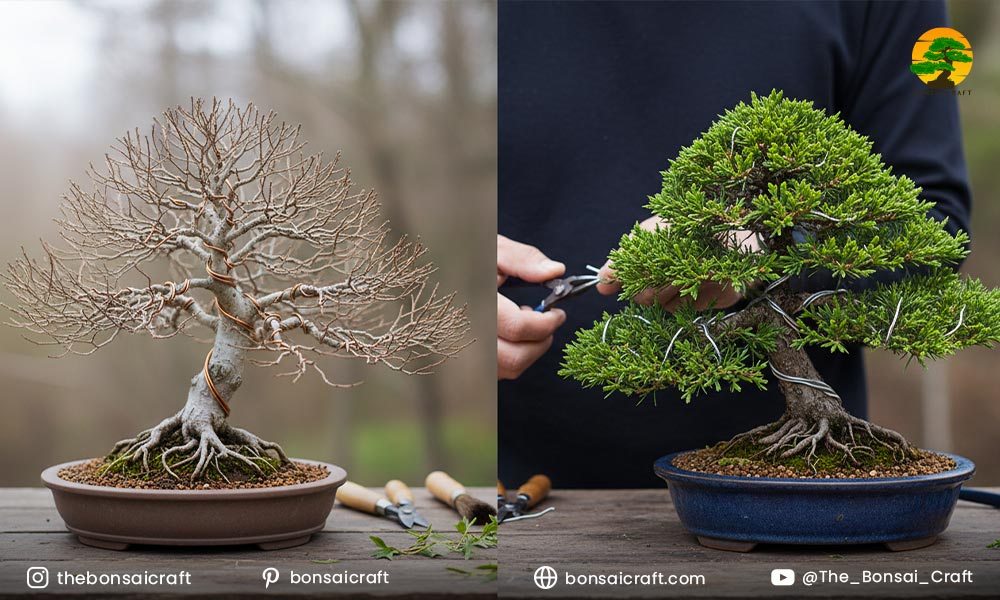
Wiring should be applied when a bonsai tree is healthy, young, and flexible enough to bend safely. Wiring should be applied to a healthy, young tree when its root system is established enough. Younger trees are flexible enough to bend without breaking, while older trees are fragile, so the trunks or branches can be damaged while wiring.
Moreover, choosing the right time for wiring a bonsai tree also depends on the season, according to the tree species.
For example, deciduous trees require wiring in the late winter or early spring. That’s because the absence of leaves, in this season, creates a clear visualization of the trunk and branches. And the bare limbs allow you to apply the wiring in the right way.
On the contrary, coniferous trees should be pruned in the early winter or late autumn. Though coniferous trees always contain a certain amount of foliage, there is no chance of getting bare limbs like the deciduous trees. But at this time, the growth of the plant is comparatively reduced, and the sap in the branches is diminished, which increases the flexibility of the plant and ensures the best wiring.
Types of wire
There are two main types of bonsai wire: copper wire and aluminum wire, each suited for different tree types. There are typically two types of bonsai wire made from two different materials and named according to their materials. One is made from copper and called copper wire, and the one is made from aluminum and called aluminum wire. These two types of bonsai wire come with their advantages and disadvantages, too.
Copper Wire
Copper wire is a strong bonsai wire mainly used for hard and coniferous tree species. Copper wire is stronger than aluminum wire. So, copper wire is recommended to be used for harder trees like conifers and pines. But because of their extra steadiness, they hold their form in place. As a result, it can damage the branches and trunks of the trees if they’re not carefully pruned.
Aluminum Wire
Aluminum wire is a flexible and beginner-friendly bonsai wire commonly used for deciduous trees. Aluminum wires are more flexible and delicate than copper wire, which is generally used for deciduous trees. They are easy to use and manipulate. Moreover, there is no need for regular monitoring, while copper wire requires regular monitoring for safe use. So, aluminum wires are highly recommended for beginners to start wiring with them.
For growers interested in advanced structural refinement, combining wiring with correct seasonal care is essential, as explained in this ultimate guide to watering bonsai tree.
How to wire a Bonsai tree
Wiring a bonsai tree involves selecting the right time, wire, and technique to safely shape branches and trunks. Wiring a bonsai tree is a continuous process that may take a longer period to complete. In this case, multiple tricks and techniques can be applied by the masters. But it’s also not a big deal for the newbies when anyone is truly devoted to their work. If you follow some easy instructions in the right way, you’ll be able to achieve your desired results.
So let’s see how to wire a bonsai tree just by following a few simple steps.
Step 1: Choosing the right time for wiring
Choosing the right time ensures branches are flexible and reduces the risk of damage. The first thing to be considered in this process is to determine the right time for wiring. As we mentioned above, start wiring when your tree is young and healthy enough. Never wire an unhealthy or immature tree.
Besides, if you have deciduous trees, start wiring in the early spring and if you’ve coniferous trees, then start wiring in the late autumn.
Step 2: Selecting the correct wire
Selecting the correct wire depends on the tree species, branch thickness, and flexibility. After determining the right time to start wiring, select the wire type to use according to the tree species. The aluminum wire would be the best choice for deciduous trees, while the copper wire is preferable for wiring coniferous trees.
Not only that. In this step, select the correct size and length of the wire, in addition to choosing the material of the wire. Always use wire about ⅓ the diameter of the branches and the trunk being wired.
Step 3: Planning the wiring
Planning the wiring helps identify which branches and areas need reshaping.
Before starting wiring, determine your tree very carefully and identify the branches and trunk that need to be re-shaped in a new direction and where you should apply wiring.
Step 4: Apply wire to the selected areas
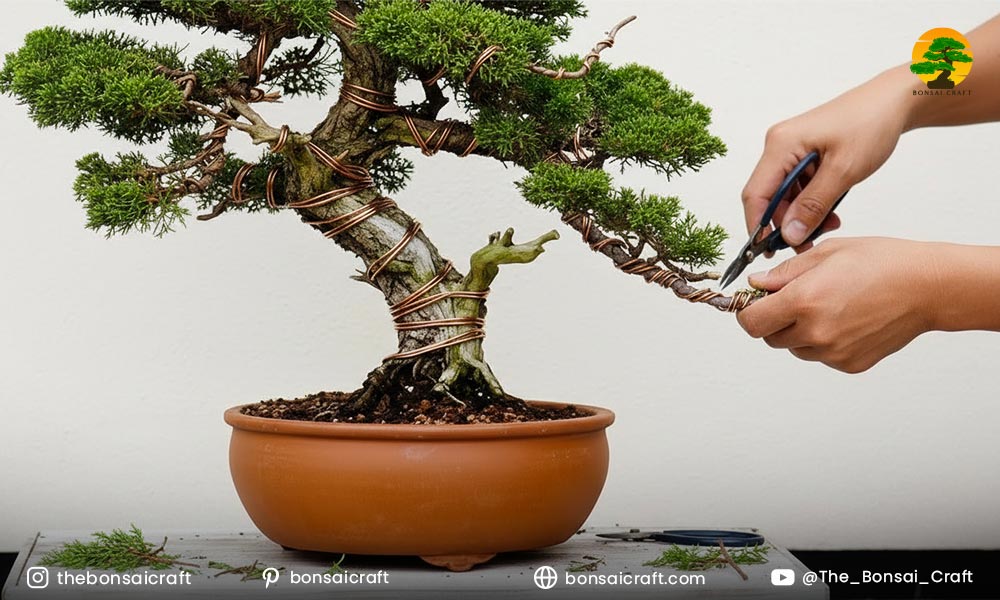
Applying wire correctly anchors branches and prepares them for bending. Now it’s time to apply the wire to the selected part of the tree. If you’re wiring branches, anchor the wire around the trunk and start wiring on the way to the tips.
On the contrary, if you’re re-styling the trunk, anchor one end of the wire in the soil along the base of the tree so that it is firmly inserted. Then wrap the wire twice around the base and keep wrapping up the trunk.
Step 5: Bending the wire
Bending sets the wired branches into the desired position carefully and gradually. When you’re finished wiring the tree completely, you can start bending the bonsai wire. First of all, trim off the wire ends with a sharp wire cutter. Then hold the outside of the wired branch with your fingers, very gently apply pressure on the inside of the branch and bend it into the desired position.
Step 6: Removing the wire
Removing the wire at the right time prevents bark damage and scarring. When the wired branches or trunks are set in their new position, the wire can be removed. You should also remove the wire when branches start to grow into the tree. Besides, the wire will also be removed before they start digging into the bark.
Our Final Thoughts
Bonsai wiring is a long-term training technique that requires patience and correct guidance. Bonsai wiring, as we said before, is a continuous process that can take from a few months to many years. So you will most likely have enough patience to achieve your desired goal, as well as know enough guidelines.
For the first time, this wiring technique can be seemingly very difficult to do. But when you follow the proper guidelines, as we mentioned above, and with a little practice and time, you will get this process very relaxing. Thus, as time goes by, you will become more successful and skillful as a bonsai master.
As wiring is part of long-term bonsai development, this resource on essential tips to keep your bonsai tree thriving provides additional insight into maintaining health while training.
Frequently Asked Questions
Can the electrical wire be used for bonsai?
No, electrical wire should never be used for bonsai wiring. Electrical wire isn’t suitable to use for wiring bonsai trees. Copper wire and aluminum wire are the most suitable wires for wiring a tree. You can choose any of them but never think of using an electrical wire.
How long do wires stay on bonsai?
Bonsai wires stay on the tree until branches hold their new shape. There is no specific time for how long the wires will stay on the bonsai plant. Wires must be removed when the branches hold the desired position and shape. But if you eagerly want to know about the period, perhaps it may take around six to ten weeks, depending on the type of tree and the time of the year.
Can you bonsai without metal wire?
Yes, bonsai trees can be trained without using metal wire. You can create a bonsai without using any metal wire, like copper, aluminum, or stainless steel wire. You can use raffia, yarns, bamboo, or jute rope for wiring a bonsai tree.
What can I use instead of bonsai wire?
Materials like raffia, rubber bands, yarn, or jute rope can replace bonsai wire. There are many alternatives to bonsai wire that you can use for re-shaping or re-styling your bonsai tree. You can use raffia, rubber bands, yarn, or jute rope for wiring your bonsai tree instead of bonsai copper and aluminum wire.
When should I start bonsai bending?
You should start bending bonsai branches immediately after wiring is complete. Once you’ve completed wiring the entire tree, you can start bending and repositioning the wired branches of your bonsai tree.
What wire do you use for wire trees?
Aluminum wire is the most commonly used wire for bonsai trees. As we already know, there are two major types of bonsai wire: copper wire and aluminum wire. Aluminum wire is more flexible than copper wire and is very easy to use and maintain. It is also suitable for most tree species. So I hope aluminum wire would be the best choice for wiring trees.
Can you grow bonsai without wiring?
Yes, bonsai can grow without wiring, but advanced shaping becomes limited. Many of us think wiring bonsai trees is a very difficult process, and often it is frustrating. Though it is not so wrong, without wiring a tree, we can’t get the dreamy style and shape of our bonsai trees. But if you think that it is so scary, then you can also grow bonsai without wiring. Regular pruning will help you keep the size of your bonsai tree small.