

The strawberry tree (Arbutus unedo) is an evergreen shrub or small ornamental tree prized for its glossy foliage, seasonal white or pale pink flowers, and ornamental red fruits that resemble tiny strawberries. Despite its name, the fruits are distinct from garden strawberries and have a unique texture and mildly sweet‑tart flavour that is frequently used in jams, jellies, and traditional liquors. Known for its drought tolerance and architectural form, the strawberry tree thrives in Mediterranean climates, coastal landscapes, and low‑maintenance gardens, making it an appealing choice for gardeners seeking both ornamental beauty and edible interest.
This comprehensive guide will walk you through everything you need to know, from planting and watering to pruning, propagation, problem-solving, and harvesting, with expert insights rooted in reliable, publicly accessible sources. For watering advice, refer to our ultimate guide to watering bonsai trees.
What Is a Strawberry Tree?
The strawberry tree (Arbutus unedo) is an evergreen ornamental tree known for its year‑round foliage, bell‑shaped flowers, and red edible fruit.
Belonging to the Ericaceae family, Arbutus unedo is a hardy shrub or small tree native to the Mediterranean region and parts of western Europe. It blooms with fragrant, white to pale pink flowers in late autumn or winter, often concurrently with ripening fruit from the previous season, a rare sight in many gardens. The tree’s fruits are round, rough‑textured, and change from yellow to deep red when ripe. Despite their resemblance to strawberries, the fruits have a distinct taste and are most commonly processed into jellies, jams, and fermented beverages rather than eaten fresh. You can compare fruiting trees in our bonsai lemon tree guide.
How to Plant a Strawberry Tree
To successfully plant a strawberry tree, choose well‑drained soil in a sunny to lightly shaded location and avoid waterlogged conditions.
Begin by selecting a planting site with at least 6–8 hours of sunlight daily, ideally where the soil is loose and well-drained. Strawberry trees tolerate a range of soil types, from slightly acidic to neutral, as long as drainage is excellent. If your soil is heavy or clayey, incorporating organic matter or creating a raised bed can significantly improve soil structure. Dig the hole much wider than the root ball to allow roots to spread freely. After placing the tree at collar level, backfill with soil and gently firm it around the roots, then water deeply to settle the soil and eliminate air pockets. Regular watering is crucial during the first year to establish a healthy root system, but once mature, Arbutus unedo becomes drought-tolerant. For tips on soil, see our bonsai soil guide.
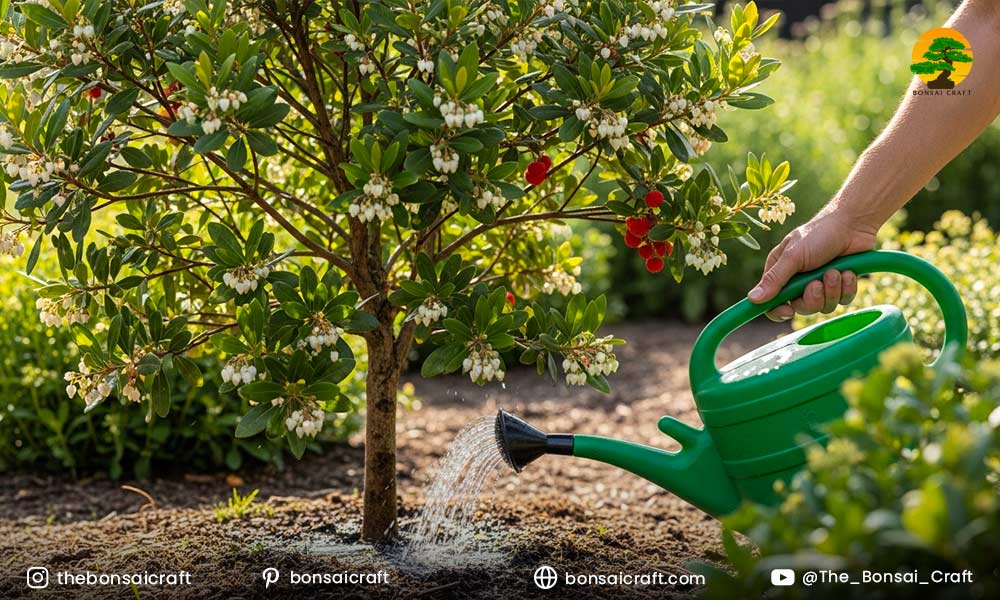
How to Water a Strawberry Tree
Experienced strawberry tree care involves deep, infrequent watering that maintains moisture without causing root rot.
Young strawberry trees require consistent moisture during their first growing season to develop a robust root system. Water deeply to ensure moisture reaches the deeper roots, then allow the soil to partially dry before the next watering. After establishment, mature trees are drought-tolerant and typically only need supplemental watering during long dry spells or extreme heat, especially in containers. Avoid frequent shallow watering, as this encourages weak, surface roots and increases disease susceptibility. Allowing the soil to dry slightly between waterings helps prevent root rot and other moisture‑related issues. See the importance of bonsai tree watering for more guidance.
What Soil and Light Conditions Do Strawberry Trees Need?
Strawberry trees thrive in well‑drained soil with full sun to partial shade; they prefer slightly acidic to neutral pH but tolerate a variety of conditions.
For optimal growth, plant your Arbutus unedo in soil that is gritty, free‑draining, and rich in organic matter. Light sandy loams or amended garden soil with compost work well. While the tree tolerates a range of light conditions, full sun or bright light yields the best flowering and fruiting performance. In hotter climates, a bit of afternoon shade can help reduce leaf scorching. These trees are hardy in temperate regions (USDA zones 7–10) and can withstand salt spray and coastal exposure when given proper drainage and protection from cold winds. According to the Royal Horticultural Society, strawberry trees prefer sunny, well-drained locations for the healthiest growth and best fruiting.
How to Prune a Strawberry Tree
Proper pruning of a strawberry tree is minimal and typically involves removing dead or damaged wood in late winter or early spring.
Unlike commercial fruit trees requiring regular shaping, Arbutus unedo generally maintains an attractive open form with little pruning. Remove only dead, diseased, or rubbing branches to enhance air circulation and light penetration, which helps reduce disease pressure. Light structural pruning can be done after fruiting finishes and before new growth begins to avoid cutting off flower buds that develop on older wood. Avoid heavy shearing or drastic pruning, which can lead to excessive unintended growth and reduce flowering for the season. For pruning techniques, see our bonsai wiring and pruning guide.
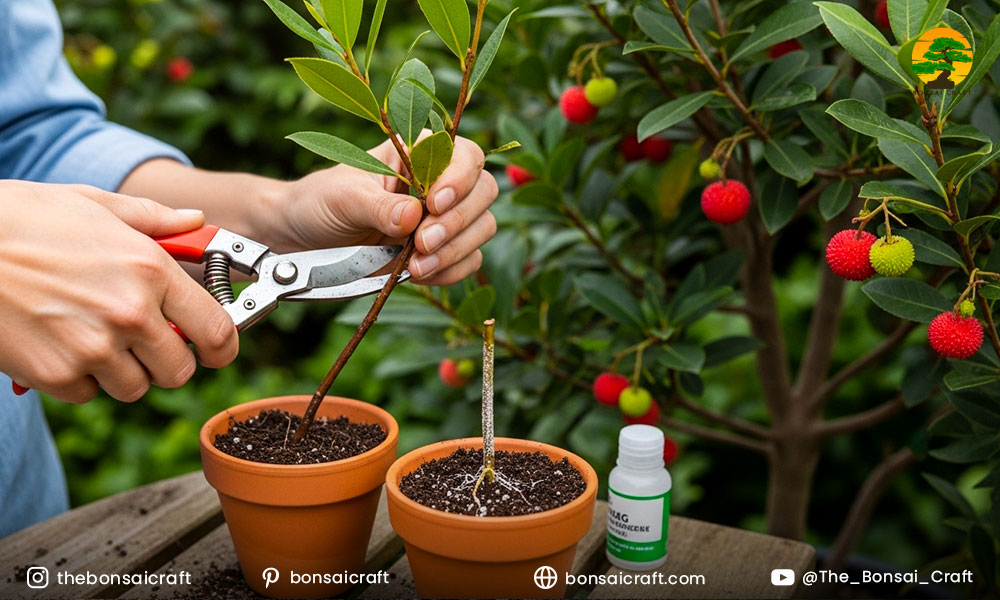
How to Propagate Strawberry Trees
Strawberry trees can be propagated from seeds or semi‑hardwood cuttings, but cuttings are generally more reliable.
Propagation from seeds requires cold stratification, a period of cool treatment to break seed dormancy, and germination can be slow and inconsistent. On the other hand, semi‑hardwood cuttings taken in late summer tend to root more successfully when placed in a well‑draining medium with consistent humidity. Some gardeners also use air layering as an effective method, especially with larger specimens, because it produces a more mature plant more quickly than seed propagation. Regardless of method, propagation requires patience and careful moisture control to prevent rot during early development stages. For more on propagation, check our guide to bonsai seeds.
When Do Strawberry Trees Fruit and How to Harvest
Strawberry trees typically flower in autumn or winter, and their fruits require many months to ripen, often maturing by late autumn.
Unlike typical fruit trees, Arbutus unedo exhibits an extended development cycle: flowers can bloom in the cooler months, followed by fruits that take nearly a full year to ripen. Fully ripe fruits are usually firm yet slightly soft and deep red in colour. They are best harvested when completely coloured and slightly yielding to gentle pressure. The fruits’ flavour is unique, often described as mildly sweet, tangy, or somewhat bland, and they are frequently processed into jams, jellies, liqueurs, or fermented products like the Portuguese medronho.
Why Are My Strawberry Tree Leaves Turning Yellow?
Yellowing leaves on a strawberry tree are often a sign of water stress, nutrient imbalance, or poor soil drainage.
Leaf yellowing can result from overwatering, which saturates the soil and deprives roots of oxygen, leading to root stress and chlorosis. Conversely, underwatered or drought‑stressed trees may also show yellowing as a stress response. Nutrient deficiencies, particularly nitrogen or iron, can disrupt chlorophyll production, resulting in pale or yellow leaves. Ensuring well‑drained soil, balanced fertilization, and appropriate watering practices typically mitigates these issues and promotes healthy foliage. For beginner bonsai tips, see our best bonsai trees for beginners guide.
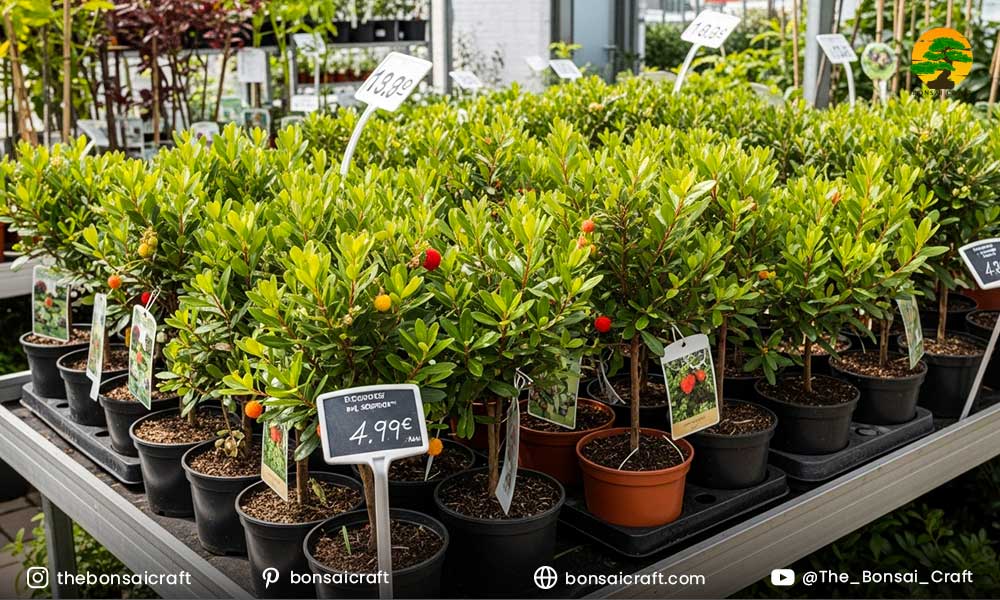
Where to Buy Strawberry Trees
Strawberry trees can be purchased from reputable nurseries and online plant retailers that offer Arbutus unedo specimens for garden and container growing.
You can find strawberry trees available from established nurseries and reputable online sellers that specialize in ornamental and fruiting trees. Many garden centres offer Arbutus unedo in standard or dwarf forms suitable for hedges, containers, or specimen planting. When purchasing, choose healthy, well‑rooted plants and avoid excessively wet or pot‑bound specimens for best establishment outcomes.
Adapting Strawberry Tree Care for Bonsai and Hedges
Strawberry trees can be trained as attractive bonsai or formal hedges with careful pruning and root management.
For bonsai cultivation, select a young plant with fine branching and supply a fast‑draining bonsai soil mix. Regular, light pruning and wiring help cultivate an appealing miniature form. Strawberry trees also respond well to hedging, especially when lightly tipped throughout the growing season to encourage dense branching while preserving flowers and fruit. Remember that heavy or frequent shearing can reduce the visual display of blossoms and berries, so opt for gentle shaping instead.
Frequently Asked Questions (FAQs)
Can you eat strawberry tree fruit?
Yes, strawberry tree fruits (Arbutus unedo) are edible. The berries are often processed into jams, preserves, and fermented beverages because their texture and mild flavour are better suited to cooking than eating fresh.
How long does it take for a strawberry tree to fruit?
Strawberry trees often take several years before producing fruit; some cultivars may fruit sooner than others. Fruiting can require up to 5+ years from seed and earlier if propagated by grafts or cuttings.
What soil pH is best for strawberry trees?
Strawberry trees prefer slightly acidic to neutral soil with excellent drainage, although they tolerate a range of soil types as long as saturation is avoided.
Should I fertilize my strawberry tree?
Fertilization isn’t usually necessary, but a light application of balanced fertilizer or compost in spring can support health and growth, especially in poor soils.
How do I prevent pests and diseases on a strawberry tree?
Good cultural practices such as proper spacing, pruning for airflow, and healthy soil help prevent most problems. Occasional pests like aphids can be controlled with organic sprays if needed.
Conclusion
Caring for a strawberry tree (Arbutus unedo) combines ornamental beauty with practical ease. Its evergreen foliage, striking flowers, and unique fruits make it a versatile choice for gardens, hedges, containers, and even bonsai. With proper planting, balanced watering, minimal pruning, and attention to soil quality, these trees reward patience with year‑round interest and seasonal fruit. Whether you’re a novice gardener or seasoned horticulturist, understanding the core principles of strawberry tree care ensures healthy growth and long‑term success.