The Privet Bonsai (Ligustrum) is a hardy, fast-growing bonsai species valued for its adaptability and refined appearance. Its small, glossy leaves, strong branching structure, and tolerance to frequent pruning make it a favorite among both beginners and experienced bonsai growers. Privet bonsai trees respond well to shaping techniques and recover quickly from trimming, allowing artists to experiment with multiple styles. Because of its resilience and visual elegance, the Ligustrum Bonsai Tree Privet is suitable for both indoor and outdoor cultivation when cared for properly.
For readers who are new to bonsai care and want a broader understanding beyond individual species, this complete bonsai care guide explains the core principles of pruning, watering, and long-term maintenance.
What is the Privet Bonsai (Ligustrum)?
The Privet Bonsai is a miniature tree created from the Ligustrum species that is known for easy growth and versatile styling. It features small, shiny leaves, a woody trunk, and dense branching, making it ideal for classic bonsai forms such as formal upright, informal upright, slanting, and cascade styles. During summer, the tree produces small white flowers followed by decorative black berries, adding seasonal interest. With consistent pruning, watering, and light management, the Privet Bonsai develops a refined structure that enhances both indoor and outdoor bonsai displays.
Privet is one of many versatile species used in bonsai, and this guide to different types of bonsai trees helps readers understand how Ligustrum compares with other popular bonsai varieties.
Care Guide for the Privet Bonsai Tree (Ligustrum)
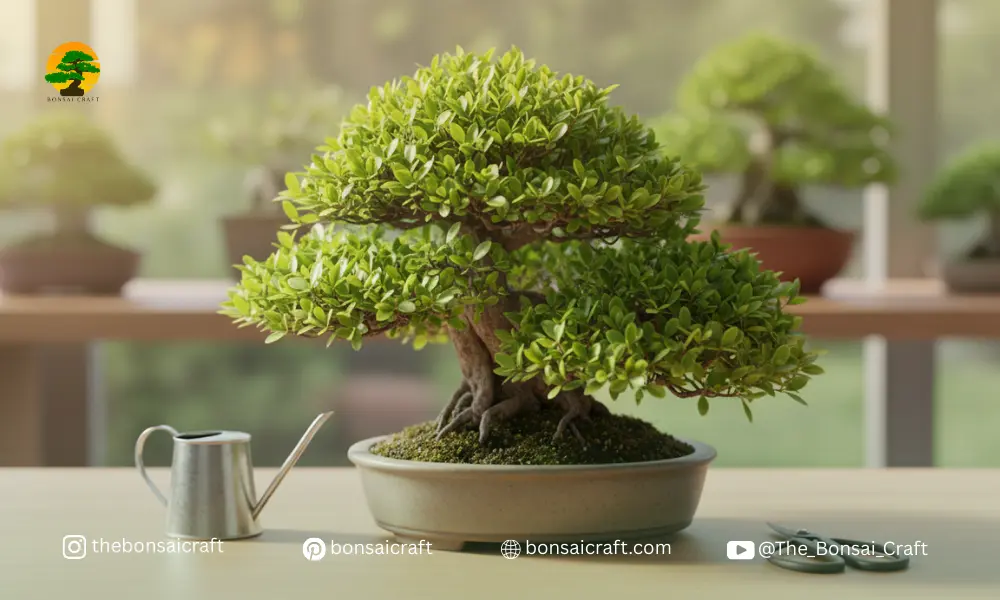
The Privet Bonsai Tree (Ligustrum) requires balanced light, watering, pruning, and nutrition to remain healthy and visually compact. This adaptable bonsai responds well to regular maintenance and can thrive for many years when basic care principles are followed consistently. Below is a detailed breakdown of essential care requirements for maintaining a strong and attractive Ligustrum Bonsai.
Lighting Requirements
The Privet Bonsai grows best in bright light with some protection from harsh midday sun. When kept indoors, place the bonsai near a south- or west-facing window where it receives several hours of natural sunlight daily. Outdoors, partial to full sun is ideal, but excessive midday heat can scorch leaves. Adequate light encourages compact growth, healthy foliage, and strong branch development throughout the growing season.
Because light exposure directly affects leaf size and growth density, this detailed guide on indoor bonsai trees explains how light positioning influences bonsai health indoors.
Watering
Proper watering is critical for maintaining healthy roots and preventing stress in a Privet Bonsai. Water the tree thoroughly when the top 1–2 inches of soil feel dry, ensuring excess water drains freely from the pot. Overwatering can lead to root rot, while underwatering may cause leaf drop and weakened growth. Although adaptable to varying humidity levels, Privet Bonsai trees perform best in moderate, consistent moisture conditions.
Temperature and Environment
The Privet Bonsai thrives in moderate temperatures and stable environmental conditions. Ideal temperatures range between 60°F and 75°F (16°C–24°C). While the Ligustrum Bonsai Tree Privet can tolerate light frost, prolonged freezing temperatures may damage roots and branches. When grown outdoors, place the tree in a sheltered location protected from strong winds and sudden temperature fluctuations.
Soil and Repotting
Well-draining soil and periodic repotting are essential for healthy root development in a Privet Bonsai. A bonsai soil mix containing akadama, pumice, and lava rock provides proper moisture retention while preventing waterlogging. Repot every 2–3 years in early spring before active growth begins. During repotting, lightly prune the roots to maintain a compact and efficient root system that supports long-term health.
Because soil structure plays a critical role in drainage and oxygen flow, this guide on bonsai plant soil explains how proper mixes support healthy root systems.
Trimming and Wire Exhibition
Regular trimming and careful wiring help maintain shape, density, and structure in a Privet Bonsai. Prune vigorous shoots frequently to encourage dense foliage and prevent leggy growth. Use clean, sharp bonsai tools to minimize damage and stress. Ligustrum branches are flexible and respond well to wiring, making this species especially suitable for shaping into various traditional bonsai styles.
Fertilizing
Consistent fertilization supports healthy growth and vibrant foliage in Privet Bonsai trees. Apply a balanced liquid fertilizer every two to four weeks during spring and autumn. A general-purpose bonsai fertilizer such as 10-10-10 provides essential nutrients. Reduce or pause feeding during winter when growth naturally slows to prevent nutrient buildup and stress.
Management of Pests and Diseases
Pest prevention and proper soil management are key to avoiding common Privet Bonsai health issues. Aphids, spider mites, and scale insects may appear if airflow or hygiene is poor. Treat infestations early using neem oil or insecticidal soap. Root rot is usually caused by overwatering or compacted soil, so maintaining proper drainage and watering habits is essential.
Seasonal Care and Maintenance
Spring (March to May)
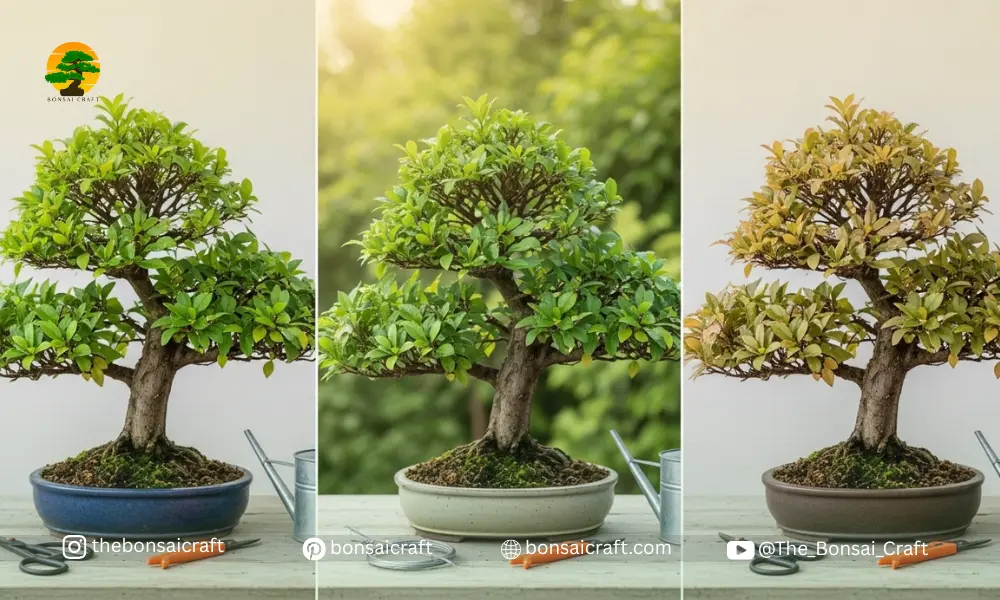
Spring is the primary growth and recovery period for Privet Bonsai trees. Repot and prune roots if needed, increase watering as temperatures rise, and fertilize every two to three weeks to support new growth.
Summer (June to August)
Summer care focuses on moisture control and heat protection. Water more frequently as the soil dries faster, provide ample sunlight with midday shade, and continue pruning and wiring to maintain shape.
Fall (September to November)
Fall care prepares the Privet Bonsai for slower growth and dormancy. Reduce watering gradually, perform light pruning, and apply fertilizer monthly to maintain nutrient balance before winter.
Since Privet Bonsai reacts to seasonal temperature changes, this winter bonsai care guide explains how to protect bonsai during colder months.
Conclusion
A Privet Bonsai thrives when given consistent care, proper pruning, and seasonal attention. By managing light, water, soil, fertilization, and pests correctly, you can maintain a healthy and visually refined Ligustrum Bonsai Tree Privet for many years. Whether you grow a Chinese Privet Bonsai indoors or outdoors, disciplined maintenance will reward you with dense foliage, elegant structure, and long-term vitality.
Frequently Asked Questions (FAQs)
Does Privet Bonsai lose leaves during seasonal changes?
Yes, Privet Bonsai can shed some leaves during seasonal transitions, especially in fall or winter. This is usually a natural response to reduced light, cooler temperatures, or changes in watering. As long as new growth appears in spring, light leaf drop is not a sign of poor health.
Is Privet Bonsai suitable for beginners?
Privet Bonsai is one of the most beginner-friendly bonsai species available. Its fast recovery from pruning, tolerance to wiring, and adaptability to indoor and outdoor conditions make it ideal for beginners learning basic bonsai care techniques without high risk of failure.
How fast does a Privet Bonsai grow?
Privet Bonsai grows relatively fast compared to many other bonsai species. During the active growing season, it can produce new shoots quickly, which allows frequent pruning and shaping. This fast growth makes it excellent for developing trunk thickness and branch structure early.
Can Privet Bonsai produce flowers and berries?
Yes, a healthy Privet Bonsai can produce small white flowers followed by black berries. Flowering usually occurs in summer when the tree receives sufficient sunlight and proper nutrition. Allowing limited flowering can enhance visual appeal, but excessive flowering may reduce foliage density.
What happens if I don’t prune my Privet Bonsai regularly?
Without regular pruning, a Privet Bonsai will quickly lose its compact bonsai shape. Unchecked growth leads to long shoots, larger leaves, and weak branch structure. Consistent trimming helps maintain dense foliage, balanced proportions, and the refined appearance expected from a bonsai tree.
Can Privet Bonsai survive winter outdoors?
Privet Bonsai can survive mild winter conditions but needs protection from severe frost. In colder climates, it is best to move the tree to a sheltered area or indoors during freezing temperatures. Prolonged frost exposure can damage roots and slow spring recovery.