
The fukien tea bonsai tree is a popular tropical evergreen species prized for its small, waxy, dark-green leaves, delicate white five-petaled flowers, and vibrant red berries. Native to parts of Southeast Asia and Southern China, this fukien tea bonsai is highly favored by enthusiasts because it can be successfully grown indoors year-round under specific conditions. Effective fukien tea bonsai care requires a disciplined balance of high atmospheric humidity, consistent soil moisture, and bright indirect light. Whether you are a novice or a seasoned practitioner, mastering the specific physiological needs of Carmona is essential to preventing common health pitfalls like sudden leaf drop or root desiccation.
This comprehensive guide delivers technical insights and horticultural best practices to ensure your specimen thrives. By following these evidence-based protocols for irrigation, structural pruning, and environmental management, you can maintain the health and aesthetic integrity of your Fukien tea for decades.
Understanding foundational tropical tree care principles from our complete bonsai care guide can help you build the right daily routine for long-term success.
What is a Fukien Tea Bonsai?
The fukien tea bonsai is a tropical evergreen shrub known taxonomically as Carmona microphylla, characterized by its persistent year-round flowering and rugged, aged-looking bark. In its native habitat of Fujian, China, it grows as a hardy shrub, but its naturally small leaf size and fissured trunk make it an ideal candidate for miniature “shohin” or larger bonsai styles. The fukien tea bonsai tree is unique for its ability to bloom almost constantly when kept in stable, warm conditions, producing small green drupes that ripen into decorative red berries.
While visually stunning, the species is technically demanding due to its extreme sensitivity to environmental fluctuations. Unlike temperate trees, it does not possess a dormant period, meaning its metabolic processes remain active throughout the year. This constant activity requires the grower to maintain a vigilant care schedule, as the tree has a very low tolerance for “dry feet” or sudden temperature shifts.
Choosing The Right Environment For Fukien Tea Bonsai
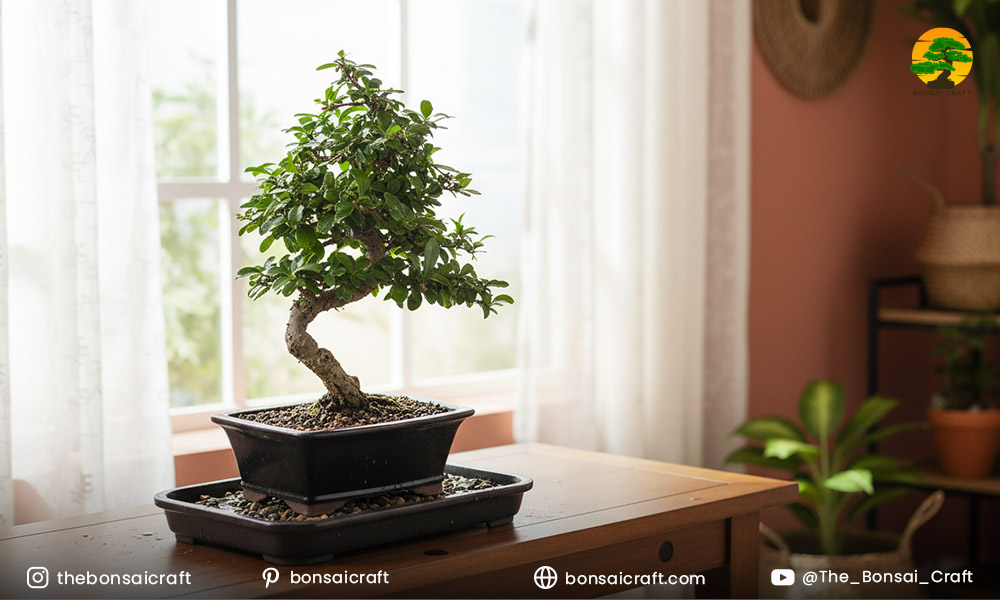
The ideal environment for a Fukien tea bonsai is a bright, humid indoor location that maintains a stable microclimate free from cold drafts or dry heat sources. Because this species is native to the humid subtropics, it requires a placement that mimics a greenhouse effect—specifically near a south-facing window where it can receive ample light without the risk of thermal shock.
In temperate climates, this tree should remain indoors for the majority of the year. If moved outdoors during summer months, it must be acclimated slowly to prevent UV scorch and brought back inside well before nighttime temperatures dip. Stability is the hallmark of a healthy environment; frequent relocation of the pot can cause “environmental stress,” leading the tree to shed leaves as a defense mechanism while it attempts to recalibrate its transpiration rate.
Fukien Tea Bonsai Ideal Temperature Range
Fukien tea bonsai thrive in temperatures between 15°C (60°F) and 24°C (75°F) and must be protected from any exposure below 10°C (50°F). As a tropical species, Carmona lacks the physiological mechanisms to survive frost or prolonged cold exposure, which can lead to vascular collapse and death.
Consistency is more important than hitting a specific high-temperature mark; fluctuations caused by proximity to air conditioning vents, radiators, or poorly insulated window glass are the leading causes of health decline. If the ambient temperature is comfortable for a human in a light sweater, it is generally appropriate for the tree, provided the heat is not “dry” heat, which saps moisture from the leaves faster than the roots can replenish it.
Humidity Requirements
Fukien tea tree bonsai care requires a relative humidity level of 50% to 60% to prevent leaf desiccation and support healthy stomatal function. Standard indoor residential air, especially during winter heating seasons, often drops below 20% humidity, which is lethal to Carmona over extended periods.
To bridge this gap, practitioners should utilize humidity trays filled with decorative pebbles and water, ensuring the bottom of the bonsai pot sits above the water line to avoid root rot. For integrated collections, a dedicated room humidifier is the most effective method for maintaining the necessary atmospheric moisture. While misting the foliage provides a temporary boost, it is generally insufficient as a primary source of humidity.
How to Water Your Fukien Tea Bonsai
Perform fukien tea bonsai watering immediately when the top layer of soil feels slightly dry to the touch, ensuring the root ball never completely dries out. Unlike many other bonsai species that prefer a “dry-wet” cycle, the Fukien tea is highly intolerant of drought; if the soil becomes bone-dry, the fine feeder roots will die rapidly, leading to a “crispy” leaf drop that is difficult to recover from.
Fukien Tea Bonsai Watering Guidelines
-
Soil Moisture: Monitor the substrate daily by touch; water thoroughly until it drains from the bottom holes if the top half-inch feels dry.
-
Watering Frequency: There is no fixed schedule; water demand varies based on seasonal growth and light. Generally, indoor specimens require water every 1–3 days.
-
Water Quality: Use tepid water to avoid shocking the tropical root system. Rainwater or filtered water is preferred if your municipal tap water has high mineral content.
Caution: While the tree hates being dry, it cannot sit in stagnant water. Ensure the soil mix is highly porous to allow oxygen to reach the roots, preventing anaerobic conditions that cause root rot.
If you’re unsure about proper hydration techniques, refer to our ultimate guide to watering bonsai trees for a deeper understanding of moisture management.
What are The Lighting and Temperature Requirements?
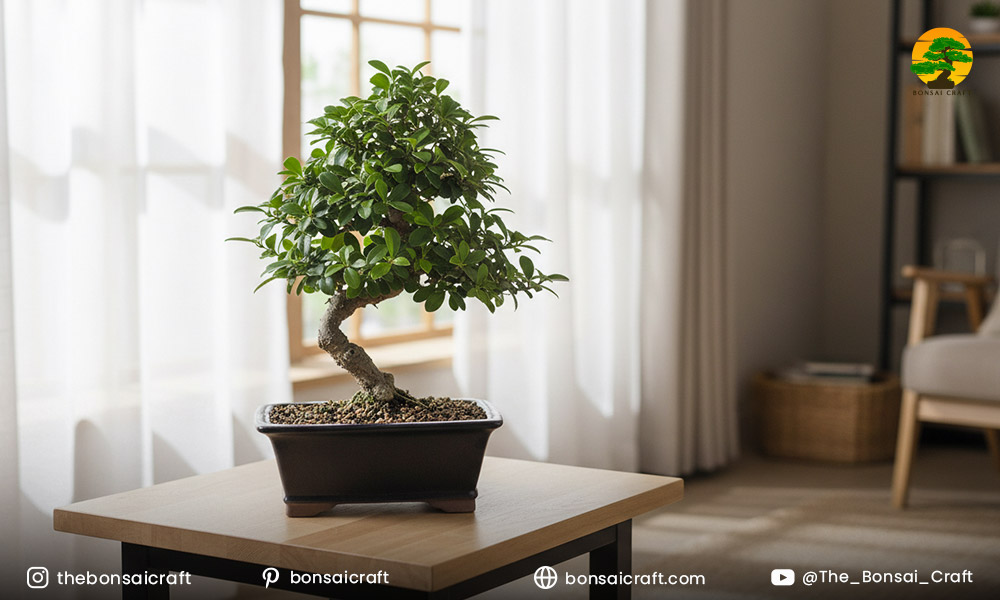
Fukien tea bonsai require at least 5 to 6 hours of bright, indirect sunlight daily to maintain vigor and stimulate the production of flowers. While they crave high light intensity, intense midday sun through a glass pane can act as a magnifying glass, causing permanent leaf scorch.
Indoor growers may also benefit from reviewing our guide to indoor bonsai trees to better understand light positioning and seasonal adjustments.
Indirect Light is Imperative for Fukien Tea Bonsai Growth
The goal is to provide high-quality light that stimulates photosynthesis without overheating the foliage.
-
Lighting Patterns: An East or South-facing window with a sheer curtain is ideal. Rotate the tree 90 degrees every week to ensure even foliage distribution.
-
Artificial Light: For indoor growers in northern latitudes, 12–14 hours of supplemental LED lighting placed 6–12 inches above the canopy can compensate for short winter days.
-
Temperature Stability: Ensure the light source does not generate excessive heat. Thermal stress, combined with low light, will result in “leggy” growth where the internodes (the space between leaves) become long and weak.
How to Prune and Shape Your Bonsai Tree Fukien Tea
Execute fukien tea bonsai pruning by trimming new shoots back to two or three leaves after they have developed six to eight leaves to maintain a compact silhouette. Because Carmona is a vigorous grower under the right conditions, regular maintenance of the Fukien tea bonsai tree pruning is necessary to prevent the inner branches from dying back due to lack of light and to promote fine ramification.
Fukien Tea Bonsai Pruning For The Shape
-
Structural Pruning: Remove any “suckers” growing from the base of the trunk or branches growing vertically into the canopy.
-
Wiring: The branches of a Fukien tea bonsai are notoriously brittle once they thicken. Use aluminum or copper wire only on young, flexible shoots, and monitor them weekly; the bark is thin and will scar quickly if the wire begins to “bite.”
-
Defoliation: Partial defoliation can be used by experts to reduce leaf size, but this should only be performed on a specimen in peak health.
When To Prune Fukien Tea Bonsai
Since it is a tropical evergreen, pruning fukien tea bonsai can occur year-round. However, the most vigorous response follows a “flush” of growth in late spring. Avoid heavy structural pruning if the tree is showing signs of stress.
How to Repot Your Fukien Tea Bonsai
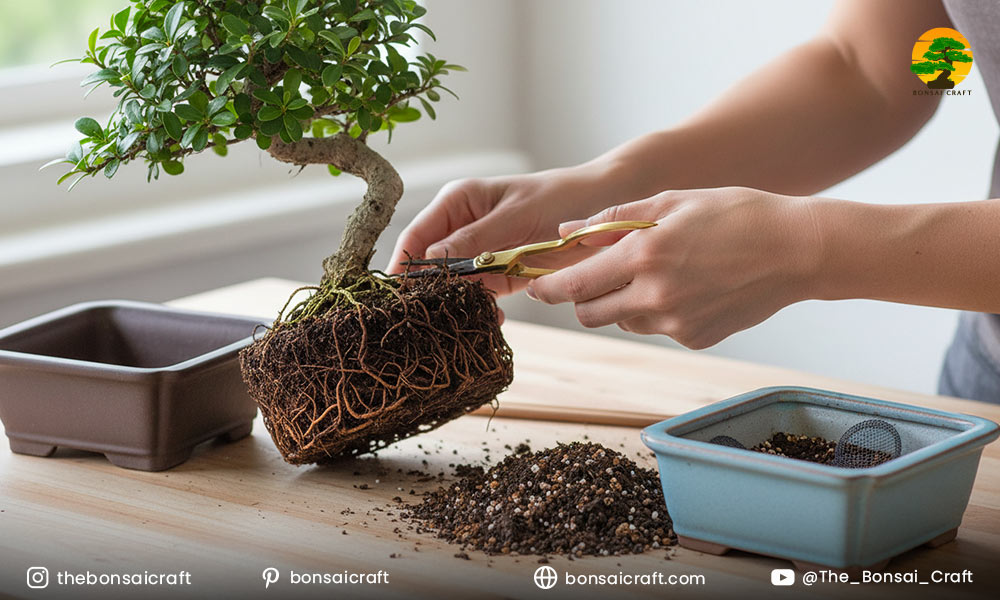
The process of repotting Fukien tea bonsai should occur every two years in late spring or early summer when the tree’s metabolic rate is highest. Repotting is a vital horticultural intervention to refresh exhausted substrate and manage the root-to-foliage ratio, preventing the specimen from becoming root-bound and stagnant.
Instructions for Repotting Your Bonsai Tree Fukien Tea
-
Indicators: If water takes longer to soak into the soil or roots are visible at the drainage holes, the tree requires intervention.
-
Root Pruning: Carefully comb out the roots and prune away approximately 20–25% of the outer root mass. Focus on removing thick, circling roots to make room for fine feeder roots.
-
Soil Choice: Use a professional-grade bonsai mix consisting of Akadama, Pumice, and Lava Rock (2:1:1 ratio) for the perfect balance of moisture retention and oxygen.
-
Aftercare: After repotting, keep the tree in a shaded, wind-protected area for 2–3 weeks and avoid fertilizing until new growth appears.
Pot selection also influences drainage and root health — see our bonsai pot selection guide for choosing the correct container.
Nutrients and Their Application in Soil for Fukien Tea Bonsai
Apply a balanced, organic or synthetic fertilizer every two weeks during the active growing season to sustain the tree’s high energy demands for flowering. Because bonsai are confined to small containers with limited soil volume, they rely entirely on the grower for essential macro and micronutrients.
Fertilization Guideline Fukien Tea Bonsai
-
NPK Ratio: A balanced 10-10-10 or 7-7-7 ratio is appropriate. For better flowering, a fertilizer slightly higher in Phosphorus can be used periodically.
-
Application: Always apply liquid fertilizers to damp soil; applying to dry soil can cause “fertilizer burn” on the sensitive roots.
-
Winter Feeding: Reduce fertilization to once a month during winter, as growth naturally slows due to lower light levels.
Known and Unknown Pests and Diseases That Can Be Harmful
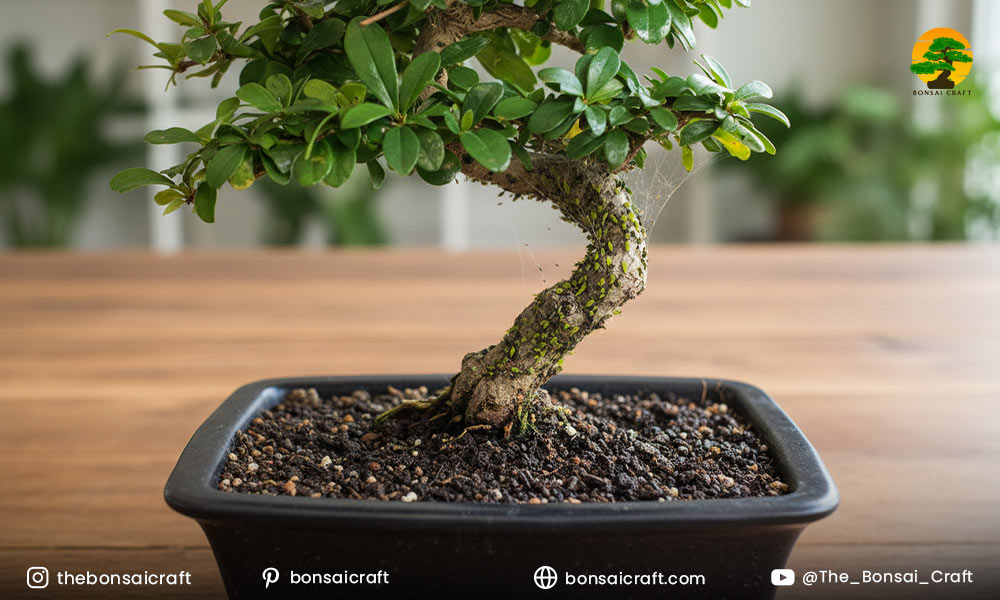
Common threats to fukien tea bonsai care include spider mites, scale insects, and mealybugs, which frequently thrive in dry indoor environments. Vigilance is the best defense; a healthy tree can withstand a minor infestation, but a stressed tree may succumb quickly to secondary infections or localized dieback.
Common Pests & Diseases
-
Spider Mites: Look for fine webbing and mottled yellow spots on leaves. Increase humidity and treat with Neem oil.
-
Scale/Mealybugs: These appear as waxy bumps or white cottony tufts. They should be removed manually with a cotton swab dipped in rubbing alcohol.
-
Root Rot: Caused by overwatering or compacted soil. Symptoms include yellowing leaves and a “mushy” trunk base. This requires immediate repotting into fresh, well-draining soil.
Fukien Tea Bonsai Common Mistakes to Avoid
The most frequent error in fukien tea bonsai care is inconsistent watering, specifically allowing the root ball to dry out completely. Another common mistake is placing the tree in a location with insufficient light, which causes the tree to drop its inner leaves and become “leggy.” Finally, avoid “over-parenting” by moving the tree constantly; find a high-quality location and allow the tree to adapt to that specific microclimate.
Conclusion
Successfully cultivating a fukien tea bonsai requires a disciplined approach to tropical horticulture, balancing consistent moisture with environmental stability. While the species is often marketed to beginners, its lack of a dormancy period and sensitivity to humidity fluctuations make it a rewarding challenge for those committed to a daily care routine. By mastering the fundamentals of Fukien tea bonsai watering and providing a stable, light-rich environment, you can enjoy a specimen that offers delicate white blossoms throughout the year. As your tree matures, continue to refine its structure through intentional Fukien tea bonsai pruning to maintain the classic, elegant silhouette this species is known for.
What Questions Are Most Frequently Asked?
How often should I water my Fukien Tea Bonsai?
Perform fukien tea bonsai watering whenever the top layer of soil feels slightly dry to the touch, which typically occurs every one to three days depending on your environment. Because the Fukien Tea is highly intolerant of drought, allowing the soil to dry out completely can cause rapid root death and irreversible leaf drop. Always water thoroughly until the liquid runs freely from the drainage holes.
Can I grow a Fukien Tea Bonsai outdoors?
Fukien Tea Bonsai can be grown outdoors only in tropical climates where temperatures remain consistently above 15°C (60°F) year-round. In temperate zones, it is strictly an indoor tree for most of the year, though it can benefit from being placed outside in a shaded, humid spot during peak summer months.
What can be done to promote flowering in the Fukien Tea Bonsai?
To encourage consistent flowering, provide the tree with at least 5 to 6 hours of bright indirect sunlight and apply a balanced fertilizer every two weeks during the growing season. High light intensity is the primary driver for flower production. If your tree is healthy but not blooming, it may require supplemental grow lights.
What is the best way to prune the Fukien Tea Bonsai?
The best method for fukien tea bonsai pruning is the “clip and grow” technique, where you trim back new shoots to two leaves once they have extended to six or eight leaves. Regular maintenance prevents the inner canopy from becoming shaded out, which can lead to branch die-back. Use specialized, sharp bonsai shears to ensure clean cuts.