
Crataegus monogyna is a deciduous hawthorn species widely grown as a small tree or dense, thorny hedge that flowers in spring and bears red fruits (“haws”) later in the year. If you’ve seen a classic countryside hedgerow filled with white blossom in late spring and bright red berries in autumn, there’s a good chance you were looking at common hawthorn, often called “May-tree” in parts of the UK due to its flowering season.
Gardeners love hawthorn because it’s tough, adaptable, and incredibly useful: it can be a specimen tree, a wildlife hedge, a boundary plant, or even a bonsai candidate with the right approach.
At the same time, it comes with real-world considerations: sharp thorns, occasional disease pressure in humid conditions, and (depending on where you live) the potential to naturalize aggressively.
This care guide focuses on practical growing decisions, site, soil, water, pruning, hedging, containers, bonsai styling, and wildlife value, grounded only in information that can be verified in reputable public sources.
For readers exploring evergreen trees used in long-term cultivation and artistic training, this complete bonsai care guide explains foundational practices such as watering balance, pruning timing, and container management.
What is Crataegus monogyna?
Crataegus monogyna is a deciduous shrub or small tree in the rose family (Rosaceae), commonly known as common hawthorn or single-seed hawthorn. It is native across a wide range from Europe to the Caucasus and from North Africa toward parts of Southwest Asia (including Iraq), which explains its broad tolerance of different garden settings.
In garden and hedgerow use, it’s recognized for spiny branches, lobed leaves, clusters of creamy-white flowers, and red fruits.
Bay laurel has deep historical significance in classical gardens and symbolic plant traditions, and this history of bonsai trees article provides broader cultural context on how long-lived trees are preserved through intentional cultivation.
Is Crataegus monogyna Evergreen?
Crataegus monogyna is not evergreen because it is deciduous and loses its leaves in winter. That deciduous cycle is part of its seasonal appeal: fresh green leaves in spring and summer, flowers in late spring, then fruits that feed wildlife into autumn and winter, followed by bare structure that still works well in hedges and bonsai silhouettes.
How Big Does a Crataegus monogyna Tree Get?
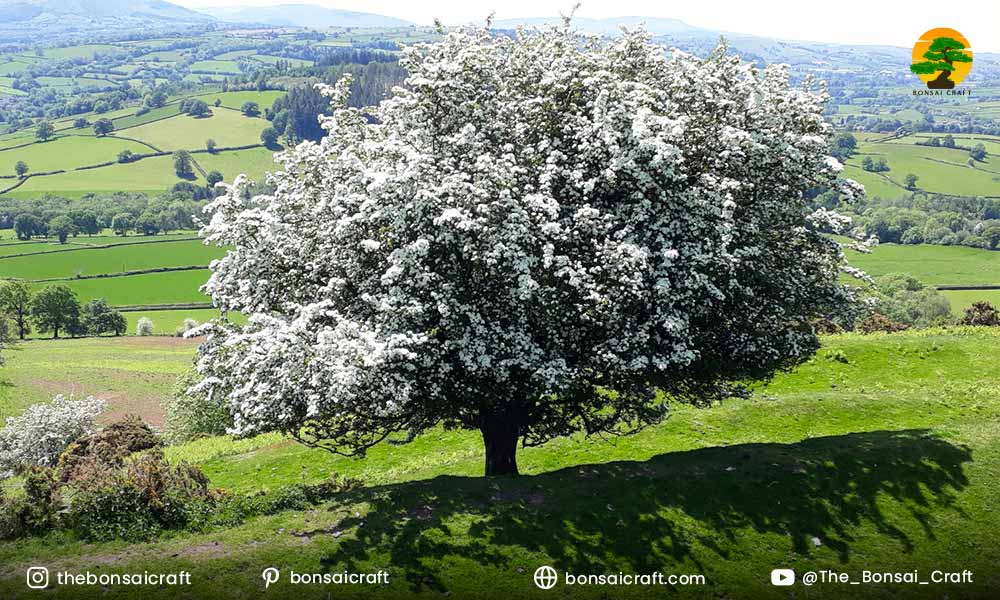
A mature Crataegus monogyna can reach around 10–15 meters tall in favorable conditions, often forming a dense, thorny crown. In many gardens, it’s kept smaller through pruning, especially when grown as a boundary hedge or managed as a compact ornamental tree. The key point is that hawthorn responds well to trimming and can be maintained at very different sizes depending on your goal.
How Fast Does Crataegus monogyna Grow?
Crataegus monogyna can grow at a moderate pace, and some growers report around 40–60 cm of growth per year under good conditions. Growth is not “instant hedge” fast, but it is steady when the tree is happy: full sun or part shade, adequate moisture during establishment, and soil that isn’t frequently waterlogged.
In practical terms, hawthorn often grows faster when young and slows as it matures, so the early years matter most for forming structure (whether that’s a hedge line, a tree framework, or a bonsai trunk line).
Where Should You Plant Hawthorn for Best Results?
Hawthorn grows well in sun or part shade and tolerates exposed sites, making it suitable for many gardens and boundary locations. If your goal is maximum flowering and fruiting, stronger light usually helps, and reputable tree guidance notes that hawthorn flowers and fruits best in full sun.
Because hawthorn can develop into a dense, thorny plant, it’s smart to site it away from high-traffic paths, play areas, and tight doorways, especially if you plan to let it grow informally.
What Soil Does Crataegus monogyna Prefer?
Crataegus monogyna is adaptable to many soil types but performs best in moist, well-drained conditions rather than ground that stays waterlogged. Authoritative plant data list it as suitable for chalk, clay, loam, and sand, and tolerant across acid, neutral, and alkaline pH, so the limiting factor is less about soil “type” and more about drainage and prolonged saturation.
If you’re planting in heavier soil, improving structure and avoiding a constantly wet planting pocket reduces the risk of root stress and long-term decline.
How to Plant a Crataegus monogyna Tree
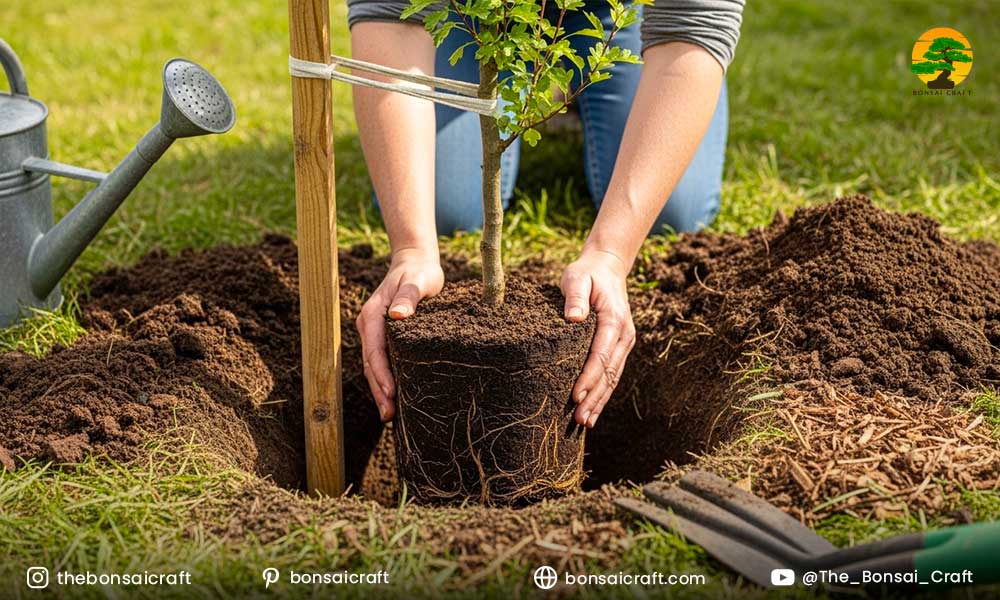
You can plant container-grown hawthorn trees most of the year, but winter or spring planting often makes aftercare easier because soil moisture is more reliable. The planting fundamentals are straightforward: give the root zone enough space for the plant’s eventual size, set it at the correct depth, firm it in gently, and water well. For exposed sites or larger specimens, staking can help until the roots anchor properly.
Once planted, mulching helps conserve moisture, but keep mulch off the trunk base to reduce bark problems.
How to Plant Crataegus monogyna as a Hedge
A hawthorn hedge is formed by planting in rows and trimming at least annually to encourage dense, stock-proof growth. RHS guidance for hawthorn hedging includes typical spacing of about 45–60 cm between plants for a single row and suggests a double row when you want a wider hedge.
What makes hawthorn hedges special in real gardens is the balance they offer: they can be clipped for a clean boundary, or cut more lightly (even every other year) to encourage more blossom and berries for wildlife.
Watering Hawthorn the Right Way
Watering is most important during establishment, especially through dry periods in the first few growing seasons. RHS guidance emphasizes thorough watering directed at the base so moisture reaches the root zone, with particular attention during dry weather and continued monitoring during early years.
Once established, hawthorn is generally low maintenance compared with thirstier ornamental trees, but drought stress can still reduce flowering and fruiting, and it can make pest issues more likely.
Feeding and Fertility Management
Hawthorn usually needs minimal feeding when planted in reasonably fertile garden soil. Because it’s naturally adapted to hedges, woodland edges, and a range of soils, overly rich feeding can push soft growth that doesn’t always improve flowering quality. In most home settings, focusing on mulch, weed control around the base, and consistent moisture during establishment aligns well with what hawthorn actually needs.
Pruning a Hawthorn Tree for Structure and Safety
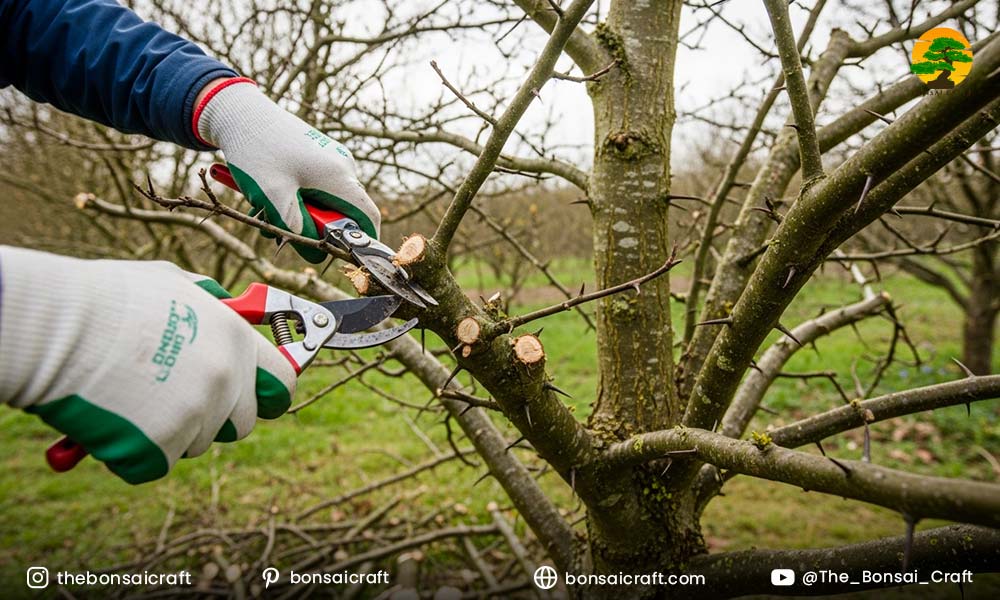
Pruning hawthorn is mainly about shaping, removing dead or crossing wood, and managing thorny growth where it affects access. For hedges, RHS advice indicates at least one trim per year to keep shape, with more frequent trimming (late spring through summer) if you want a formal look.
If you want maximum blossom and berries, a more informal approach, lighter cuts, or even cutting every other year, can support that goal.
In practical experience, gloves and eye protection matter with hawthorn: thorns are not just a nuisance; they’re a real handling risk.
Hawthorne Flowers
Crataegus monogyna produces clusters of creamy-white blossoms in late spring that are a major visual feature and a key wildlife resource. The spring flowering is one reason hawthorn is so widely used in hedgerows and wildlife-friendly garden boundaries: the blossoms provide nectar and pollen for bees and other pollinators.
If your tree flowers poorly, the most common correctable factors are insufficient light and overly aggressive pruning at the wrong time (especially if you remove flowering wood just before the season).
Hawthorn Fruit and Berries
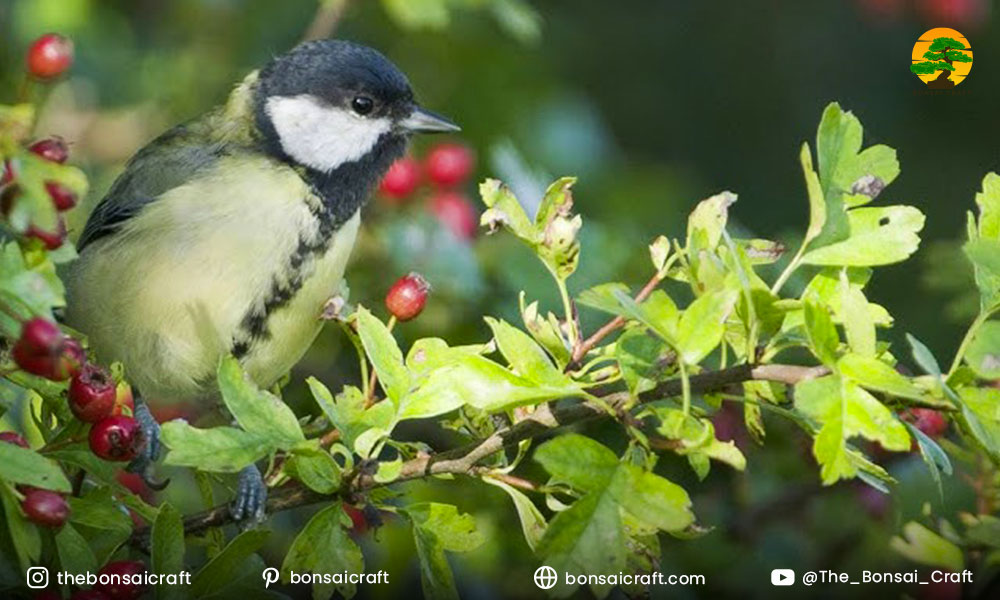
Hawthorn fruits, commonly called haws, ripen to red and are widely eaten by birds, making them valuable for wildlife gardening. Wildlife sources note hawthorn as an important food plant, and woodland conservation guidance emphasizes its strong value in hedgerows, woodland edges, and scrub where it supports many organisms.
From a gardener’s point of view, fruiting is also a quick “health signal”: trees that get enough sun and are not constantly waterlogged tend to set and hold fruit more reliably.
What Are the Benefits of Crataegus monogyna?
Crataegus monogyna is beneficial because it supports wildlife, functions as a tough hedge or small tree, and has documented traditional and researched uses related to hawthorn preparations. As a garden plant, its benefits are immediate: dense shelter for nesting birds, pollen/nectar for pollinators, and seasonal fruit that feeds birds into winter.
Separately, hawthorn (as a broader plant group used in foods and supplements) is widely discussed in scientific literature for phytochemical content and potential health-related applications; however, those uses are not the same as recommending home treatment, and they depend on preparation, dose, and medical context.
Is Crataegus monogyna Good for Wildlife?
Crataegus monogyna is highly valuable for wildlife because it offers nectar and pollen in spring, dense shelter for nesting, and berries that feed birds later in the year. Woodland-focused sources describe hawthorn as common in hedgerows and woodland/scrub habitats, and wildlife retail/planting guidance highlights its support for hundreds of insect species and its importance to birds and pollinators.
If your goal is biodiversity, an “informal hedge” management style that preserves blossom and fruit can be more ecologically productive than very frequent hard trimming.
Is Hawthorn Poisonous?
Hawthorn is generally listed as non-toxic to common pets, but guidance also exists warning that seeds should be removed if you plan to eat the fruit. This is exactly where online confusion often happens: “non-toxic” in one context (pet exposure) doesn’t automatically mean “eat everything freely,” and authoritative horticultural guidance notes seed concerns for human consumption of fruit.
If you’re growing hawthorn for haws, follow reputable edible-plant guidance and avoid casual assumptions, especially with children.
How to Propagate Crataegus monogyna
Crataegus monogyna can be propagated by seed, and it may also be propagated by grafting in winter. Seed propagation is common for hedging stock, but it requires patience, and seedlings may vary slightly. Grafting is used when you need reliable characteristics. From a home-garden perspective, propagation is usually most practical when you want multiple hedge plants and can tolerate variability.
Crataegus monogyna Bonsai Care and Styling
Why Hawthorn works as a bonsai
Crataegus is used for bonsai because it offers fine branching potential, spring flowers, red fruits, and strong character as it ages. The species can take time to develop thick trunks, but that slow build is often part of the appeal: hawthorn bonsai can look “ancient” through bark texture, branching density, and seasonal interest.
Pruning and wound management
Hawthorn bonsai pruning is typically timed to encourage ramification while minimizing ugly scarring. Bonsai sources emphasize that hawthorn can produce significant scars and that timing and technique matter; practical guidance also highlights using care with cuts and considering wound management.
In experience-based bonsai work, it’s wise to prune with a plan: build your branch structure gradually, preserve flowering spurs when you want blooms, and avoid repeated heavy chops that leave permanent marks.
Wiring and thorns
Hawthorn can be wired, but the thorns and brittle older wood require caution and seasonal timing. Bonsai guidance notes that substantial wiring is often done during winter dormancy when foliage is absent, with flexibility in younger shoots and increased risk in old, stiff branches.
This is where hawthorn rewards patience: gentle directional wiring, guy wires for stubborn branches, and careful handling to avoid thorns make styling smoother and safer.
Crataegus monogyna vs Other Hawthorn Species
Crataegus monogyna differs from some other hawthorns in predictable ways, including its “single-seed” fruit trait compared with similar species that often have more than one seed. One commonly confused comparison is with Midland hawthorn (C. laevigata), which can look very similar; urban forestry guidance notes a straightforward method: dissecting the fruit, one seed suggests C. monogyna, while two seeds suggest C. laevigata.
Another “hawthorn” people search is the Washington hawthorn (a different species), which reputable arboreta describe as an ornamental hawthorn with white flowers and red fruit that can persist into winter.
If you’re buying a tree for a specific purpose, hedge density, ornamental fruit display, or disease pressure, checking the exact Latin name avoids expensive mistakes.
Climate Considerations and Invasiveness Awareness
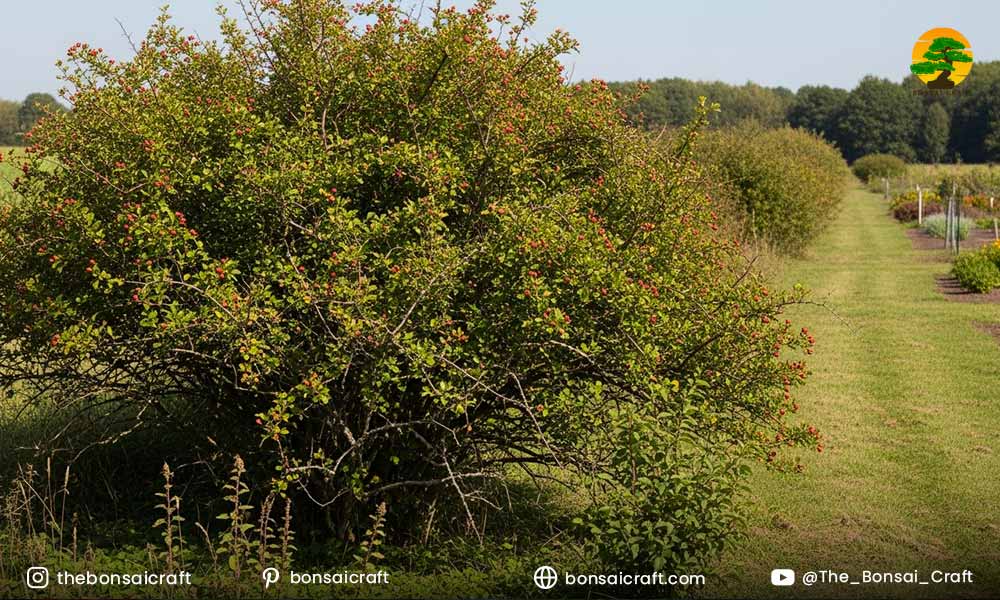
Crataegus monogyna is tough and adaptable, but in some regions it is considered invasive and can form dense thickets. Landscape and invasive-plant authorities in parts of the United States describe it as capable of prolific seeding and thicket formation that can exclude understory plants, and it may hybridize with native hawthorn species in some regions.
This doesn’t mean you can’t grow it, but it does mean you should check local guidance and consider whether a native hawthorn species is a better ecological fit in your area.
FAQs
How fast does Crataegus monogyna grow?
Crataegus monogyna can grow moderately, with reports of around 40–60 cm per year in good conditions. Growth is usually strongest when plants are young, in sun or part shade, and kept adequately watered during establishment. Overly wet ground can cause root problems and slow progress, while consistent trimming helps hedges thicken rather than shoot upward.
Is Crataegus monogyna evergreen?
Crataegus monogyna is deciduous, so it drops its leaves in winter. This seasonal cycle is normal and often desirable in hedges and bonsai because it reveals branch structure. In spring, it returns with fresh foliage and blossoms, and later it produces haws that are valuable to birds and other wildlife.
Can you grow Crataegus monogyna in pots?
Yes, Crataegus can be grown in pots most successfully as a bonsai or as a carefully managed container specimen. Container growing increases your responsibility for watering, drainage, and root care, because pots dry out faster and can also become waterlogged if drainage is poor. Bonsai practice shows the species can thrive in containers when managed well.
Is Crataegus monogyna good for wildlife?
Yes, Crataegus monogyna is widely valued for wildlife because it supports insects, pollinators, and birds through flowers, shelter, and fruit. Its spring blossoms provide nectar and pollen, and its dense thorny structure offers nesting protection. Later, haws are eaten by birds, supporting feeding through autumn and into winter in many landscapes.
Is hawthorn poisonous?
Hawthorn is generally listed as non-toxic to common pets, but edible fruit guidance warns about the seeds and advises removing them if eating the fruit. This is why “poisonous” answers vary by context: pet-toxicity lists may say non-toxic, while horticultural references still caution against consuming seeds. If you plan to use haws, follow reputable edible-plant guidance rather than assumptions.
Conclusion
Crataegus monogyna is one of the most versatile, wildlife-supporting small trees you can grow, especially when you use its natural toughness in the right setting. As a hedge, it forms a dense boundary that can be clipped formally or managed informally for blossom and berries. As a tree, it brings spring flowering and seasonal fruiting with low maintenance once established. And as a bonsai, it offers flowers, fruit, and character, if you respect the thorns, wiring limits, and pruning scars. With good site choice, sensible watering during establishment, and pruning aligned to your goals, hawthorn can be a long-term cornerstone plant in both gardens and landscapes.