
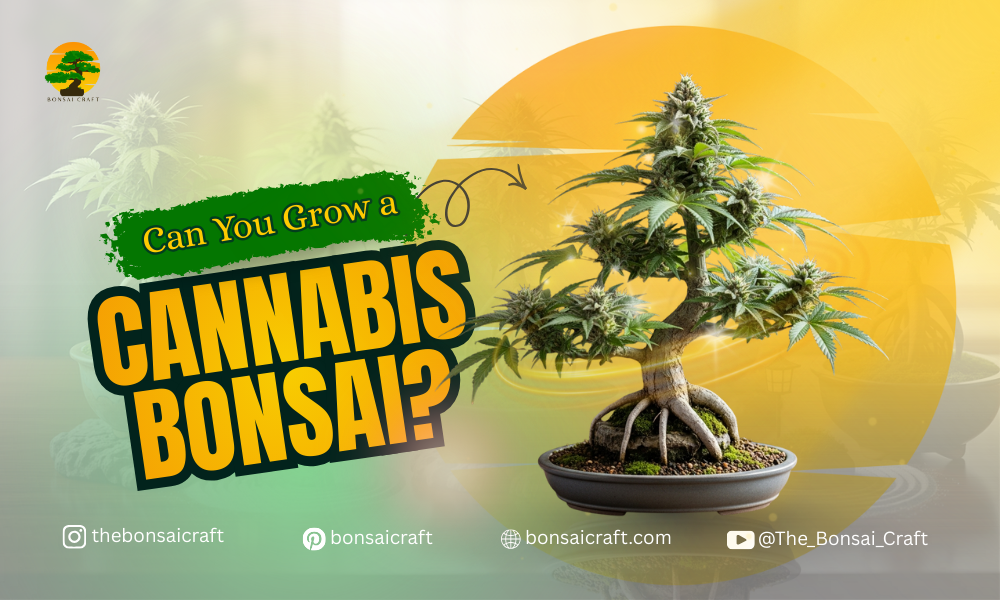
Yes, you can grow a cannabis bonsai by applying traditional bonsai techniques to control the size, shape, and structure of a cannabis plant. Cannabis bonsai is one of the most creative trends in modern cannabis cultivation, blending the ancient art of bonsai with contemporary horticulture. Instead of focusing on rapid growth or yield, this method emphasizes patience, precision, and visual balance. Through careful pruning, wiring, and root management, growers can transform a cannabis plant into a miniature tree that highlights artistic form rather than production. Cannabis bonsai appeals to gardeners who enjoy hands-on plant training and want to explore cannabis cultivation as a long-term creative practice.
What is Cannabis Bonsai?
Understanding Cannabis Bonsai
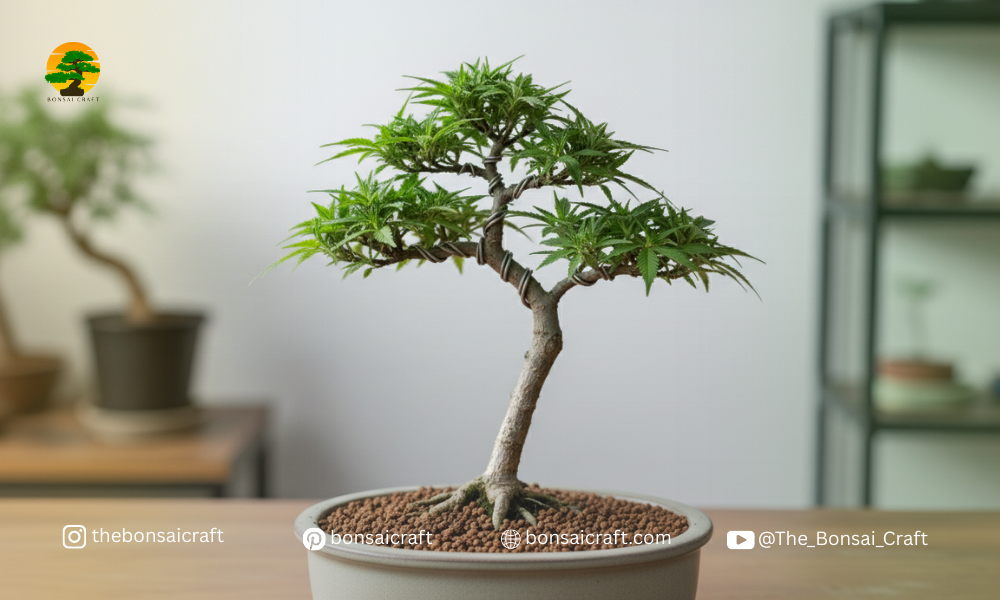
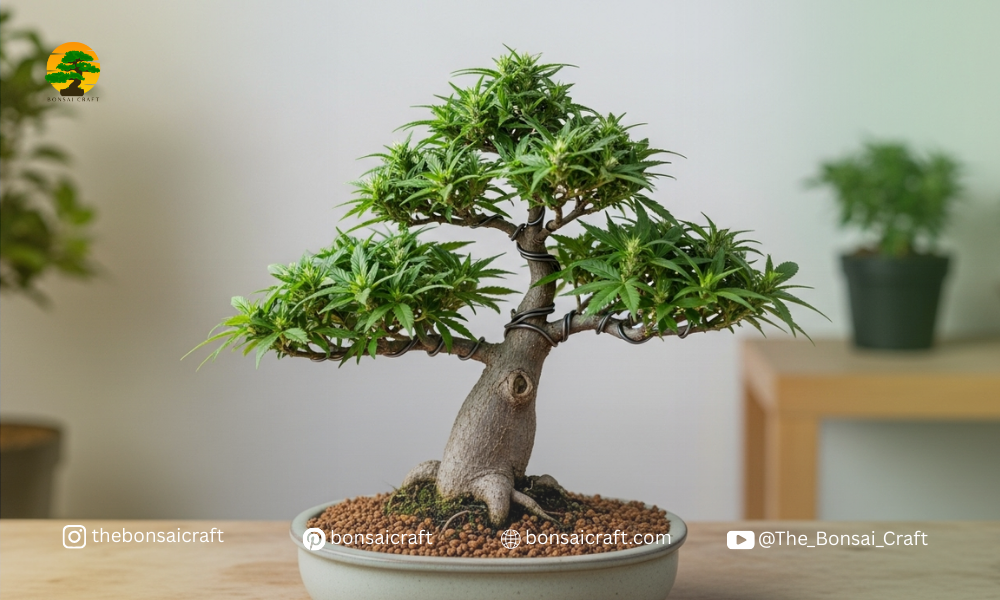
Cannabis bonsai is a cultivation method where a cannabis plant is intentionally kept small and shaped using bonsai training principles. Unlike conventional cannabis growing, which prioritizes height, canopy expansion, and bud mass, bonsai cannabis focuses on aesthetics, symmetry, and controlled growth. The plant’s size is restricted by pruning branches, trimming roots, and limiting container space. Over time, the cannabis bonsai develops a thick trunk, compact canopy, and tree-like silhouette, turning it into a living sculpture rather than a high-yield crop.
Because cannabis bonsai follows the same artistic and horticultural rules as traditional bonsai, this complete bonsai care guide helps reinforce how watering balance, root restriction, and gradual shaping work together over time.
The Process of Creating a Cannabis Bonsai Plant
How to Bonsai Cannabis: Step-by-Step Guide
Creating a cannabis bonsai plant requires early training, consistent pruning, and long-term structural planning. The process begins during the vegetative stage and continues throughout the plant’s life. Each technique—strain selection, pruning, wiring, and repotting—plays a role in controlling growth direction and maintaining the miniature form.
1. Select the Right Cannabis Strain
Choosing a compact, slow-growing cannabis strain makes bonsai training significantly easier. Indica-dominant strains such as Northern Lights, Blueberry, and Lowryder are commonly preferred because they grow shorter internodes and denser branching. These characteristics allow growers to shape the plant more easily and reduce aggressive vertical stretching. Sativa strains can be trained but usually require more frequent pruning and wiring to maintain size.
2. Start with a Healthy Cannabis Seedling
A healthy cannabis seedling in the vegetative stage provides the best foundation for bonsai shaping. Strong root development and pest-free foliage are essential because bonsai techniques place controlled stress on the plant. Starting early allows growers to guide branch placement, encourage lateral growth, and prevent excessive height before the plant matures.
3. Prune and Trim the Plant
Pruning controls size, encourages branching, and defines the bonsai cannabis structure. The main stem is topped to promote side growth, while weak or overcrowded branches are removed. Regular pruning every few weeks helps maintain balance, limits height, and keeps the canopy compact. Controlled trimming also directs energy toward selected branches, improving overall structure.
4. Wire the Plant for Shaping
Wiring allows precise control over branch direction and overall cannabis bonsai design. Soft bonsai wire is gently wrapped around branches to guide them into horizontal or curved positions. The wire must be checked regularly to prevent it from cutting into the stem as growth continues. Proper wiring enhances the tree-like appearance and adds artistic character to the bonsai cannabis plant.
To better understand safe branch positioning and wire timing, this step-by-step bonsai wiring guide outlines gentle training methods that help prevent stem damage and long-term scarring.
5. Repot and Care for the Plant
Shallow pots and careful root management are essential to maintain a cannabis bonsai’s size. Repotting limits root expansion and slows vertical growth. During repotting, roots are lightly trimmed and placed in well-draining soil. Consistent monitoring of light, watering, and nutrients keeps the plant healthy without encouraging excessive growth.
Because container size and soil drainage directly affect growth control, this guide on bonsai soil and pot selection explains how root restriction influences plant size and long-term stability.
How to Make a Cannabis Bonsai Tree
A cannabis bonsai tree is created through continuous pruning, root control, and gradual refinement over time. Growers focus on developing a thick central trunk, evenly spaced branches, and a compact canopy. Periodic root trimming and careful repotting prevent the plant from outgrowing its container, allowing the bonsai form to be maintained for years.
Types of Cannabis Bonsai Plants and Trees
Beautiful Cannabis Bonsai Varieties
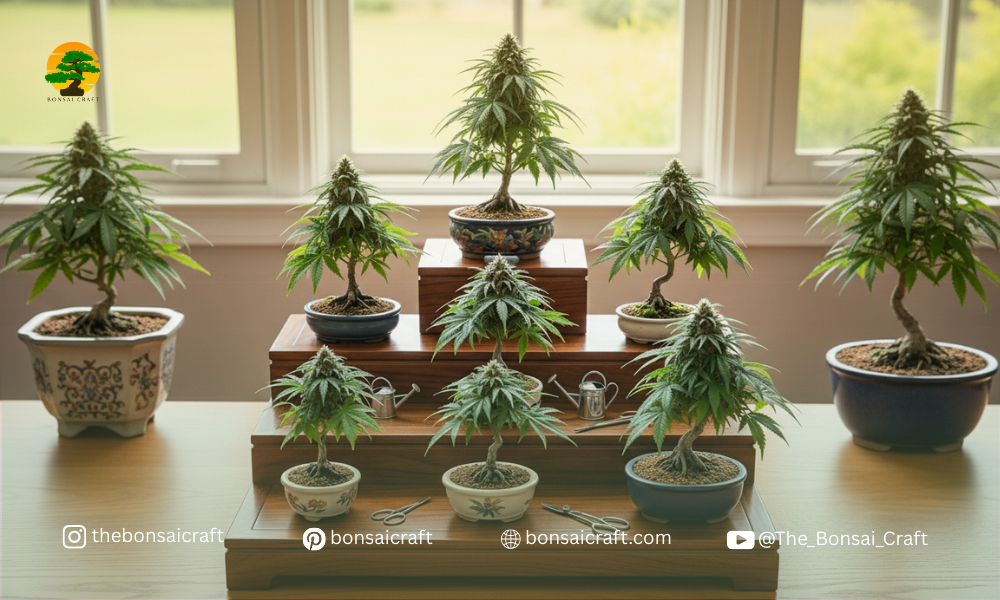
Certain cannabis strains are better suited for bonsai due to their natural growth habits and resilience. Northern Lights offers dense branching and compact growth, Lowryder remains naturally small and manageable, and Blue Dream can be shaped with additional training for visual appeal. These varieties adapt well to both indoor and outdoor cannabis bonsai setups.
Old Cannabis Bonsai: Care and Maintenance
Old cannabis bonsai plants require gentler pruning and careful root maintenance to remain healthy. As the plant ages, roots may become restricted and require occasional repotting. Heavy pruning should be avoided because mature plants recover more slowly. Light trimming, minimal wiring adjustments, and stable growing conditions help preserve structure and vitality.
Advanced Cannabis Bonsai Techniques
Cannabis Bonsai Mother Plant: What You Need to Know
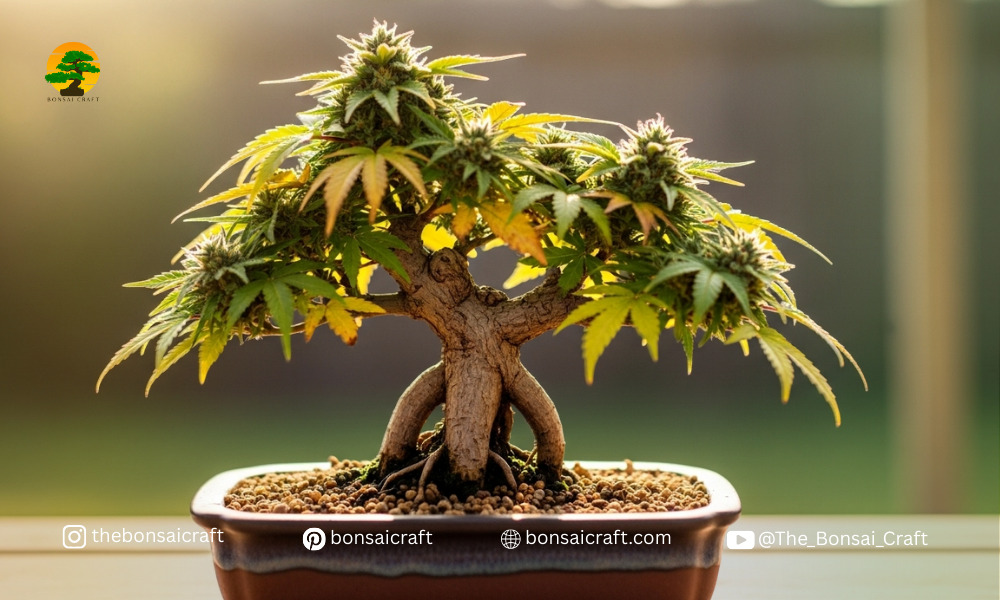
A cannabis bonsai mother plant is a compact plant maintained long-term for cloning purposes. By keeping the plant small through regular pruning, growers can preserve genetics while producing consistent cuttings. This approach is useful for maintaining a specific strain without dedicating large growing spaces to mother plants.
Bonsai and Cannabis: The Artistic Fusion
The fusion of bonsai techniques and cannabis cultivation transforms growing into a form of living art. Cannabis bonsai emphasizes creativity, observation, and design rather than speed or yield. Each plant reflects the grower’s artistic vision, making it a decorative and expressive addition to gardens or indoor spaces.
Common Mistakes and Troubleshooting Tips
Troubleshooting Cannabis Bonsai Issues
Most cannabis bonsai problems arise from overwatering, under-pruning, or pest infestations. Excess moisture leads to root stress, while insufficient pruning causes uncontrolled growth. Regular inspections, proper drainage, and organic pest control methods help prevent long-term issues and maintain plant health.
Growing Cannabis Bonsai Outdoors vs. Indoors
Indoor Cannabis Bonsai
Growing cannabis bonsai indoors provides greater environmental control and consistent shaping conditions. Artificial lighting, stable temperatures, and controlled humidity allow precise management of growth. Adequate airflow is essential to prevent mold and pest problems.
Outdoor Cannabis Bonsai
Outdoor cannabis bonsai benefits from natural sunlight but requires protection from environmental stress. Wind, rain, and pests can disrupt the structure. A sheltered location with partial sunlight and well-draining soil supports healthy outdoor growth.
Conclusion
Growing a cannabis bonsai is a long-term artistic practice that combines plant training, patience, and creativity. Whether cultivated for aesthetics or personal enjoyment, cannabis bonsai offers a unique way to explore cannabis horticulture beyond traditional growing methods. With proper techniques and consistent care, these miniature plants can become lasting living artworks.
FAQs
Can you legally grow a cannabis bonsai tree?
Yes, you can grow a cannabis bonsai tree where cannabis cultivation is legal under local laws. Cannabis bonsai follows the same legal rules as standard cannabis plants, including limits on plant count and location. Always check local regulations before growing, especially for indoor or outdoor setups.
Does growing cannabis as a bonsai reduce yield?
Yes, cannabis bonsai significantly reduces yield because the plant is intentionally kept small. Bonsai cannabis focuses on aesthetics and structure rather than flower production. Regular pruning, root restriction, and limited canopy size naturally reduce bud development compared to traditional cannabis cultivation.
How long does a cannabis bonsai plant live?
A cannabis bonsai plant can live for several months to multiple years with proper care. Longevity depends on strain choice, pruning consistency, root management, and whether the plant is kept in vegetative growth. Bonsai mother plants often live the longest when maintained carefully.
What size pot is best for a cannabis bonsai tree?
A shallow bonsai pot with good drainage is best for growing a cannabis bonsai tree. Small containers restrict root growth, which helps control plant size and structure. Pots are usually repotted periodically to refresh the soil and lightly trim roots without encouraging excessive growth.
Is cannabis bonsai difficult for beginners?
Cannabis bonsai is beginner-friendly if basic pruning and watering techniques are followed. While it requires patience and regular attention, beginners can succeed by choosing compact strains, avoiding overwatering, and pruning gradually. Starting indoors also helps maintain better environmental control.