Creating healthy bonsai soil at home is one of the most important steps to ensure long-term bonsai success. Unlike standard garden soil, bonsai soil is a carefully structured substrate designed to optimize drainage, aeration, and moisture retention. Whether you are working with junipers, maples, or tropical bonsai, understanding how to make bonsai soil at home will help you cultivate strong roots, maintain tree health, and enhance your bonsai’s aesthetic appeal.
A proper bonsai soil mix combines inorganic components such as akadama bonsai soil, pumice, and lava rock, often with minor organic additives, depending on species and climate. Knowing the right ratios and particle sizes is crucial because shallow bonsai pots can easily trap water, leading to root rot, fungal infections, or nutrient deficiencies. This comprehensive guide provides a step-by-step approach to DIY bonsai soil preparation, detailed insights into akadama bonsai soil, and tips for species-specific and climate-specific adjustments.
What is Bonsai Soil and Why Does It Matter?
Bonsai soil is a specialized growing medium designed to provide high levels of drainage, aeration, and moisture retention within the restricted space of a bonsai pot. While regular bonsai potting soil might look like dirt, it is actually a carefully engineered substrate of various particle sizes that prevents the soil from compacting into a solid, airless mass. The primary goal of any best bonsai soil is to maintain a healthy oxygen exchange at the root level; without oxygen, the delicate feeder roots cannot absorb nutrients or water, leading to a quick decline in the tree’s health.
The physical structure of the soil determines how the roots grow. In a coarse, granular mix, roots are forced to divide and branch out when they hit a hard particle, which creates the dense, fibrous root system necessary for a miniature tree. If you use standard garden soil, the fine particles fill all available air gaps, creating a “soggy brick” effect that suffocates the tree. According to experts at Bonsai Empire, a quality mix must drain water immediately while holding just enough moisture inside the individual particles to keep the tree hydrated until the next watering.
Bonsai Soil Is a Structured Blend That Supports Healthy Roots
Bonsai soil is a carefully designed blend of inorganic and limited organic materials that promotes root aeration, drainage, and moisture retention.
Unlike ordinary garden soil, bonsai soil maintains a balance of water and oxygen critical for shallow-rooted trees. Standard potting soil compacts easily, reduces airflow, and can cause root rot in bonsai containers. Structured bonsai soil ensures that water percolates evenly while roots receive sufficient oxygen. Using this type of soil also prevents nutrient leaching and promotes the development of fine feeder roots, which are essential for overall tree health and vigor.
For more on bonsai fundamentals, see our complete bonsai care guide.
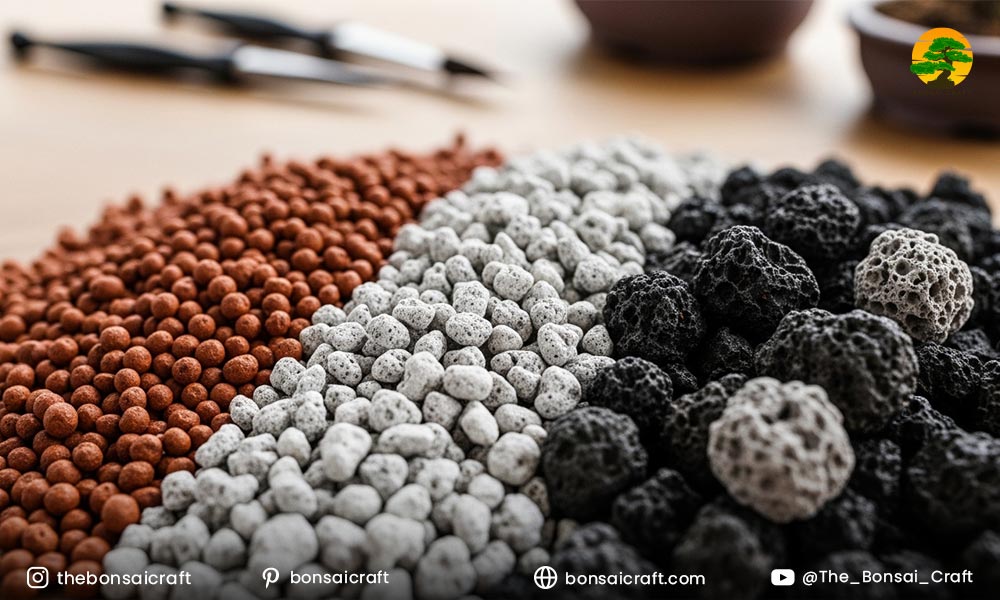
The Best Bonsai Soil Components Include Akadama, Pumice, and Lava Rock
Akadama, pumice, and lava rock are the primary components of most bonsai soil mixes because they balance drainage and moisture retention.
Akadama Bonsai Soil
Akadama is a hard-baked Japanese clay that retains moisture while allowing oxygen flow. Roots can penetrate the granular particles, which also provide structural stability. However, akadama gradually breaks down after 2–3 years, so regular repotting is necessary to maintain soil structure.
Pumice
Pumice is a porous volcanic rock that holds moderate moisture and supports aeration. Its lightweight nature allows for easy water absorption while preventing soil compaction, and it promotes the growth of fine feeder roots crucial for bonsai vitality.
Lava Rock
Lava rock, also called scoria, provides excellent drainage and ensures soil structure remains intact. It does not compact over time and reduces the risk of waterlogging, which is particularly important for conifers and evergreens.
These components form a durable bonsai soil mix that balances water retention and drainage. Minor organic additives may be included but should not exceed 10–20% of the mix.
How to Make Bonsai Soil at Home Using DIY Steps
To make bonsai soil at home, combine akadama, pumice, and lava rock in species-specific ratios, sieve each component, and mix thoroughly.
Step-by-Step DIY Guide
- Gather Materials: Collect akadama, pumice, lava rock, and optional organic matter.
- Sieve Components: Use a sieve (~3–6 mm) to remove dust and fines, which impede drainage and reduce root oxygenation.
- Measure Ratios: Combine materials according to your bonsai species and local climate.
- Hydrate Lightly: Add a small amount of water to reduce dust during mixing.
- Blend Thoroughly: Mix until components are evenly distributed.
Avoid using garden soil or regular potting soil, as they compact too quickly and retain excess water, suffocating roots. Following these steps creates a bonsai tree soil mix that promotes strong root development and tree health.
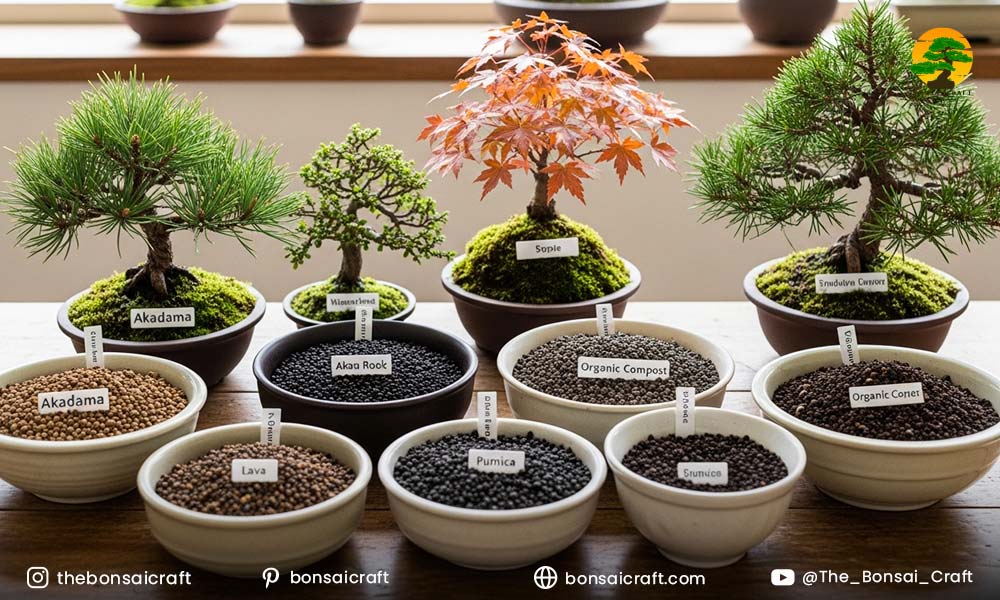
Bonsai Soil Ratios Depend on Tree Species
Different bonsai species require soil ratios adjusted for moisture retention and drainage.
Deciduous Trees (Maples, Elms):
- 50% Akadama
- 25% Pumice
- 25% Lava Rock
Deciduous trees benefit from slightly higher water retention due to leaf structure and seasonal growth patterns.
Conifers and Junipers:
- 33% Akadama
- 33% Pumice
- 33% Lava Rock
Evergreens and conifers prefer rapid drainage and less moisture retention to prevent root rot.
Adjust these ratios based on climate: wetter regions require more lava rock or grit, while drier climates may benefit from a slightly higher proportion of akadama or minimal organic matter.
Particle Size in Bonsai Soil Influences Drainage and Root Growth
Correct particle size ensures optimal air flow, water distribution, and root development.
Sieved soil prevents fine dust from clogging air pockets, which could otherwise lead to waterlogging and oxygen deficiency. Recommended particle sizes:
- Large trees: 6–8 mm
- Small trees: 3–5 mm
Proper particle sizing promotes healthy microbial activity in the root zone and reduces compaction over time.
When and How to Include Organic Matter
Organic matter should be used sparingly, as too much can increase water retention and soil compaction.
Minor additions such as composted bark, charcoal, or coconut coir improve nutrient availability but should generally remain below 20% of the total soil volume. For tropical bonsai in dry regions, a slightly higher organic content can help retain moisture. For conifers, keep organic content minimal to maintain fast drainage.
Adapting Bonsai Soil for Climate
Bonsai soil should be adapted to local climate conditions to maintain balanced moisture and prevent stress.
Wet or Humid Climates:
- Increase lava rock and grit to improve drainage.
- Ratio example: 30% Akadama, 30–40% Pumice, 30–40% Lava Rock.
Dry or Hot Climates:
- Increase akadama slightly and add a minimal organic fraction to retain moisture.
- Ratio example: 40–50% Akadama, 25–30% Pumice, 25–30% Lava Rock.
Climate adjustments ensure consistent soil performance throughout seasonal changes, preventing water stress or root decay.
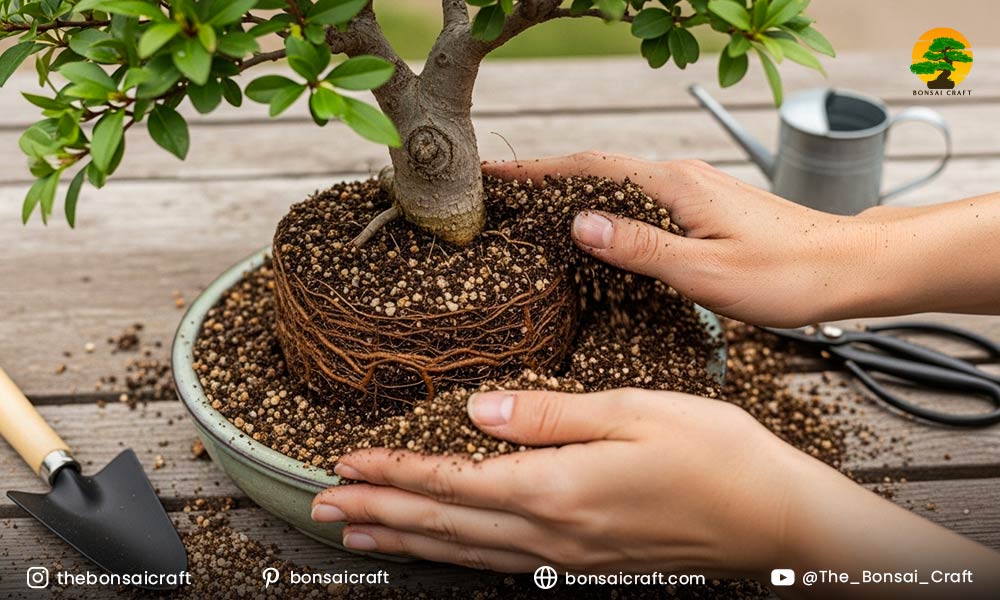
Repotting Bonsai With Homemade Soil
Repot bonsai every 1–3 years with fresh homemade soil to maintain drainage and root health.
Repotting rejuvenates soil structure and encourages fine root growth. Steps:
- Remove old soil gently using a root rake.
- Trim dead or damaged roots.
- Place tree in fresh DIY bonsai soil mix.
- Water thoroughly post-repotting.
Young trees may require annual repotting, while mature trees often need repotting every 2–3 years.
FAQs
What is bonsai soil?
Bonsai soil is a structured mix of inorganic components like akadama, pumice, and lava rock designed to optimize drainage, water retention, and aeration. Unlike garden soil, it prevents compaction and supports healthy root systems.
How do you make bonsai soil at home?
To make bonsai soil at home, combine akadama, pumice, and lava rock in appropriate ratios, sieve to correct particle sizes, and mix thoroughly. Adjust ratios based on species, climate, and container size.
What is the best soil for bonsai trees?
The best soil for bonsai trees balances moisture retention, drainage, and aeration. A classic mix is equal parts akadama, pumice, and lava rock, with adjustments for species and local climate conditions.
Can I use potting soil for bonsai?
No. Standard potting or garden soil compacts, retains too much water, and limits airflow, which can harm bonsai roots. Coarse, structured soil is necessary for shallow bonsai containers.
How often should bonsai soil be replaced?
Bonsai soil should be refreshed every 1–3 years during repotting. Regular soil replacement maintains drainage, prevents compaction, and supports healthy root growth.
Conclusion
Making bonsai soil at home allows full control over drainage, moisture, and root aeration — critical factors for bonsai health. By combining akadama, pumice, and lava rock in ratios tailored to species and climate, and by sieving to the correct particle sizes, you can create a mix that encourages vigorous roots and prevents compaction. Whether cultivating juniper, maple, or tropical bonsai, applying these techniques ensures long-term tree health and optimal growth.