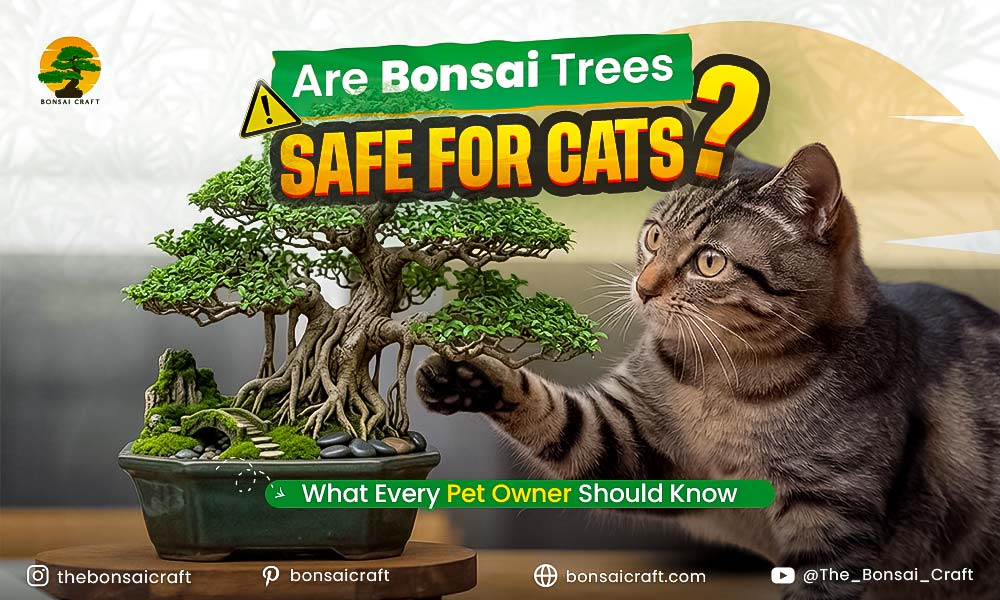
Bonsai trees are beautiful, calming, and often seen as a symbol of patience and balance. Many plant lovers enjoy keeping bonsai indoors because they take up little space while still adding a natural touch to the home. But if you have a cat, the situation becomes more complicated. Cats are curious by nature; they nibble, paw, and explore plants in ways that can quickly turn dangerous.
One of the biggest misunderstandings is thinking that “bonsai” refers to a specific type of plant. In reality, bonsai is just a growing technique. This means any tree can be turned into a bonsai, including both safe and highly toxic species. That’s where the risk comes in. A harmless-looking miniature tree could actually contain compounds that affect your cat’s digestive system, nervous system, or even vital organs.
For cat owners, the goal isn’t to avoid bonsai altogether; it’s to understand which species are safe, which are dangerous, and how to manage your space responsibly. This guide breaks everything down clearly, using verified plant safety information and practical experience from bonsai care.
Some Bonsai Trees Can Be Harmful to Cats
Some bonsai trees are poisonous to cats because certain plant species contain natural toxins that affect animals when ingested. These toxins can include compounds like cyanogenic glycosides, alkaloids, or irritating sap, depending on the species.
When a cat chews on leaves, bark, or berries, these substances enter the body and may cause symptoms ranging from mild stomach upset to severe organ damage. Indoor bonsai increases the risk because cats are more likely to interact with plants placed at eye level or within reach. Even small amounts can be enough to trigger a reaction, especially in smaller cats.
Are Ficus Bonsai Trees Safe for Cats? Not Always
Ficus bonsai trees are toxic to cats because their sap can irritate the mouth, skin, and digestive system. The milky latex inside ficus plants is the main issue, and it can cause vomiting, drooling, or diarrhea if ingested.
Ficus is one of the most popular indoor bonsai choices because it is easy to maintain and adapts well to indoor environments. However, that convenience makes it more likely to be placed where cats can reach it. While the toxicity is usually not life-threatening, repeated exposure can cause ongoing discomfort and should be avoided in homes with curious pets.
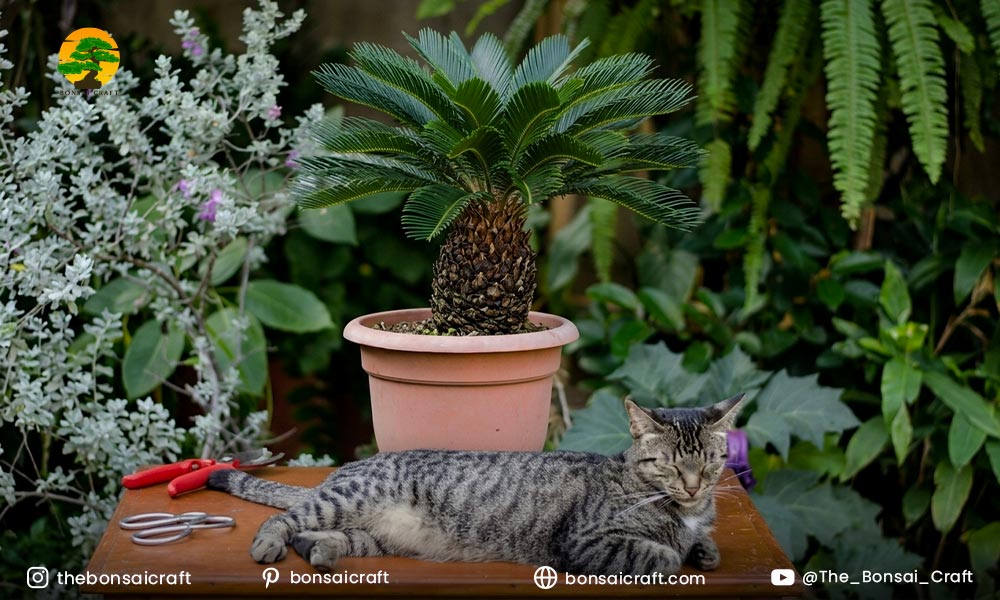
Sago Palm Bonsai: One of the Most Dangerous Plants for Cats
Sago palm bonsai is highly toxic to cats and can cause severe liver failure even in small amounts. Every part of the plant contains toxins, especially the seeds, making it extremely dangerous if ingested.
Cats that chew on sago palm may show symptoms such as vomiting, lethargy, seizures, or jaundice within hours. This is not a mild reaction; it is a medical emergency. Despite its attractive, palm-like appearance and popularity in bonsai styling, sago palm should never be kept in a home with cats.
Cherry Laurel Bonsai Can Be Risky for Cats
Prunus laurocerasus bonsai is toxic to cats because it releases cyanide-like compounds when the leaves or seeds are chewed. These compounds interfere with the body’s ability to use oxygen at a cellular level.
Although cherry laurel is commonly used as a hedge plant outdoors, its use as a bonsai indoors creates more direct exposure. Cats that ingest it may experience breathing problems, weakness, or more serious reactions. This makes it a poor choice for pet-friendly bonsai collections.
Hawthorn Bonsai: A Safer Choice for Cat Owners
Crataegus bonsai is generally safe for cats because it is not listed as toxic in major plant safety databases. This makes hawthorn one of the better options for pet owners who still want a traditional bonsai tree.
Hawthorn is also highly adaptable. It works well as both a bonsai and an outdoor hedge, especially in temperate climates. While the berries are not toxic, eating large amounts may cause mild stomach upset. Overall, it provides a good balance between beauty, structure, and safety.
Is Juniper Bonsai Safe for Cats? Mostly Yes
Juniper bonsai is considered low-risk for cats, though eating large amounts may cause mild digestive discomfort. It is not classified as highly toxic, making it a more suitable option compared to dangerous species.
Juniper is widely used in bonsai because of its rugged look and flexibility in styling. For cat owners, it offers a practical middle ground safe enough for most homes, but still requiring some supervision to prevent chewing.
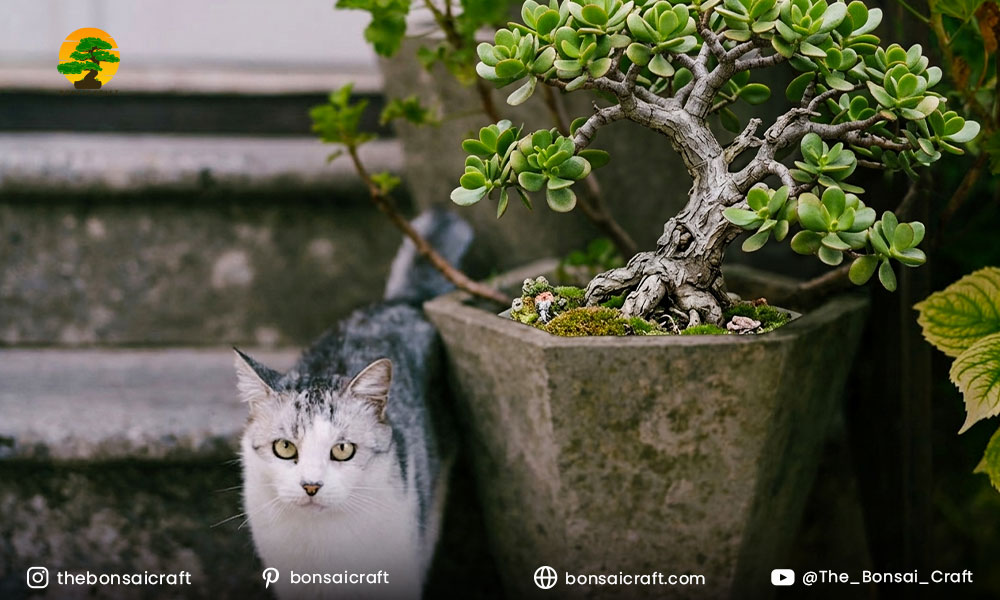
Jade Bonsai Might Look Safe: But It’s Not for Cats
Jade bonsai is toxic to cats and can cause vomiting, lethargy, and coordination issues if ingested. Despite its popularity as an indoor plant, it is not considered pet-safe.
Many people assume jade plants are harmless because they are succulents, but this is a common misconception. For households with cats, it’s better to avoid jade bonsai entirely and choose non-toxic alternatives instead.
How to Tell If Your Cat Ate a Toxic Bonsai
Signs of bonsai poisoning in cats often include vomiting, drooling, diarrhea, lethargy, or unusual behavior. These symptoms may appear quickly or develop over several hours, depending on the plant.
In more serious cases, cats may show tremors, seizures, or difficulty breathing. Recognizing these signs early is critical. If you suspect your cat has eaten a toxic bonsai, immediate action can make a significant difference in recovery.
Why Cats Shouldn’t Chew on Bonsai Leaves
Cats should not eat bonsai leaves because even non-toxic plants can cause digestive upset, while toxic ones can lead to serious illness. Chewing is a natural behavior, but it becomes dangerous when harmful plants are involved.
Indoor environments often lack natural stimulation, which can increase a cat’s curiosity toward plants. Providing safe alternatives like cat grass can help redirect this behavior while protecting your bonsai collection.
Choosing Bonsai That Are Safe for Cats and Dogs
Pet safe bonsai plants are the best option for households with animals because they reduce the risk of accidental poisoning. Species like hawthorn and certain non-toxic landscape trees are better suited for indoor bonsai setups.
Choosing the right plant from the start eliminates the need for constant monitoring and worry. It also allows you to enjoy bonsai as a hobby without compromising your pet’s safety.
Where to Place Bonsai So Your Cat Stays Safe
Safe indoor bonsai for cats requires strategic placement to limit access and reduce interaction. Keeping bonsai on high shelves, plant stands, or in separate rooms can help prevent chewing.
Placement is just as important as plant selection. Even safe plants can become a problem if cats frequently disturb them. A controlled setup ensures both your bonsai and your cat remain stress-free.
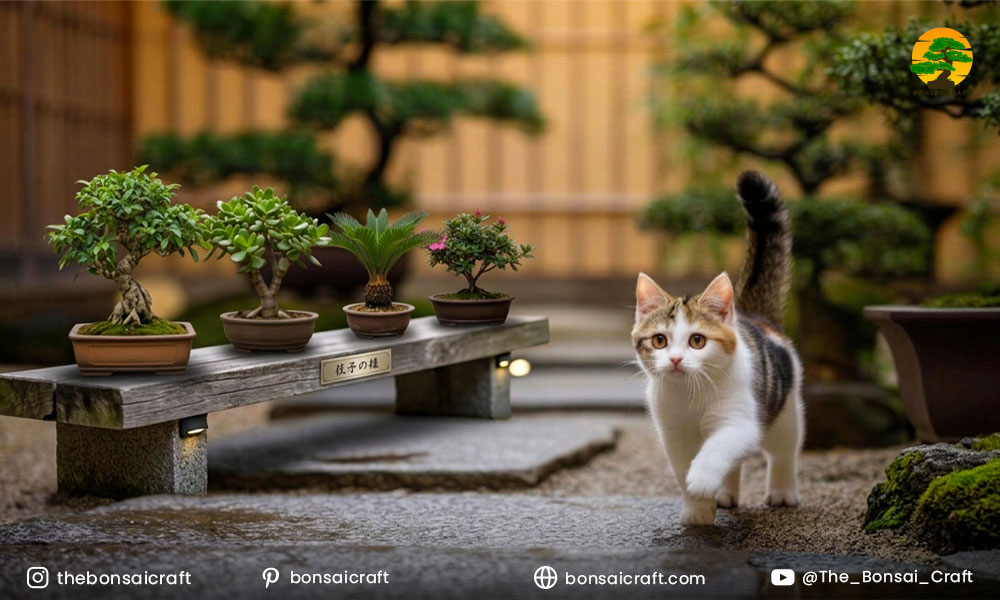
Bonsai Plants You Should Keep Away from Cats
Toxic bonsai plants include sago palm, ficus, jade, azalea, and cherry laurel. These species are known to cause health issues in cats and should be avoided in pet-friendly homes.
Understanding which plants are dangerous allows you to make better decisions when buying or designing a bonsai collection. It also helps prevent accidental exposure, especially when introducing new plants into your home.
What to Do If Your Cat Eats a Bonsai Plant
If your cat eats a bonsai plant, you should contact a veterinarian immediately and monitor symptoms closely. Quick action is especially important if the plant is known to be toxic.
Remove any plant material from your cat’s mouth, keep them calm, and provide your vet with the plant name if possible. Early treatment can prevent complications and improve recovery outcomes.
Best Bonsai Trees for Homes with Cats
The best bonsai trees for cat owners are non-toxic, easy to maintain, and adaptable to indoor environments. Hawthorn and certain low-risk species like juniper are among the safest options.
These trees provide the beauty and structure of traditional bonsai while minimizing risk. Choosing wisely allows you to maintain both a healthy plant collection and a safe home for your pets.
FAQs
Are bonsai trees poisonous to cats?
Yes, some bonsai trees are poisonous to cats depending on the species used. Toxic plants like sago palm and ficus can cause serious health problems, while others like hawthorn are safer options. Always check the plant species before bringing a bonsai into a home with cats.
Are ficus bonsai trees poisonous to cats?
Yes, ficus bonsai trees are toxic to cats due to their irritating sap. If ingested, they can cause vomiting, drooling, and digestive issues. While not usually fatal, they can still make cats uncomfortable and should be kept out of reach.
Are sago palm bonsai trees toxic to cats?
Yes, sago palm bonsai trees are extremely toxic and can be fatal to cats. Even small ingestion can lead to liver failure, seizures, and severe illness. This plant should never be kept in homes with pets.
What bonsai trees are safe for cats?
Hawthorn and some low-risk species like juniper are safer choices for cat owners. These plants are not highly toxic and are better suited for indoor environments where pets are present.
What should I do if my cat eats bonsai leaves?
You should contact a veterinarian immediately if your cat eats bonsai leaves. Remove any remaining plant material and monitor symptoms closely. Quick action is essential, especially if the plant is toxic.
Conclusion
Bonsai trees can be either safe or dangerous for cats; it all depends on the species. While some plants like sago palm and cherry laurel pose serious risks, others like hawthorn offer a safer alternative. The key is understanding what you’re bringing into your home.
With the right plant selection, thoughtful placement, and awareness of your cat’s behavior, you can enjoy bonsai without putting your pet at risk. A careful approach allows both your bonsai collection and your cat to thrive in the same space.