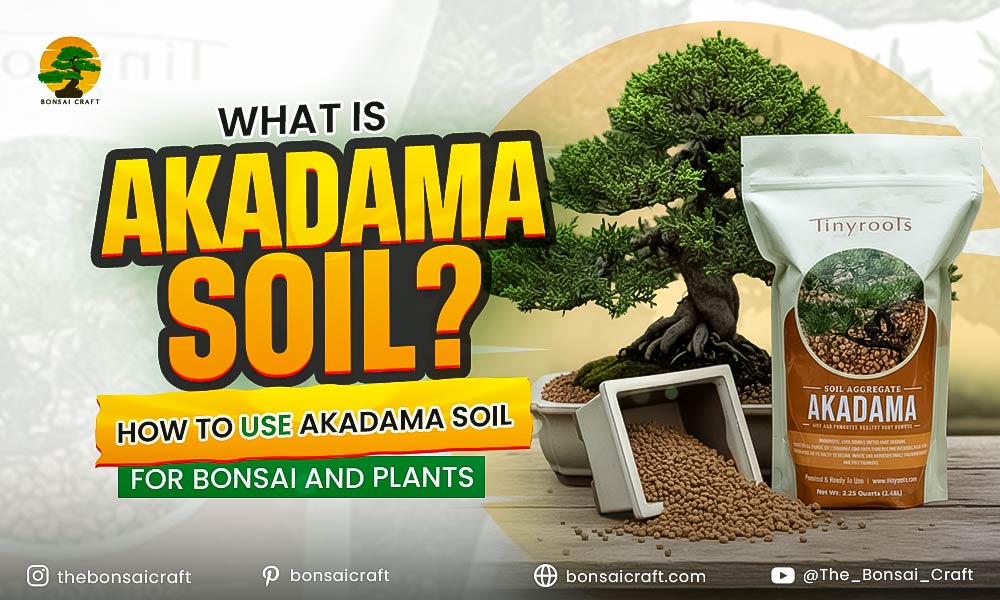
Bonsai cultivation depends heavily on the quality and structure of the soil used in the pot. Unlike ordinary garden soil, bonsai soil must provide a delicate balance between drainage, aeration, and moisture retention. One of the most widely recognized materials used in bonsai substrates is akadama soil, a natural granular clay that has been used by Japanese growers for decades. For more detailed guides, tips, and bonsai inspiration, visit Bonsai Craft. Understanding proper soil composition is also essential for overall tree health as explained in this guide to bonsai plant soil.
Understanding what is akadama soil and how to use akadama soil correctly is essential for anyone interested in bonsai cultivation, container gardening, or specialized plant substrates. Its unique physical structure helps regulate water retention while maintaining the oxygen flow necessary for healthy root systems. Soil structure and moisture balance are also important topics discussed in this resource on the ultimate guide to watering bonsai trees.
Originally mined in Japan, Japanese akadama soil has become a globally recognized bonsai soil component. It is now used not only in traditional bonsai soil mixes but also in houseplant substrates, cactus mixes, and even aquariums. Growers in regions such as the United States and Canada often import akadama because of its reliable performance in container environments. Many professional growers also combine it with techniques explained in this complete bonsai care guide.
This guide explains what akadama bonsai soil is, its composition, benefits, pH level, and how to use akadama soil in different mixes. It also explores how growers adapt akadama soil blends depending on climate, plant species, and growing conditions.
What is Akadama Soil?
Akadama soil is a naturally occurring granular clay from Japan that is widely used as a bonsai growing medium. Akadama soil is a naturally occurring clay-like mineral soil mined in Japan and used primarily in bonsai cultivation and container gardening. It forms from volcanic deposits that have weathered into clay particles over time and are then mined, dried, and graded into different particle sizes for horticultural use.
The word “akadama” translates from Japanese as “red ball earth,” referring to the soil’s reddish-brown color and round granular shape.
Unlike traditional potting soil, akadama is not organic soil. Instead, it is a mineral substrate composed primarily of silica, aluminum oxide, and iron oxide, which contribute to its structural stability and water retention ability.
Because the particles are granular rather than compacted, akadama creates air pockets within the soil structure. These spaces allow oxygen to reach the roots while still holding enough moisture to support plant growth, a principle also important in maintaining healthy trees such as the juniper bonsai tree.
Another distinctive feature of akadama bonsai soil is its color change when wet. When watered, the granules darken noticeably, which helps growers visually determine when plants need watering.
For this reason, many bonsai growers consider akadama one of the most reliable soil components for maintaining root health in container-grown trees.
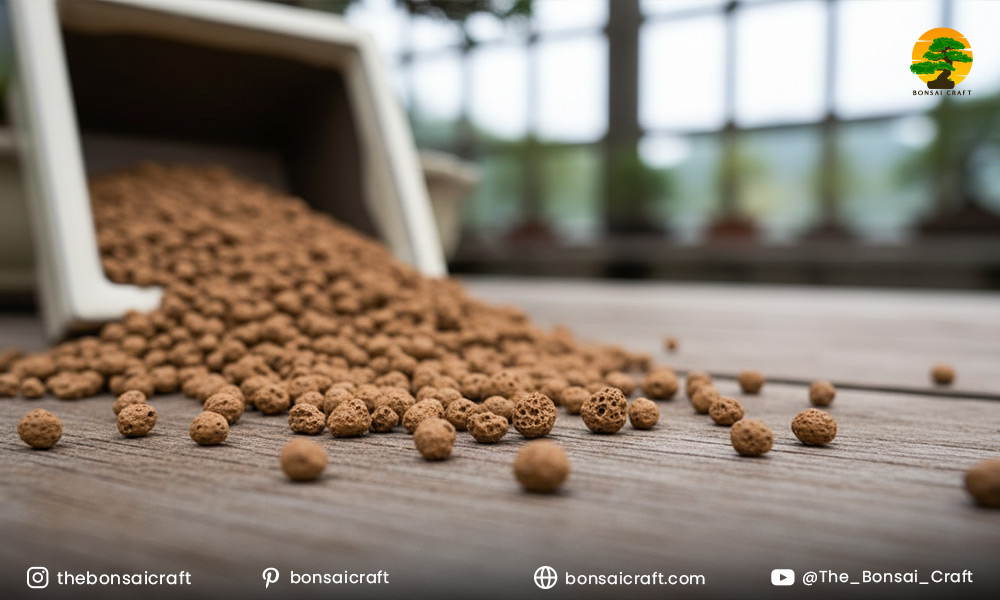
What is Akadama Bonsai Soil Made Of?
Akadama bonsai soil is composed of mineral-rich volcanic clay containing silica, aluminum, and iron compounds.
The mineral composition of soil akadama gives it unique physical properties that make it suitable for bonsai cultivation.
Scientific analyses show that akadama contains the following main mineral components:
- Silicon dioxide (SiO₂) – about 42.7%
- Aluminum oxide (Al₂O₃) – about 25.1%
- Iron oxide (Fe₂O₃) – about 8.4%
- Magnesium oxide and calcium oxide in smaller quantities
These minerals contribute to the soil’s porous structure and moderate nutrient retention capacity. These minerals contribute to the soil’s porous structure and moderate nutrient retention capacity, which works well alongside proper fertilization methods described in this guide to bonsai fertilizer.
Akadama is typically processed into different particle sizes before being sold for horticultural use. The granules are commonly graded as:
- Fine (1–3 mm)
- Small or medium (4–7 mm)
- Large (7–14 mm or more)
The selected particle size depends on the plant type and container size. Smaller particles are often used for seedlings or small bonsai trees, while larger particles improve drainage for mature bonsai.
What is the pH of Akadama Soil?
Akadama soil has a slightly acidic to neutral pH, usually around 6.5 to 6.9.
The akadama soil pH typically falls between 6.5 and 6.9, which is considered slightly acidic to neutral and suitable for many plant species.
This pH range supports efficient nutrient availability while avoiding extreme acidity or alkalinity that could harm root systems.
Because of this balanced pH level, akadama bonsai soil mix works well for many bonsai species including:
- Juniper bonsai
- Pine bonsai
- Maple bonsai
- Tropical bonsai species
The neutral-to-slightly-acidic environment also makes akadama compatible with many other soil components such as pumice, lava rock, or organic bark mixes. Different species may have slightly different soil preferences, which are explored in this overview of types of bonsai trees.
Akadama Soil Benefits for Bonsai and Plants
Akadama soil benefits include improved drainage, strong root aeration, and stable moisture retention.
The popularity of akadama soil bonsai mixes comes from several horticultural advantages.
Excellent Drainage
The porous structure of akadama allows excess water to drain easily through the soil. This prevents root rot and waterlogging, two of the most common problems in container plants.
Balanced Moisture Retention
Although it drains well, akadama still absorbs moisture in its tiny pores. This allows the soil to hold enough water for plant roots without becoming saturated, similar to the watering balance explained in the importance of bonsai tree watering.
Strong Root Development
The granular texture creates stable air pockets that provide oxygen to roots. Good aeration encourages the development of fine feeder roots, which are essential for bonsai health.
Visual Water Indicator
Because akadama darkens when wet and becomes lighter when dry, it helps growers easily determine watering schedules.
Nutrient Retention
The clay minerals in akadama can hold certain nutrients and release them gradually, supporting steady plant growth.
These characteristics explain why Japanese akadama soil has become a standard component of professional bonsai soil mixes.
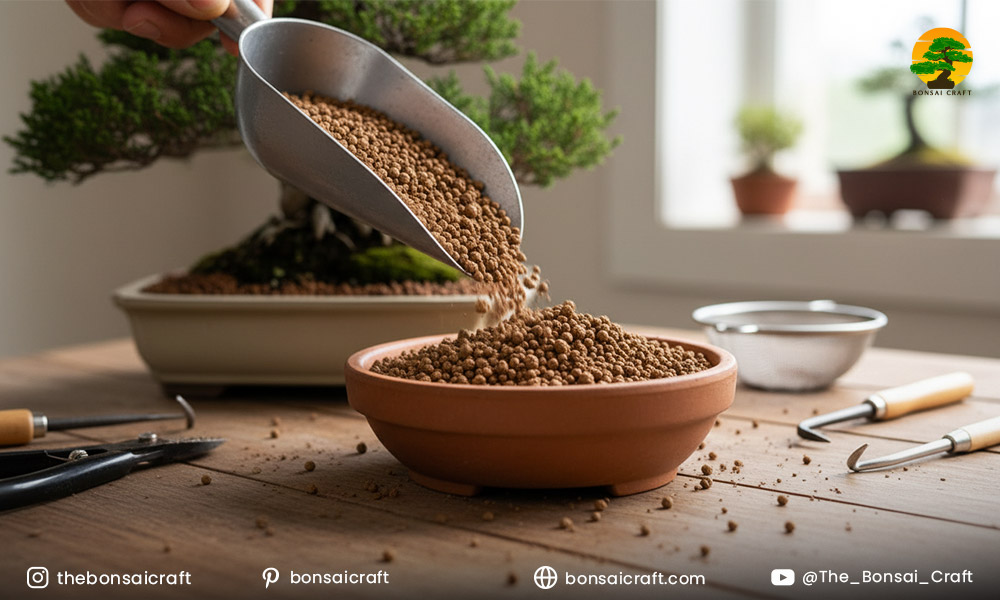
How to Use Akadama Soil
Akadama soil can be used alone or mixed with other substrates to create a balanced bonsai soil mix.
Using akadama bonsai soil properly depends on the type of plant, pot size, and climate conditions.
Using Pure Akadama
Some growers use 100% akadama soil for certain bonsai species, especially conifers such as pine trees.
This method allows excellent control over watering and root development.
However, pure akadama may break down gradually over time, so many growers prefer to combine it with other materials.
Using Akadama in Bonsai Soil Mix
A typical akadama bonsai soil mix often includes:
- Akadama (water retention)
- Pumice (aeration)
- Lava rock (drainage and structure)
These mixes create a balanced soil environment suitable for many bonsai species.
Example Bonsai Mix
A common beginner bonsai soil recipe:
- 50% akadama
- 25% pumice
- 25% lava rock
This mixture maintains moisture while ensuring proper drainage and airflow.
How to Use Akadama Bonsai Soil Step by Step
Using akadama bonsai soil involves selecting the right particle size, preparing the soil, and mixing it properly.
Before potting a bonsai tree, the akadama should be prepared correctly.
First, sieve the akadama to remove dust particles. Fine dust can clog drainage and reduce aeration.
Next, choose the correct particle size for your tree:
- Small particles for young trees
- Medium particles for most bonsai
- Larger particles for mature trees
Then combine akadama with other soil components if desired.
Finally, place a drainage layer in the bonsai pot and fill it with the prepared soil mix before planting the tree.
This process ensures healthy root growth and prevents soil compaction.
Akadama Soil for Different Plants
Akadama soil is used for bonsai trees, succulents, houseplants, and even aquarium substrates.
Although akadama soil bonsai is the most common use, it also works well in other growing systems.
Succulents and Cactus
Akadama provides excellent drainage while still retaining moisture, making it suitable for succulent mixes when combined with pumice or sand.
Houseplants
Some houseplant growers add akadama to soil mixes for plants such as:
- Monstera
- Ficus
- Indoor tropical plants
The soil structure helps prevent compacted potting soil.
Aquariums
Akadama soil aquarium setups are sometimes used for aquatic plants because the clay particles can absorb nutrients and slowly release them into the water.
However, aquarium use typically requires rinsing the substrate thoroughly.
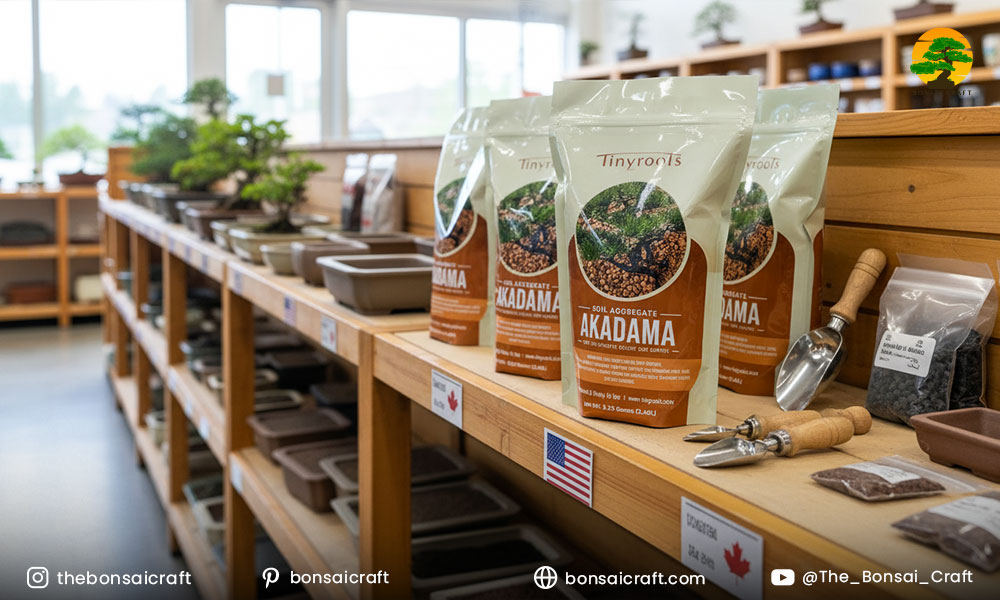
Akadama Soil USA and Canada Availability
Akadama soil in the USA and Canada is usually imported from Japan and sold through bonsai suppliers.
Authentic Japanese akadama soil is mined in Japan and then exported worldwide.
Because it must be imported, akadama can be more expensive in countries such as the United States and Canada compared to other soil components.
For this reason, some growers replace part of the akadama with similar materials such as:
- Calcined clay
- Pumice
- Turface
Even so, many bonsai enthusiasts still prefer genuine akadama because of its reliable performance in bonsai cultivation.
Limitations of Akadama Soil
Akadama soil gradually breaks down over time and may require repotting after several years.
Despite its advantages, akadama does have a few limitations.
One of the main issues is that akadama particles slowly break down into smaller particles, especially in very wet or freezing climates.
As the soil breaks down, it may reduce drainage and airflow. Because of this, bonsai trees grown in akadama are usually repotted every 2–3 years to refresh the soil structure.
This gradual breakdown is actually useful for bonsai cultivation because it stimulates root pruning during repotting cycles.
FAQs
What is akadama bonsai soil?
Akadama bonsai soil is a granular clay substrate from Japan used for growing bonsai trees. It provides excellent drainage, aeration, and moisture retention while maintaining a stable pH level. Because of its porous structure, akadama supports healthy root growth in container-grown plants.
How to use akadama soil for bonsai?
Akadama soil is usually mixed with pumice and lava rock to create a balanced bonsai soil mix. Growers select the particle size based on the tree’s age and pot size, sieve the soil to remove dust, and then use the mixture during repotting.
What is the pH of akadama soil?
Akadama soil typically has a pH between 6.5 and 6.9. This slightly acidic to neutral range supports nutrient absorption and is suitable for most bonsai species and many container plants.
Can akadama soil be used alone?
Akadama soil can be used alone for certain bonsai species, especially conifers like pine. However, many growers mix it with pumice and lava rock to improve soil structure and reduce breakdown over time.
Is akadama soil good for houseplants?
Akadama soil can improve drainage and aeration in houseplant soil mixes. When blended with organic potting soil or bark, it helps prevent compaction and promotes healthier root systems in container plants.
Conclusion
Akadama soil remains one of the most trusted growing media in bonsai cultivation. Its volcanic origin, porous structure, and balanced pH create an ideal environment for root development in container-grown trees.
Whether used alone or as part of an akadama bonsai soil mix, it provides reliable drainage, moisture retention, and aeration. These properties explain why growers around the world, from Japan to the USA and Canada, continue to rely on akadama soil for bonsai and specialized plant cultivation.
Understanding what akadama soil is and how to use akadama soil properly allows growers to create healthier soil systems and maintain stronger bonsai trees over time.