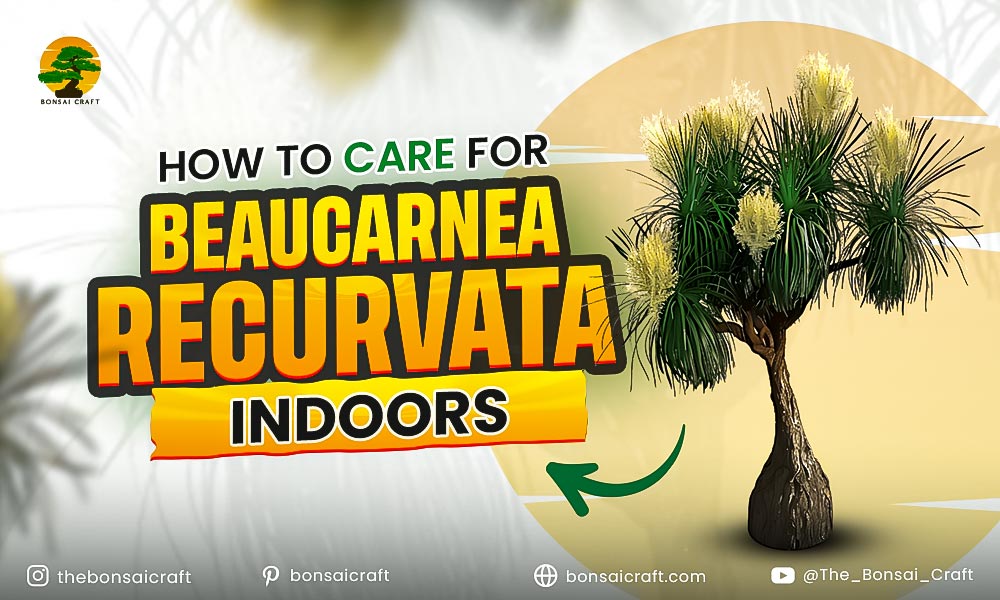
How to care for Beaucarnea recurvata starts with understanding that this plant is a drought-tolerant succulent that thrives in bright light and well-draining soil. Commonly known as the ponytail palm, this striking houseplant stores water in its swollen trunk base and requires infrequent watering, strong light, and warm temperatures to grow successfully. If you’re exploring more indoor plant care methods, you can also read this detailed guide on indoor bonsai trees.
The plant botanically known as Beaucarnea recurvata is widely referred to as the Ponytail Palm (Beaucarnea recurvata). Despite its palm-like appearance, it is not a true palm but a member of the Asparagaceae family, native to eastern Mexico. Its unique bottle-shaped trunk (caudex) and cascading leaves make it a sculptural favorite in modern interiors. Similar architectural indoor plants are discussed in this guide about Ficus lyrata care.
Whether you’re growing it as a beaucarnea recurvata indoor plant, decorative accent, or even experimenting with bonsai styling, this guide provides detailed, expert-backed instructions for long-term success. If you want to explore general techniques, see this complete bonsai care guide.
Understanding Beaucarnea recurvata: An Overview
Beaucarnea recurvata, known by the common names ponytail palm, elephant’s foot, or bottle palm, is a slow-growing evergreen succulent. It develops a distinctive bulbous trunk (caudex) that stores water, allowing it to endure prolonged dry periods. In its native range, it grows outdoors in bright sunlight and well-drained soils, and indoors it thrives in similar dry, light conditions. While mature plants can produce tall flower spikes outdoors, indoor blooms are rare. For more species insights, explore different types of bonsai trees.
How to Care for Beaucarnea recurvata: Light Requirements
Beaucarnea recurvata needs bright light with several hours of direct or very strong indirect sun each day. This ponytail palm does best when provided with ample light that mimics its native semi-desert habitat. Indoors, the best location is near a south- or west-facing window where it can receive at least 4–6 hours of bright light, including morning or late afternoon sun. Inadequate light leads to stunted growth, pale foliage, and etiolation (stretching).
If natural light is limited, use supplemental grow lights to extend photoperiod and intensity. Outdoors in warm climates (USDA Zones 9–11), it tolerates full sun with gradual acclimation, but sudden intense light shifts can cause leaf scorch. Similar light management techniques are used for a juniper bonsai tree.
How to Care for Beaucarnea recurvata: Watering and Moisture
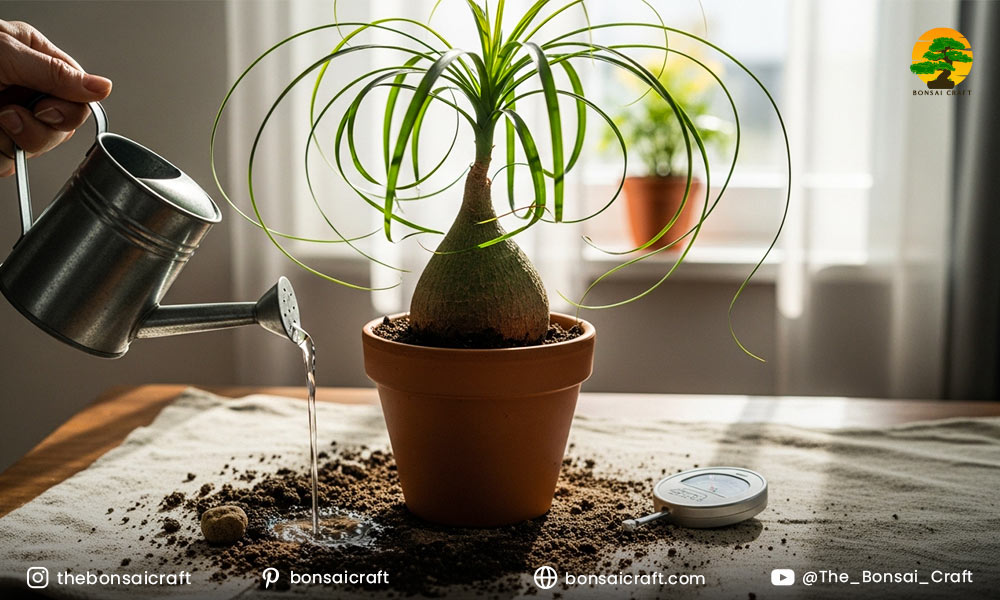
Correct watering for Beaucarnea recurvata is infrequent, allowing the soil to dry out completely between thorough waterings. Thanks to the ponytail palm’s water-storing caudex, it is drought-tolerant and susceptible to root rot if watered too often. The key is to embrace a “soak-and-dry” approach: water deeply, then wait until the entire root zone is dry before watering again.
In the spring and summer, water roughly every 1–3 weeks depending on light and pot size. During fall and winter, reduce frequency to about once every 3–6 weeks as growth slows and moisture use declines. Always avoid leaving the plant sitting in water, and empty drainage saucers immediately after watering to prevent root suffocation and rot. You can also learn more about watering techniques in the article on the importance of bonsai tree watering.
How to Care for Beaucarnea recurvata: Soil and Potting Mix
Beaucarnea recurvata thrives in a coarse, well-draining soil mix that mimics desert conditions. A cactus or succulent potting blend, preferably mixed with perlite, pumice, or coarse sand, ensures excellent drainage and prevents soggy soils that lead to root rot. Heavy, moisture-retentive soils are unsuitable. If you’re preparing soil for bonsai or container plants, read this detailed guide on bonsai plant soil.
The plant does best when slightly root-bound, so choose a pot only slightly larger than the root ball and ensure it has adequate drainage holes. Repotting is typically needed every 2–4 years or only when the plant becomes severely pot-bound. Choosing proper containers is also discussed in this helpful guide on bonsai pot selection guide.
How to Care for Beaucarnea recurvata: Temperature & Humidity
Beaucarnea recurvata prefers warm indoor temperatures and can tolerate low to moderate humidity. Maintain temperatures between 16–27 °C (60–80 °F) for optimal health. The ponytail palm is not frost-tolerant and should be protected from temperatures below 10 °C (50 °F). Typical household humidity (30–50%) is sufficient; high humidity isn’t necessary and can even slow soil drying.
Ensure stable conditions; avoid drafty windows or cold drafts, which can stress the plant and inhibit growth.
How to Fertilize Beaucarnea recurvata
Beaucarnea recurvata requires light fertilization during active growth seasons only. Feed the plant with a balanced, diluted liquid fertilizer once every 4–6 weeks in spring and summer to support new growth. Avoid fertilizing in fall and winter as the plant enters a slower growth phase and excess nutrients can cause fertilizer burn.
A half-strength succulent fertilizer or balanced houseplant fertilizer works well; stronger doses are unnecessary and potentially harmful. You can also explore recommended feeding methods in this guide on bonsai fertilizer.
How to Propagate Beaucarnea recurvata
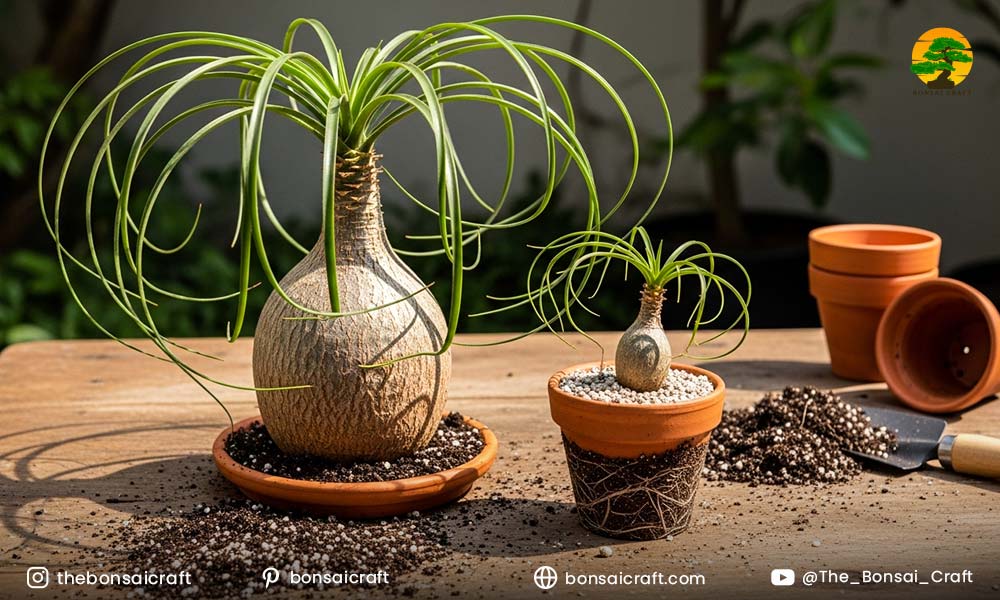
Beaucarnea recurvata is most reliably propagated from basal offsets (“pups”), not seeds. Mature plants occasionally produce pups at the base of the trunk. To propagate, wait until a pup has developed visible roots and is a few inches tall, then carefully separate it from the mother plant with a clean knife or shears. Allow the cut area to callus for a few days before planting in a well-draining succulent mix. Keep newly potted pups in bright light and lightly moist soil until they establish.
Propagation from seed is possible but uncommon for home growers because seeds take considerably longer to germinate and establish.
Understanding Beaucarnea recurvata Flowering
Beaucarnea recurvata rarely flowers when grown as a houseplant. In its native range or outdoor settings, mature specimens may send up a branched inflorescence with small white or cream flowers, but this happens only when the plant is old and well-established, often decades after planting. Indoor specimens rarely reach this stage, making flowering a unique but uncommon event.
Common Problems and How to Fix Them
Overwatering
Overwatering is the most common cause of decline in Beaucarnea recurvata. Symptoms include yellowing lower leaves, mushy caudex, and root rot. If you suspect overwatering, reduce watering frequency, ensure drainage holes are clear, and let the soil dry completely before watering again. Improve airflow and avoid saucers holding standing water. Learning proper watering techniques is essential for plant health, as explained in the guide on bonsai self watering plant.
Underwatering
Underwatering shows subtle signs like browning leaf tips and slowed growth. While this plant tolerates drought due to its water storage, prolonged neglect can cause brown, dry leaf edges. Address this by watering deeply and ensuring soil dries evenly, then adjust future watering intervals.
Leaf Scorch or Light Stress
Insufficient light results in pale, leggy growth, while sudden intense midday sun can scorch leaves. Gradually acclimate the plant to brighter light if moving it outdoors or masking midday sun with sheer curtains indoors.
Beaucarnea recurvata as an Indoor Plant
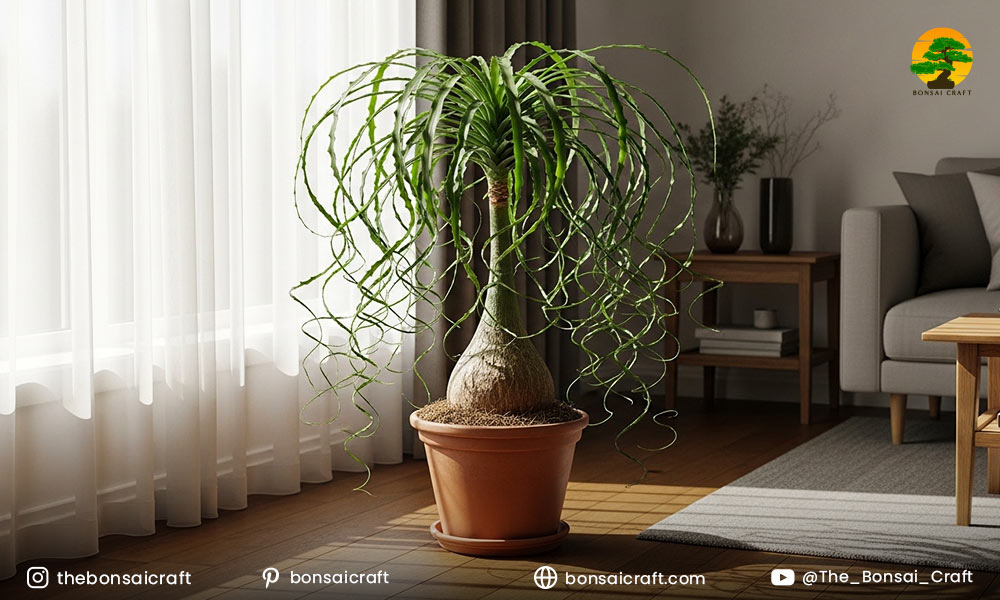
Beaucarnea recurvata is highly suited to indoor environments when given bright light and dry soil conditions. As a sculptural houseplant, it is visually striking and low-maintenance, making it a favorite for offices and homes alike. Place it near sunny windows, minimize frequent watering, and treat it as a succulent rather than a moisture-loving houseplant.
Beaucarnea recurvata Bonsai and Decorative Uses
Beaucarnea recurvata can be styled as a bonsai or focal accent plant due to its architectural form. Its slow growth, thick caudex, and cascading foliage lend themselves to bonsai applications, though standard bonsai techniques require patience because of its slow leaf production and growth rate.
Frequently Asked Questions About Beaucarnea recurvata
Can Beaucarnea recurvata survive low light?
No. Beaucarnea recurvata needs bright light and will not thrive in low-light spots. Limited light leads to pale leaves and slow growth. Place it near a sunny window or supplement with grow lights if needed.
How often should I water my ponytail palm?
You should water the plant only when the soil is completely dry, usually every 1–3 weeks in warm seasons and less frequently in winter. Avoid regular schedules; check soil moisture deeply before watering.
Is ponytail palm safe for pets?
Yes. Beaucarnea recurvata is non-toxic to cats and dogs, making it a family-friendly houseplant. However, avoid chewing as fibrous leaves may cause mild digestive discomfort.
Can I grow ponytail palm outdoors?
Yes, but only in USDA Zones 9–11 with frost-free conditions. Outdoors it can tolerate full sun and reach much larger sizes than indoors. Gradual acclimation helps prevent sun scorch.
Why is my ponytail palm not growing?
Poor growth often indicates insufficient light, overwatering, or low temperatures. Adjust lighting to bright sun, reduce watering frequency, and keep temperatures above 60°F (16 °C) to stimulate growth.
Conclusion
Caring for Beaucarnea recurvata, the elegant ponytail palm, is straightforward once you understand its succulent heritage. Prioritize bright light, allow the soil to dry thoroughly between watering, use well-draining soil, and maintain warm, stable conditions. With the right balance, even novice gardeners can enjoy a resilient, long-lived houseplant that adds sculptural charm to any indoor or outdoor space. or more plant guides and bonsai inspiration, visit the main resource hub at Bonsai Craft.