
The Ilex crenata (Japanese Holly) has emerged as one of the most versatile and essential evergreen shrubs in modern landscaping, often serving as the superior, disease-resistant alternative to the traditional Boxwood. Unlike the jagged, spiny leaves typically associated with the holly plant genus, this species features small, rounded, spineless leaves that create a soft yet dense texture. Native to East Asia, specifically Japan, Korea, and China, the Japanese holly shrub is prized for its ability to maintain a deep, lustrous green color throughout the winter, providing structural permanence to gardens across USDA hardiness zones 5 through 8.
Landscapers and home gardeners frequently turn to Ilex crenata because of its remarkable diversity in form. From the strictly vertical, architectural silhouette of the pencil holly (such as the ‘Sky Pencil’ cultivar) to the low-spreading, mounded habit of the Japanese holly sky pencil counterparts like ‘Hoogendorn’ or ‘Helleri’, there is a variety suited for nearly every garden niche. Whether you are looking to create a formal ilex crenata hedge, a delicate ilex crenata bonsai, or a simple foundation planting, this plant offers a level of adaptability that few other evergreens can match.
However, despite its robust reputation, achieving a thriving Japanese holly ilex crenata requires an understanding of its specific cultural needs, particularly regarding soil pH and drainage. While it resembles Boxwood in appearance, its internal biology is quite different, and it is far more sensitive to alkaline conditions. This guide leverages horticultural expertise to provide a comprehensive roadmap for success, covering everything from the initial how to plant ilex crenata phase to diagnosing common issues like why is my ilex crenata going yellow. By following these expert tips, you can ensure your Japanese Holly remains a centerpiece of your landscape for decades, similar to the meticulous care required for a bonsai lemon tree.
What is Ilex crenata?
Ilex crenata, commonly known as Japanese Holly, is a dense, multi-branched evergreen shrub characterized by its small, dark green, crenate (finely toothed) leaves and inconspicuous white flowers. Unlike many other members of the Ilex genus, this Japanese holly (Ilex crenata) does not produce large, bright red berries; instead, it yields small, black, drupe-like fruits that are often hidden within the foliage. It is a member of the Aquifoliaceae family and is specifically valued for its fine-textured foliage, which allows it to be sheared into precise geometric shapes or maintained as a naturalistic mound. For enthusiasts exploring companion plantings, combining Ilex crenata with Elephant Bush Bonsai offers contrasting foliage textures and forms.
In its native habitat, crenata ilex grows in thickets and woods, which has gifted it with a notable tolerance for partial shade, though it performs best in full sun. The plant is dioecious, meaning individual plants are either male or female, and both are required if fruit production is a priority, though for most gardeners, the fruit is secondary to the evergreen foliage. Because of its slow-to-moderate growth rate and non-invasive root system, the ilex crenata plant has become a staple for urban gardens, large estates, and container gardening alike. Many gardeners pair it with Ficus Microcarpa to create visually appealing container combinations.
How to Plant Ilex crenata for Long-Term Health
To plant Ilex crenata, you must select a location with well-draining, acidic soil and dig a hole that is twice as wide as the root ball but no deeper than the container it arrived in. The most critical factor in the how to plant ilex crenata is ensuring the soil pH remains between 5.0 and 6.0; if the soil is too alkaline, the plant will struggle to take up iron, leading to chlorosis. When placing the plant in the hole, it is vital to keep the top of the root ball level with or slightly above the surrounding soil line to prevent crown rot, a common killer of newly installed hollies. For tips on watering newly planted shrubs, see our Ultimate Guide to Watering Bonsai Trees.
After positioning the Japanese holly, backfill the hole with a mixture of native soil and organic matter, such as peat moss or aged pine bark, to increase acidity and improve drainage. It is a common mistake to add too much heavy compost, which can retain excessive moisture around the roots. Once the hole is filled, tamp the soil down gently to remove large air pockets without compacting the earth too tightly. Finish the planting by applying a 2-to-3-inch layer of organic mulch around the base, ensuring the mulch does not touch the actual stems of the ilex crenata shrub, and water the area deeply to settle the roots.
How to Care for Ilex crenata Throughout the Seasons
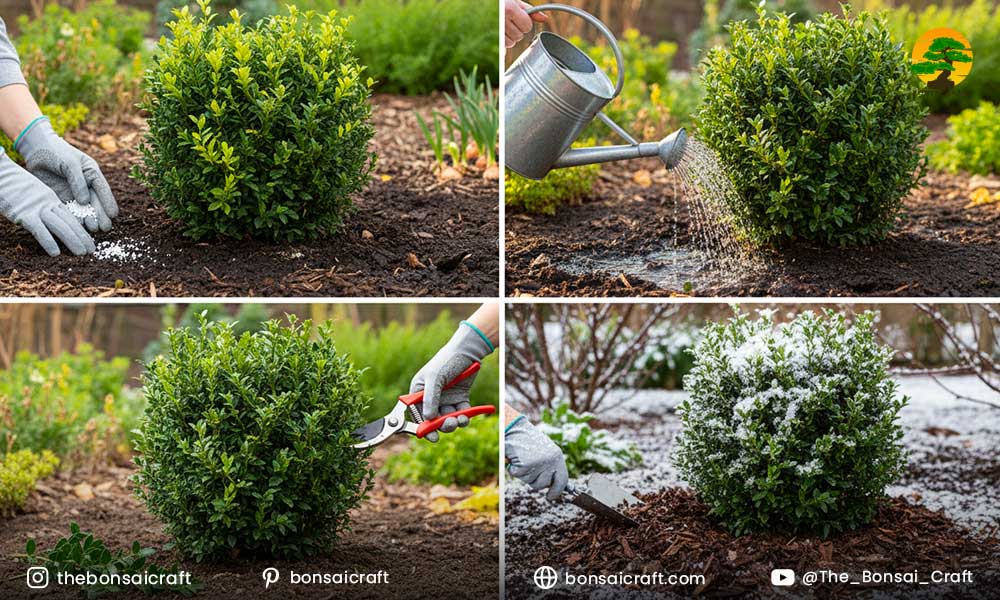
To care for Ilex crenata effectively, you must provide consistent moisture and an annual application of acid-toning fertilizer in early spring before new growth begins. While an established Japanese holly is somewhat drought-tolerant, it possesses a shallow root system that can dry out quickly during prolonged heat waves or dry winters. A regular watering schedule that keeps the soil moist but not soggy is the baseline for how to care for Ilex crenata. During the first two years after planting, deep watering once or twice a week is essential for root establishment.
Nutritional maintenance is the next pillar of care. Since Ilex crenata prefers acidic conditions, using a fertilizer designed for azaleas or camellias is highly recommended. This helps maintain the soil pH while providing the nitrogen and micronutrients needed for that signature dark green luster. In colder climates, particularly zone 5, Japanese Holly can be susceptible to winter burn caused by desiccation. To prevent this, ensure the plant is well-hydrated before the ground freezes and consider applying an anti-desiccant spray or providing a burlap windbreak for more exposed specimens like the ilex crenata sky pencil.
When to Prune Ilex crenata for Shape and Vitality
The best time to prune Ilex crenata is in late winter or very early spring while the plant is still dormant, or in early summer after the first flush of new growth has hardened. Because Japanese Holly produces its new growth in the spring, pruning during dormancy allows you to shape the plant without sacrificing the energy it has stored for the coming season. If you are maintaining a formal Ilex crenata hedge, a light secondary trim in mid-summer can help keep the lines crisp and prevent the shrub from looking shaggy.
It is important to avoid pruning late in the autumn. Pruning stimulates new growth, and if this growth does not have time to “harden off” before the first hard frost, the tender tips will be killed back by the cold, potentially leading to disease entry points. For the compact Japanese holly varieties, minimal pruning is usually required, as they naturally stay within a confined shape. However, for faster-growing types or those used in topiary, timing your cuts with the plant’s natural growth spurts ensures the quickest recovery and most dense foliage.
How to Prune Ilex crenata: Techniques for Different Forms
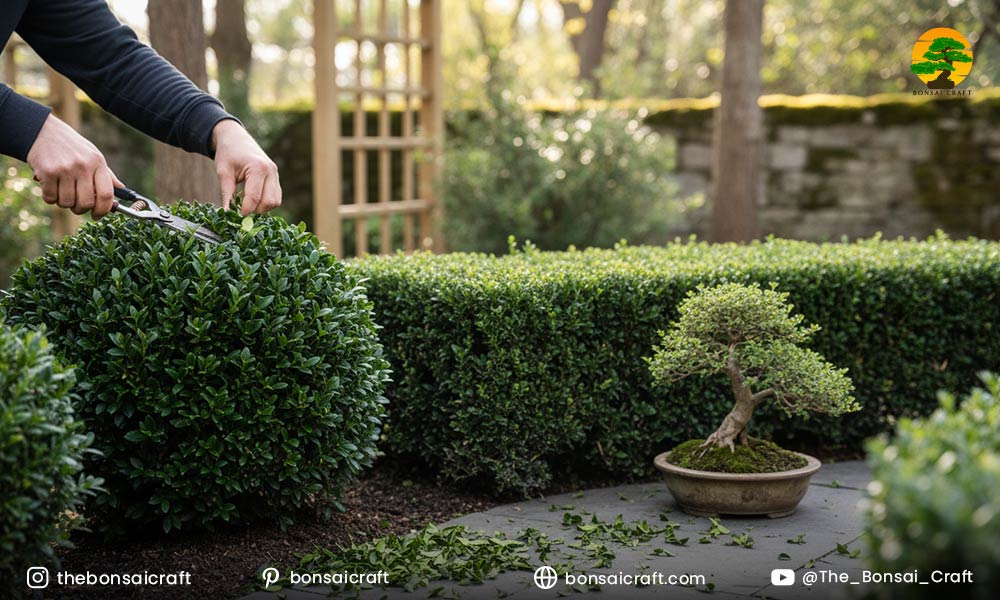
To prune Ilex crenata correctly, you should use sharp, bypass hand pruners for individual branch selection or manual hedge shears for formal shapes, always cutting just above a leaf node or lateral branch. When learning how to prune Ilex crenata, the goal is to encourage light penetration into the center of the shrub. If the outer shell becomes too dense, the interior leaves will die off, leaving you with a “hollow” plant that cannot be easily rejuvenated. To prevent this, use thinning cuts, removing entire small branches back to their point of origin, rather than just “heading back” the tips.
For the architectural pencil holly, such as the Japanese holly sky pencil, pruning is largely a matter of height control and removing any branches that begin to “splay” out from the central column. You can use garden twine to gently pull splayed branches back into the main body of the plant, or simply snip them back to maintain the narrow silhouette. For ilex crenata bonsai enthusiasts, pruning is more intricate, involving constant pinching of new buds to maintain the miniature scale and encourage “ramification,” which is the development of a complex network of small branches.
Why is My Ilex crenata Going Yellow?
The most common reason an Ilex crenata is going yellow is iron chlorosis caused by high soil pH, though poor drainage and spider mite infestations are also frequent culprits. When the soil pH rises above 6.5, the iron present in the soil becomes chemically “locked,” and the holly plant can no longer absorb it. This results in interveinal chlorosis, where the leaves turn a pale yellow while the veins remain green. To fix this, you should test your soil pH and apply elemental sulfur or chelated iron to lower the pH and provide an immediate nutrient boost.
If the yellowing is accompanied by leaf drop or a general wilting appearance, the issue is likely “wet feet.” Ilex crenata compacta and other varieties are highly susceptible to root rot if they sit in standing water. Conversely, if the leaves look dull, stippled with tiny yellow dots, and have fine webbing on the undersides, your Japanese holly shrub is suffering from spider mites. These pests thrive in hot, dry conditions and can be managed with forceful blasts of water or insecticidal soap, but the yellowed foliage will rarely turn green again; you must wait for new growth to replace it.
The Versatility of Ilex crenata Compacta and Hoogendorn
The Ilex crenata compacta and Ilex crenata hoogendorn are the most popular cultivars for low-maintenance landscaping due to their naturally mounded, dwarf growth habits. ‘Compacta’ is widely used as a foundation plant because it rarely exceeds 4 feet in height and width, maintaining a tidy appearance with almost no intervention. It features exceptionally glossy leaves that are slightly more oval than the species type, making it a favorite for those seeking a “polished” look in their front yard.
‘Hoogendorn’, on the other hand, is known for its low, spreading habit and its ability to thrive in slightly more varied conditions. It is an excellent choice for a low Ilex crenata hedge or as a groundcover shrub in larger beds. These cultivars are specifically bred to remain “compact,” which reduces the labor associated with pruning and makes them ideal for the modern homeowner. When planting these, ensure they are not crowded by larger shrubs, as they require good air circulation to prevent the fungal issues that can occasionally affect the Japanese holly family.
Ilex crenata Sky Pencil: The Vertical Masterpiece
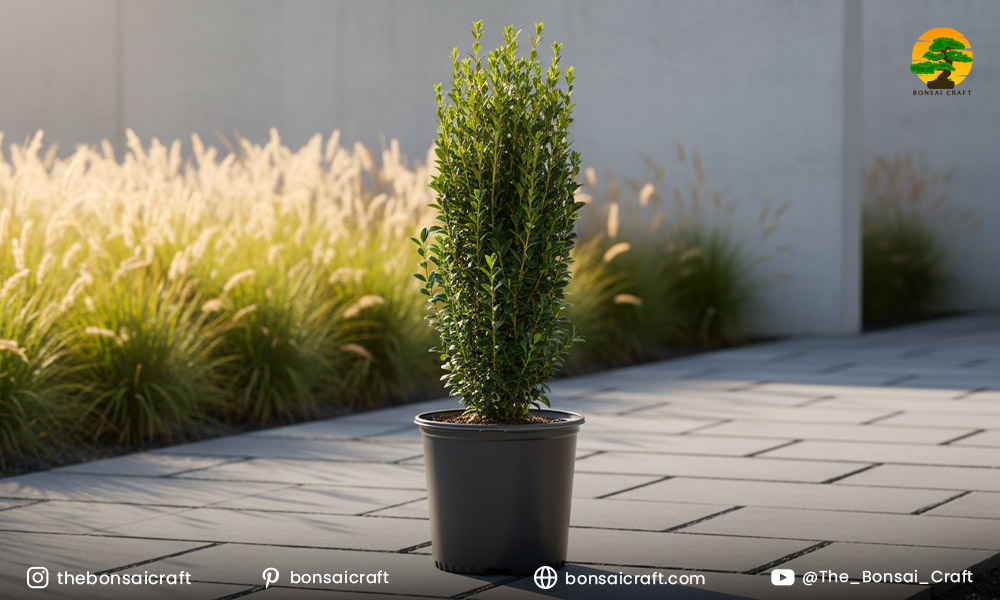
The Ilex crenata sky pencil is a unique, fastigiate (upright) cultivar that grows as a narrow, vertical column, reaching 6 to 10 feet in height while remaining only 2 feet wide. This pencil holly is an invaluable tool for landscape designers who need to create height in tight spaces, such as between windows, at the corners of a house, or as a living screen for a small patio. Unlike many other columnar evergreens, the ‘Sky Pencil’ maintains its tight form naturally, though it may require occasional pruning to remove “reverting” branches that grow horizontally.
Because of its upright nature, the Japanese holly sky pencil is particularly striking when planted in rows or used as a formal accent in a container. However, gardeners should be aware that its vertical structure makes it more prone to damage from heavy snow loads, which can cause the branches to bend outward. To protect this Ilex crenata sky pencil, many gardeners wrap the plant in light netting during the winter or simply shake off heavy snow immediately after a storm. It is a high-impact, low-maintenance solution for adding architectural interest to any garden.
Ilex crenata Bonsai: A Miniature Masterpiece
Ilex crenata is one of the most popular species for evergreen bonsai because its naturally small leaves and willingness to back-bud make it easy to train into miniature tree forms. Creating an ilex crenata bonsai allows the grower to appreciate the fine details of the holly plant on a much smaller scale. The ‘Kingsville Dwarf’ cultivar is particularly favored for this purpose, as it has the smallest leaves of all Japanese Hollies and grows extremely slowly, allowing for precise styling over many years.
Maintaining a Japanese holly ilex crenata as a bonsai requires more frequent attention than garden-grown shrubs. Because the root system is confined to a small pot, the tree must be watered daily during the summer and protected from hard freezes in the winter. Feeding with an acidic liquid fertilizer every two weeks during the growing season is necessary to keep the foliage vibrant. The ability of ilex crenata to withstand heavy pruning means you can experiment with various styles, from the classic “informal upright” to more dramatic “cascade” forms, making it an excellent species for both beginners and advanced bonsai practitioners.
Creating the Perfect Ilex crenata Hedge
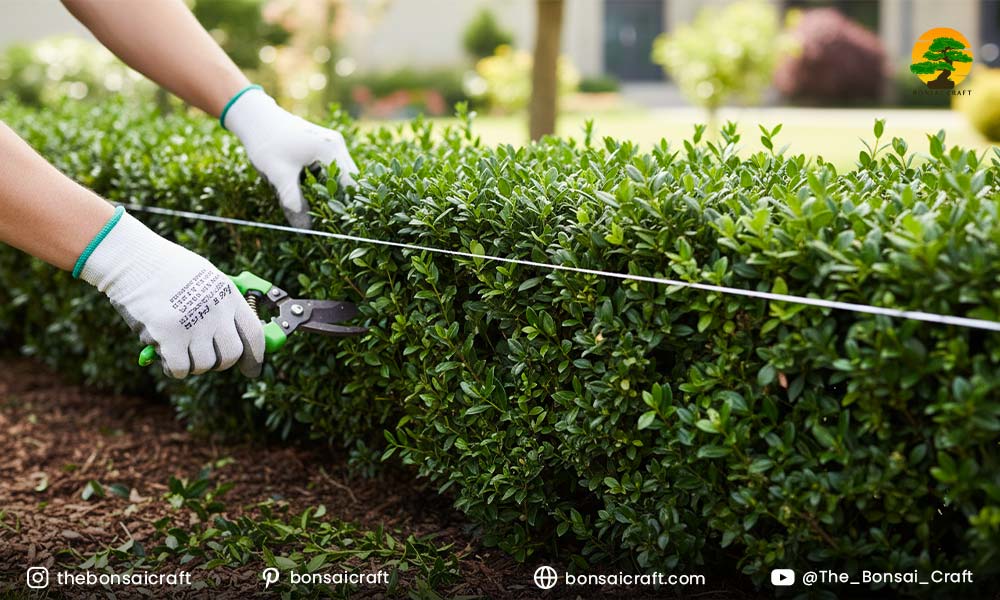
To create a formal Ilex crenata hedge, plants should be spaced 18 to 24 inches apart and sheared twice a year to maintain a dense, impenetrable screen of evergreen foliage. This species is often marketed as the “Boxwood substitute” because it is immune to Boxwood Blight, a devastating fungal disease that has decimated traditional hedges across the globe. By using Japanese holly for your hedge, you get the same fine-textured, formal look with significantly less risk of disease.
When establishing an Ilex crenata hedge, it is important to prune the sides of the hedge so that the base is slightly wider than the top. This “tapered” shape ensures that sunlight reaches the lower branches, preventing the bottom of the hedge from becoming bare and leggy. For a taller screen, cultivars like ‘Maximowicziana’ are ideal, while a low, ornamental border is best achieved with Ilex crenata compacta. Regardless of the variety, the Japanese Holly hedge provides a year-round backdrop that enhances the colors of flowering perennials and provides privacy for the home.
Frequently Asked Questions
What is the difference between Ilex crenata and Boxwood?
The primary difference is that Ilex crenata (Japanese Holly) has alternate leaf arrangements and black fruit, while Boxwood (Buxus) has opposite leaves and seed capsules. Furthermore, ilex crenata is immune to Boxwood Blight and Boxwood Leafminer, making it a more durable choice for modern landscapes. However, Japanese Holly is more sensitive to alkaline soil and will turn yellow if the pH is too high.
How fast does Japanese Holly grow?
Ilex crenata is generally a slow-to-moderate grower, typically adding between 4 to 8 inches of new growth per year, depending on the cultivar. Columnar varieties like the sky pencil holly may grow slightly faster in height, while dwarf mounded types like ‘Helleri’ are much slower. Providing ideal acidic soil and regular moisture can help maximize this growth rate.
Is Ilex crenata toxic to pets?
Yes, like all hollies, Ilex crenata contains saponins, which can cause vomiting and diarrhea in dogs and cats if ingested. While the black berries are not as enticing as red holly berries, the leaves and stems also contain these mildly toxic compounds. It is best to plant Japanese holly in areas where pets are unlikely to graze on the foliage.
Can Ilex crenata grow in full shade?
Ilex crenata can survive in partial shade, but it will become leggy and less dense compared to plants grown in full to partial sun. For the best leaf color and the densest foliage, which is usually the goal for an ilex crenata hedge, at least 4 to 6 hours of direct sunlight is recommended. In very hot climates, afternoon shade can actually be beneficial to prevent leaf scorch.
How do I stop my Japanese Holly from dying in the winter?
The best way to protect Ilex crenata in winter is to ensure it is deeply hydrated before the first frost and to use a layer of mulch to protect the roots. If you live in a zone where winter winds are harsh, an anti-desiccant spray can help the holly plant retain moisture in its leaves. For vertical varieties like pencil holly, tying the branches together can prevent damage from heavy snow loads.
Conclusion
The Ilex crenata (Japanese Holly) stands as a paragon of versatility in the horticultural world, offering a solution for almost every landscape challenge. From its role as a disease-resistant hedge to its architectural prowess as a sky pencil holly, this plant provides a level of structural integrity and evergreen beauty that is hard to surpass. By paying close attention to soil acidity, ensuring consistent moisture, and mastering the timing of when to prune Ilex crenata, you can cultivate a specimen that thrives for decades.
Whether you are a fan of the miniature ilex crenata bonsai or the expansive Japanese holly shrub, understanding the “why” behind its care, such as why is my ilex crenata going yellow, empowers you to be a more successful gardener. As we look for sustainable and resilient alternatives to classic garden plants, the Japanese Holly remains a top-tier choice for any discerning landscaper.